Stand der juristischen KI in MENA 2026: Unternehmen, Finanzierung und Lücken
Die 2026-Karte der Rechts-KI in MENA: konkrete Startups aus 8 Ländern, wer wie viel eingesammelt hat (HAQQs $3M führen) und Harveys Einstieg über Al Tamimi.
Legal AI through a MENA lens - jurisdiction-specific analysis for the Middle East and North Africa, where Arabic-language reasoning and local legal systems make generic tools fall short. The section covers country guides, Arabic legal AI, regional legal-tech trends, and lawyer-fee economics across the region. Start with our legal AI guide for Saudi Arabia 2026, the deep dive on Arabic legal AI, and our MENA legal-tech trends report. If you practice in the Gulf, the Levant, or North Africa - or you are bringing legal AI to clients who do - these posts speak to the jurisdictions and the language that actually apply.
60 Artikel

Die 2026-Karte der Rechts-KI in MENA: konkrete Startups aus 8 Ländern, wer wie viel eingesammelt hat (HAQQs $3M führen) und Harveys Einstieg über Al Tamimi.

UAE divorce now runs on two tracks: the civil path under Federal Decree-Law No. 41 of 2022, and personal-status law. Here is which applies, what talaq and khula mean, and where AI helps.

What you're owed if you're dismissed or resign in the UAE: end-of-service gratuity (21/30 days), arbitrary-dismissal compensation, and how to file a MOHRE complaint.

Your rights when breaking a tenancy or facing eviction in Dubai: the 12-month notice rule, rent-increase caps (RERA index), early-termination penalties, and the Rental Disputes Center.

When you resign or are terminated in the UAE: work-permit cancellation, the grace period to stay, moving to a new employer, labour bans, and passport rules.
How end-of-service gratuity works under Saudi Labor Law: the half-month/full-month formula, what you get if you resign (Article 85), and unfair-dismissal compensation (Article 77).

How end-of-service indemnity and arbitrary dismissal work under Kuwait Labour Law No. 6 of 2010: the indemnity formula, resignation tiers (Art. 53), notice, and PAM disputes.

Qatar's end-of-service gratuity (3 weeks/year on basic wage, not 21/30), notice under Decree-Law 18/2020, and arbitrary-dismissal remedies under Law No. 14 of 2004.

Bahrain's leaving indemnity (Art. 116), the 2024 SIO change for expats, and arbitrary-dismissal compensation (Art. 111: min 1, max 12 months) under Law No. 36 of 2012.

Oman's new 2023 Labour Law (RD 53/2023): end-of-service raised to one month per year (Art. 61), notice (Art. 38), and arbitrary-dismissal remedies (Art. 11).

Egypt's new Labour Law No. 14 of 2025: arbitrary-dismissal compensation (2 months/year, Art. 165), 3-month notice (Art. 156), and the new resignation-ratification rules.

Jordan: Art. 32 indemnity vs Social Security coverage, arbitrary-dismissal compensation (Art. 25), notice (Art. 23), and filing via the Hemayeh platform.

Lebanon: NSSF end-of-service indemnity (1 month/year), arbitrary-dismissal damages (Art. 50: 2–12 months), notice tiers, and the impact of the currency crisis on payouts.

Federal Iraq under Labour Law 37/2015: restricted termination grounds, two-weeks/year gratuity, 30-day notice, and the Service Termination Committee vs labour court route.

Morocco's Labour Code (Law 65-99): severance after 6 months (Art. 53 hours tiers), unfair-dismissal damages (Art. 41: 1.5 months/year, cap 36), notice and the 90-day deadline.

Tunisia's Labour Code: severance one day/month capped at 3 months (Art. 22), unfair-dismissal damages 1–2 months/year capped at 3 years (Art. 23 bis), notice and the 1-year deadline.

Algeria under Law 90-11: dismissal only for serious misconduct (Art. 73), unfair-dismissal remedy of reinstatement or min 6 months' salary (Art. 73-4), notice and the 6-month deadline.

Saudi tenancy via Ejar/REGA: no national rent cap (Riyadh 5-year freeze), 5% deposit cap, no self-help eviction, and the Enforcement Court route.

Kuwait Lease Law 35/1978 (amended 2024): 5-year rent freeze, the 50%-below-market increase rule, eviction grounds, and the Rental Division.

Qatar Law 4/2008: no active rent cap, eviction grounds, 2-month deposit cap, and the Rent Disputes Settlement Committee (hotline 184).

Bahrain Law 27/2014: rent +5% after 2 years (Art. 27), no eviction in first 3 years (Art. 35), Article 38 grounds, and the Rents Disputes Committee.

Oman RD 6/89 + new RD 12/2025: no increase for 3 years then 7%/yr, no termination before 4 years, and the new 90-day dispute committee.

Egypt's two rent regimes and the 2025 old-rent reform: zone-based recalculation, 15% annual rise, the 7-year phase-out, and fast-track eviction.

Jordan Owners & Tenants Law 11/1994: old vs new contracts (31 Aug 2000 cutoff), no self-help eviction, and succession protection (Art. 7).

Lebanon's 23 July 1992 split: COC 3-year protection for new leases, the old-rent phase-out (2014/2017 reform), and court-only eviction.

Federal Iraq Lease Law 87/1979: 5% annual rent cap, enumerated eviction grounds, automatic lease extension, and the 15-day notary cure.

Morocco Law 67-12 + 07-03: rent revision capped at 8% after 3 years, 2-month eviction notice, and a deposit capped at 2 months (Art. 20).

Tunisia: residential leases under the COC (Arts. 727–804), no general rent control, court-only eviction (Art. 796), and old protected tenancies (Law 76-35).

Algeria's Civil Code as amended by Law 07-05: free fixed-term leases, the mandatory written/dated lease (Art. 467 bis), and 2-month early-exit notice.

Saudi work permits and the Iqama after the 2021 Labor Reform: Qiwa sponsor transfer without consent, final exit, Premium Residency, and the passport-withholding ban.

Kuwait's Article 18 work-and-residence visa: the new residency law, sponsor transfer (3-year rule), the 2025 exit permit, and family-sponsorship income.

Qatar after Law 18/2020: NOC abolished, exit permits removed for most, the residence-permit grace period (reduced to 14 days), and the passport ban.

Bahrain's LMRA work permit and residence: sponsor transfer after one year, the self-sponsorship Flexi Permit, family-sponsorship income, and the passport ban.

Oman's labour clearance and ROP visa: the abolished NOC / 2-year ban (since 2021), conditions to transfer, family-sponsorship income (OMR 150), and the passport ban.

Syria: unjustified-dismissal compensation of 2 months/year capped at 150× minimum wage (Art. 65), end-of-service gratuity (Art. 63), and 2-month notice (Art. 56).

Libya: court-set unjustified-dismissal compensation (Art. 76), end-of-service reward for non-nationals (Art. 78), 30-day notice (Art. 71), and the conciliation/arbitration route.

Yemen: end-of-service gratuity of 1 month/year (Art. 120), arbitrary-dismissal compensation capped at 6 months, notice by pay period, and the region-dependent dispute forum.

How to set up a company in the UAE: mainland 100% foreign ownership, no LLC minimum capital, mainland vs free zone, and licensing under Decree-Law 32/2021.

Setting up in Saudi Arabia: 100% foreign ownership via MISA registration, the new Companies Law, capital expectations, and the Regional HQ program.

Setting up in Kuwait: the 49% cap vs 100% via a KDIPA license, the WLL (KD 1,000 capital), and MOCI registration under Companies Law 1/2016.

Setting up in Qatar: up to 100% foreign ownership under Law 1/2019, no LLC minimum capital, and mainland vs the Qatar Financial Centre.

Setting up in Bahrain: 100% foreign ownership in most sectors, no WLL minimum capital (Decree 28/2020), and registration via the Sijilat portal.

Setting up in Oman: up to 100% foreign ownership under the Foreign Capital Investment Law, the negative list, eased minimum capital, and the Invest Easy portal.

Setting up in Egypt: 100% foreign ownership in most sectors, LLC vs JSC capital, the exceptions (agency/import), and GAFI's one-stop-shop.

Setting up in Jordan: up to 100% ownership (50% cap on retail/wholesale, prohibited list), the abolished JOD 50,000 minimum, and CCD registration.

Setting up in Lebanon: 100% foreign-owned SARL, restricted sectors, SARL/SAL capital, the mandatory lawyer, and the post-2019 banking reality.

Setting up in federal Iraq: the 2019 reversal to a 49% foreign cap, 100% via an NIC license / branch / Kurdistan, IQD 1m minimum, and the Companies Registrar.

Setting up in Morocco: 100% foreign ownership in most sectors, no SARL minimum capital, the Office des Changes convertibility, and the CRI one-stop-shop.

Setting up in Tunisia: the 49% onshore cap vs 100% offshore-exporting, SARL/SA capital, the negative list, and the RNE one-stop platform.

Setting up in Algeria: the 51/49 rule lifted for non-strategic sectors (100% allowed), no SARL minimum capital, strategic-sector caveats, and the CNRC + AAPI.

What a free AI legal consultation can do in 2026: explain laws, review contracts, draft documents in Arabic or English - and when you still need a human lawyer.

Saudi-Arabien kodifizierte sein Zivilrecht, digitalisierte seine Gerichte und baute MENAs tiefstes Rechts-KI-Cluster. Ein Praxisleitfaden zu Tools, Use Cases und PDPL.

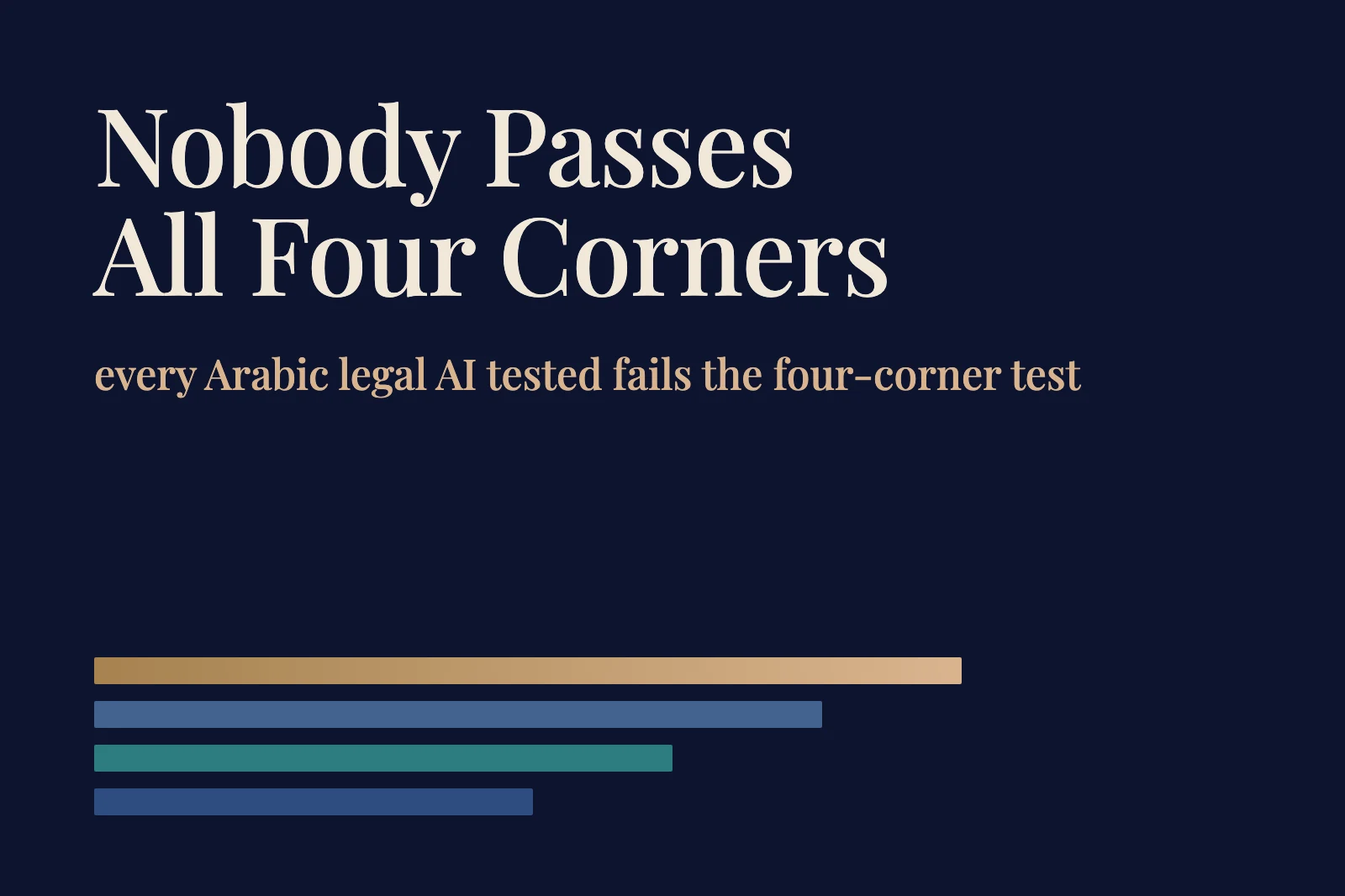
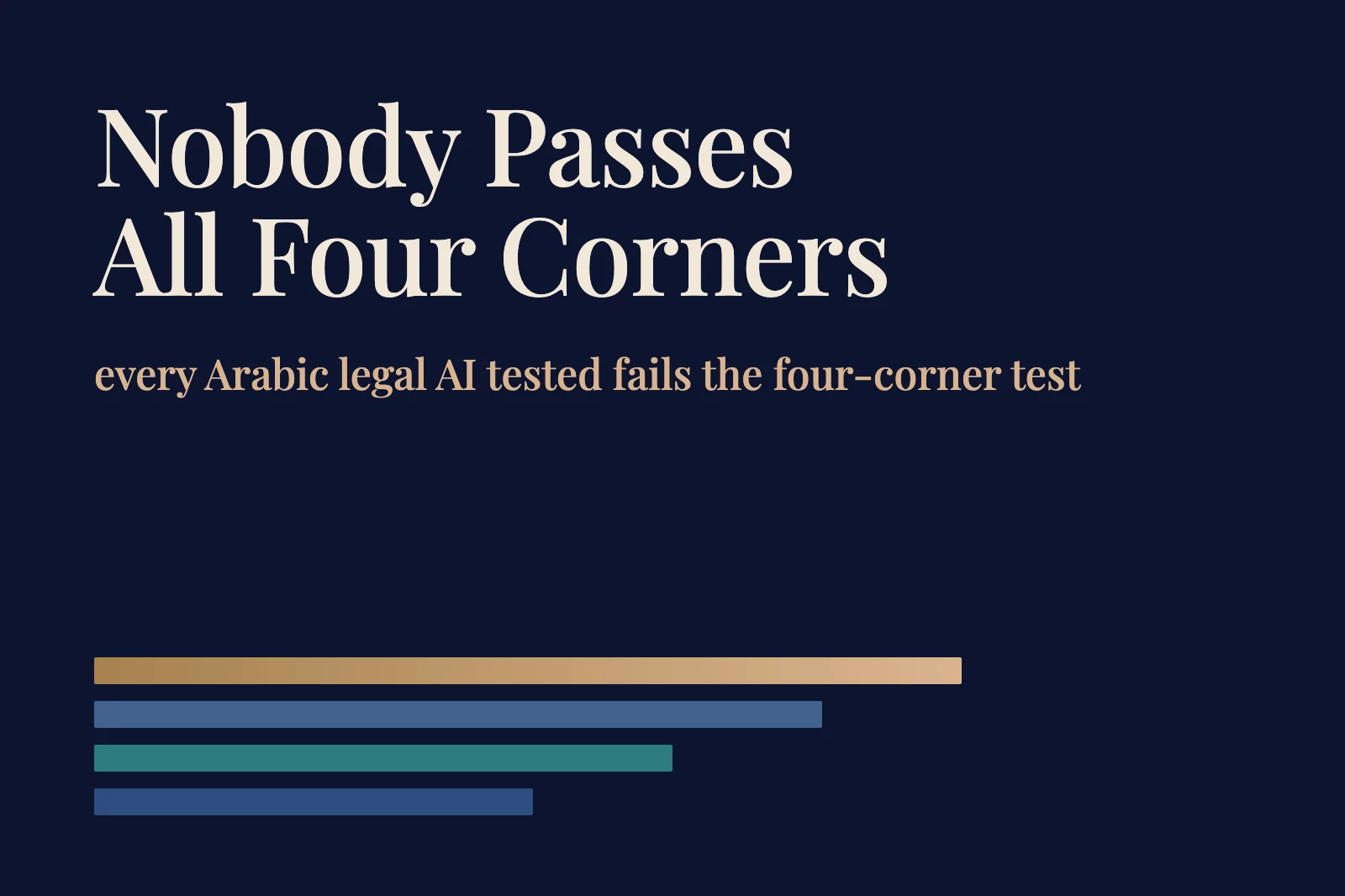
18 arabische Rechts-KI-Produkte im Vergleich - Adel, Shwra, Arabic.ai, Laiwyer - in vier Dimensionen: Consumer, mobil, Multi-Länder, natives Arabisch. Keines schafft alle vier.

Anwälte in Dubai berechnen AED 500–5,000+/Std.; VAE-Erfolgshonorare sind nun bei 25% gedeckelt. Echte 2026-Honorarspannen nach Mandatstyp, plus die KI-gestützten Kosten.

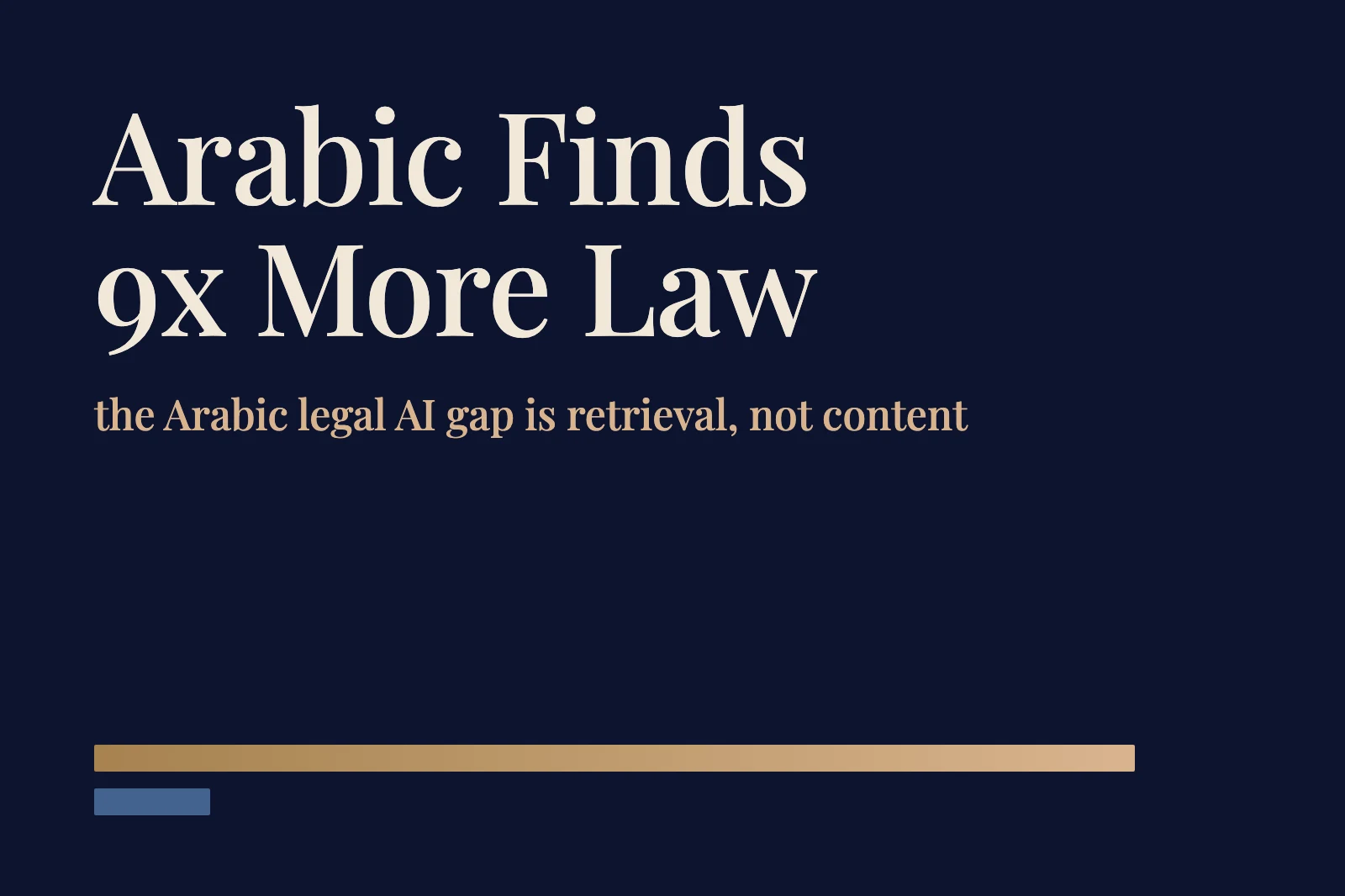
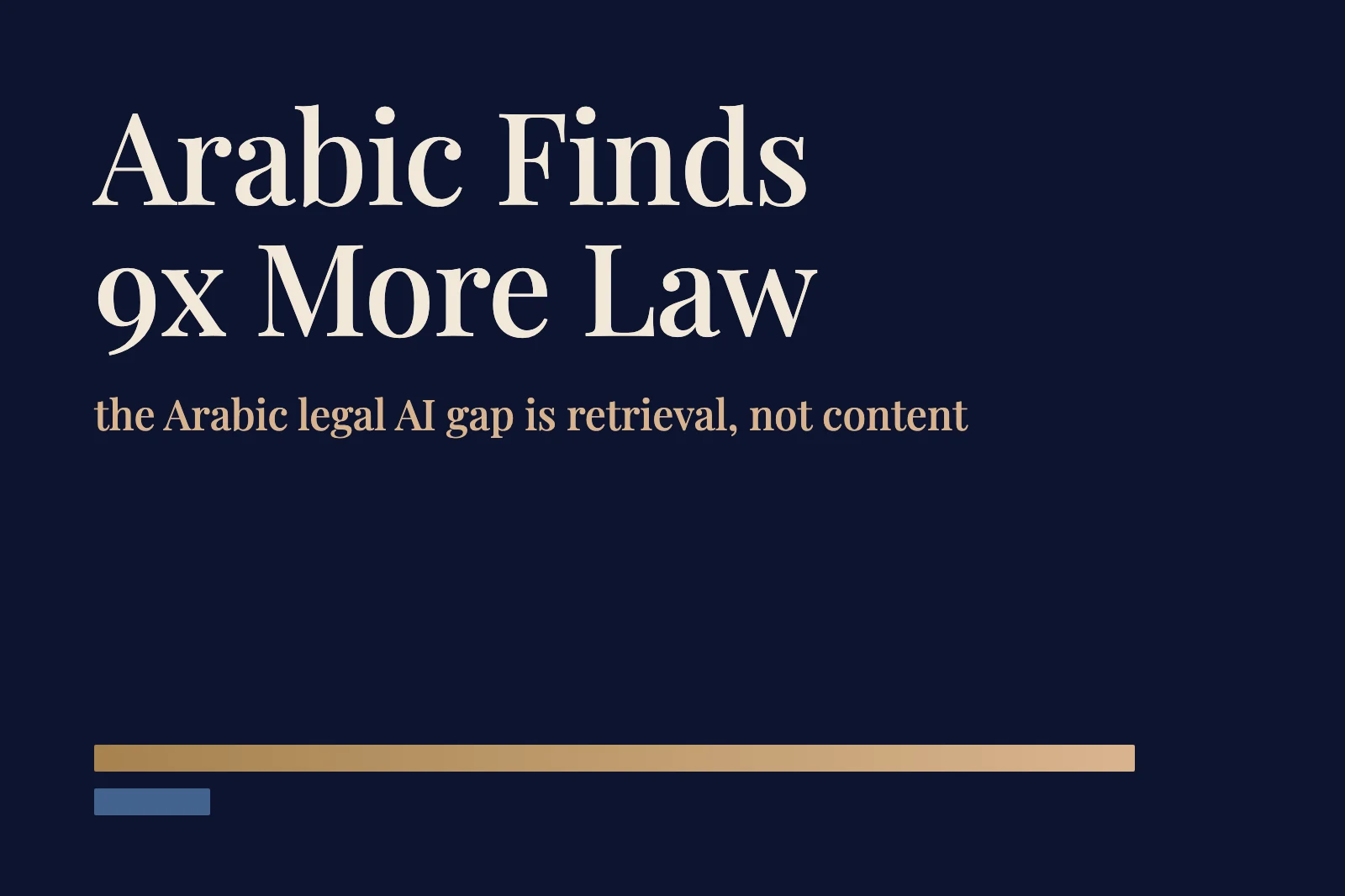
Wir stellten dieselben Rechtsfragen auf Englisch und Arabisch. Arabisch lieferte 9x mehr Primärrecht - plus stille Falsches-Land-Fehler. Die Lücke ist Retrieval, nicht Inhalt.

Golf-Gerichte nutzten KI, bevor die meisten US-Kammern Regeln hatten - doch arabische Rechtsdaten bleiben knapp. Wer baut, wer kauft und wo die Lücke wirklich liegt.

Legal Tech 2026: Wer Funding erhielt (Ivo $55M, Lawhive $60M, HAQQ $3M), wer konsolidierte, was Gerichte sanktionierten und warum MENA das Regulierungslabor ist.

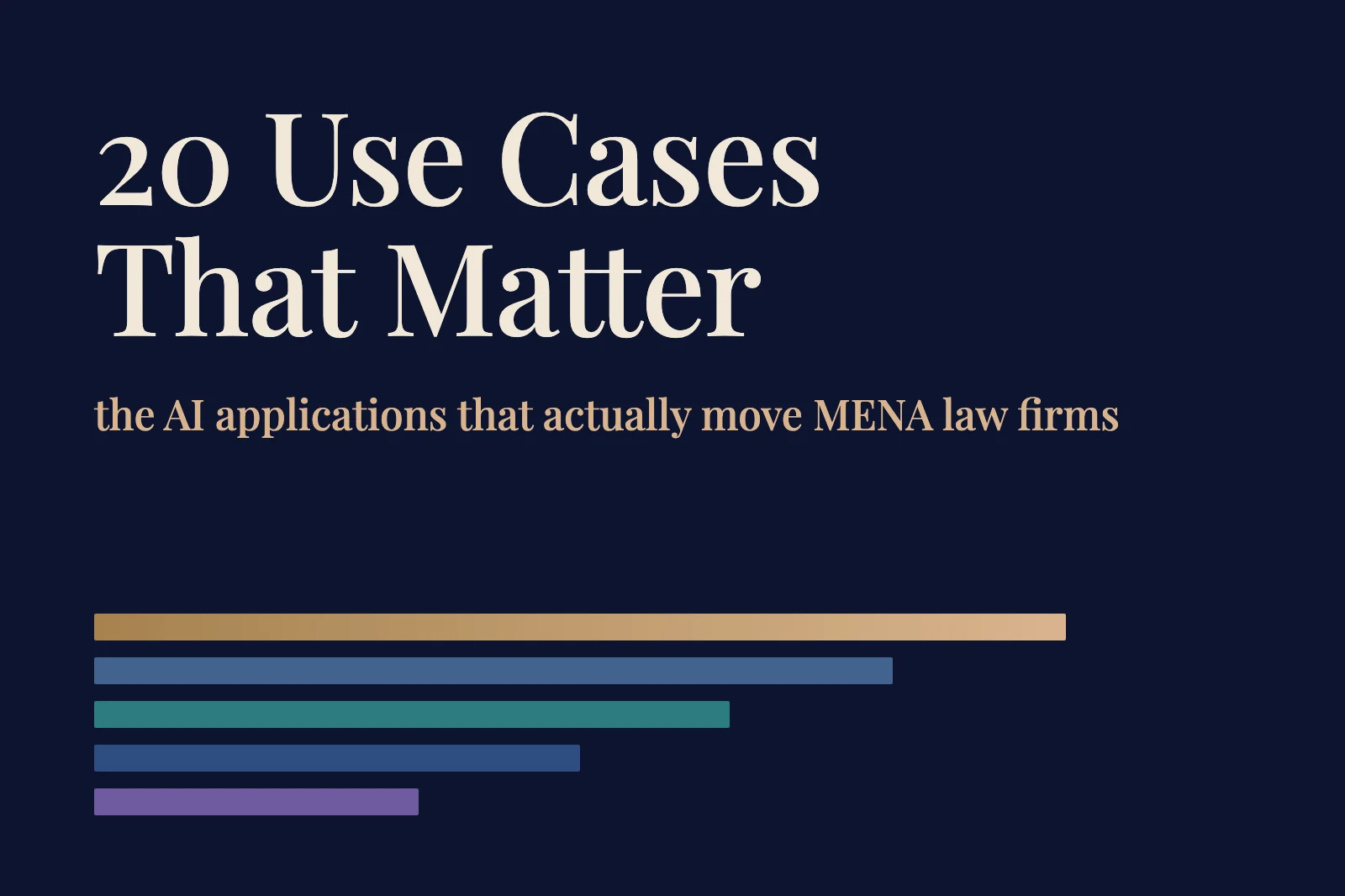
Die meisten KI-Anwendungsfälle in Kanzleien bringen keinen Wettbewerbsvorteil. Hier sind 20, die es tun.

Omans Rechtsreformen klar erklärt: 100% ausländisches Eigentum nach Königlichem Dekret 50/2019, das Datenschutzgesetz und der Rahmen der Vision 2040.

Ein kuratierter Kalender der Rechts- und Legal-Tech-Events, die sich 2026 lohnen - Legalweek, ABA TECHSHOW, ClioCon, plus die MENA-Räume, die andere Listen übersehen.