The Civil-Law Legal AI Benchmark: Why We Built HAQQ-LAB
Every major legal AI benchmark is common-law; civil law governs 60%+ of the world. HAQQ-LAB: 16 open-source MENA tasks, 4 traps - 0% vs 100% adherence.
Product updates, insights, and behind-the-scenes from the HAQQ team.
A rotating selection of articles hand-picked by the HAQQ team.

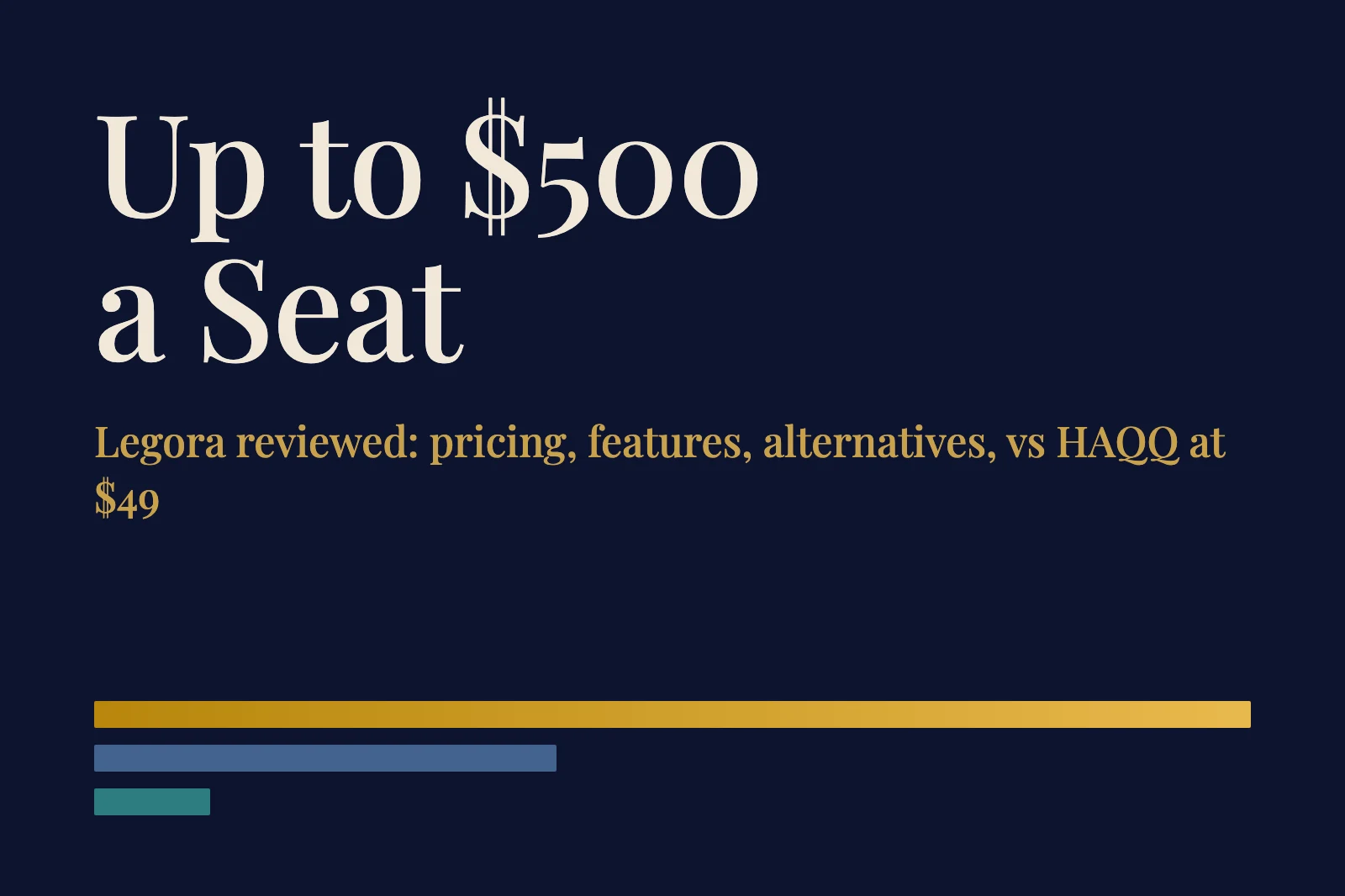
Independent Legora review for 2026: indicative pricing, the LLM stack, who owns it, and how it compares with HAQQ, Harvey, Spellbook and CoCounsel.

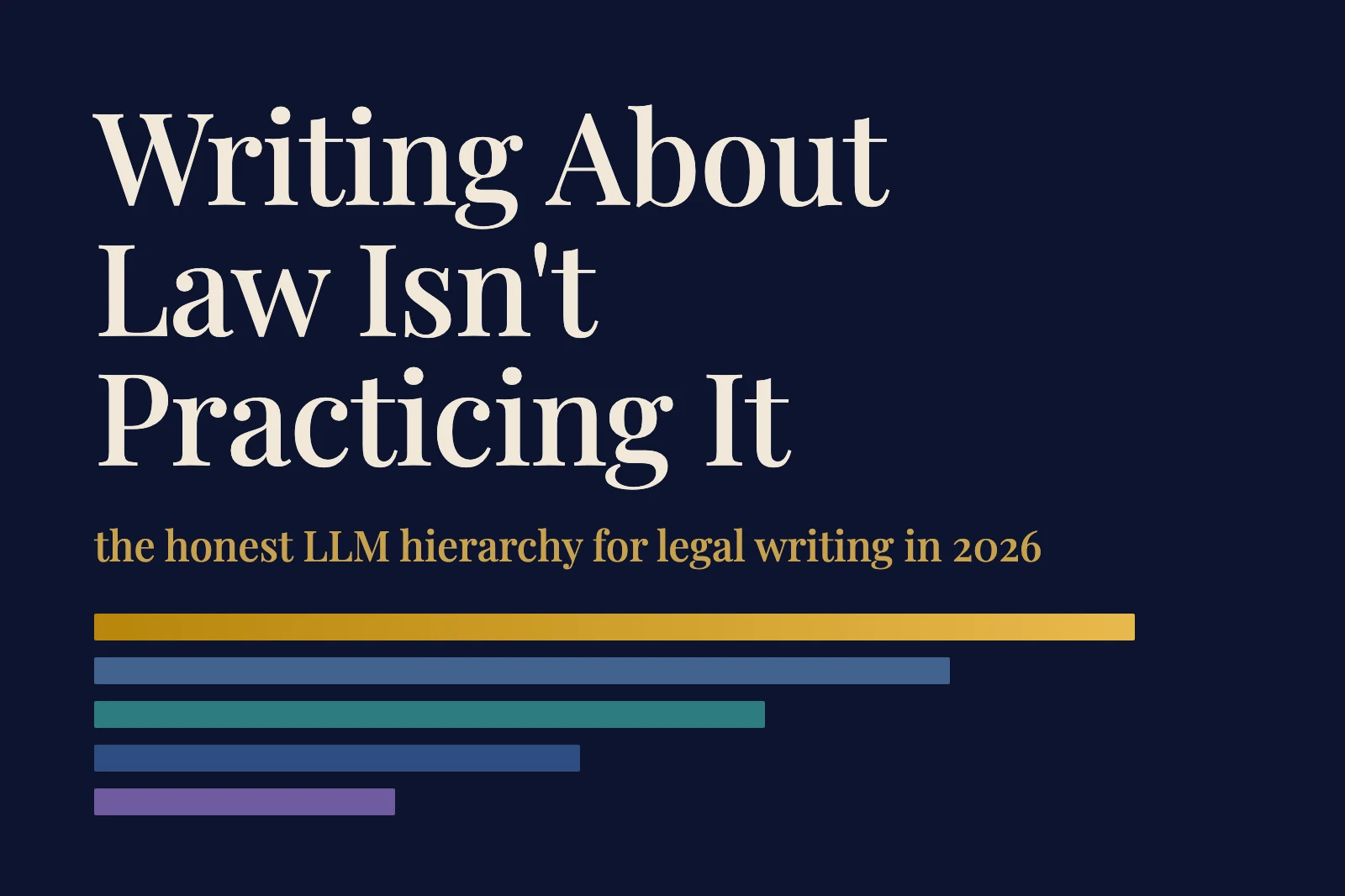
Which LLM should write your legal articles? We ranked the three Legal GPTs, Claude with the legal plugin, and purpose-built legal AI - with prompts that work.

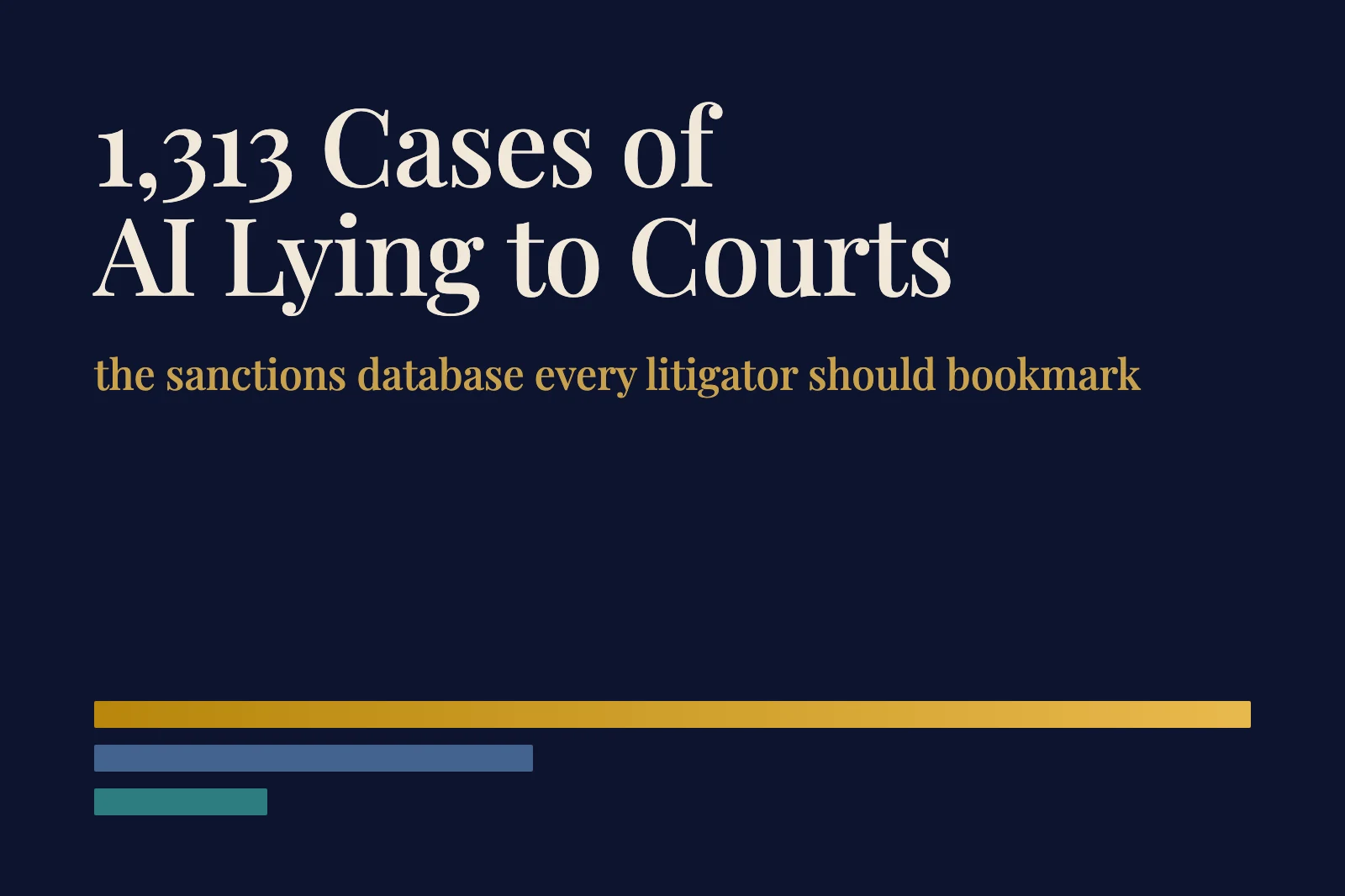
1,313 court proceedings, 496 sanctioned attorneys, five enforcement tracks across 106 countries. The global report on AI hallucinations in law.
No articles match your search.

Every major legal AI benchmark is common-law; civil law governs 60%+ of the world. HAQQ-LAB: 16 open-source MENA tasks, 4 traps - 0% vs 100% adherence.

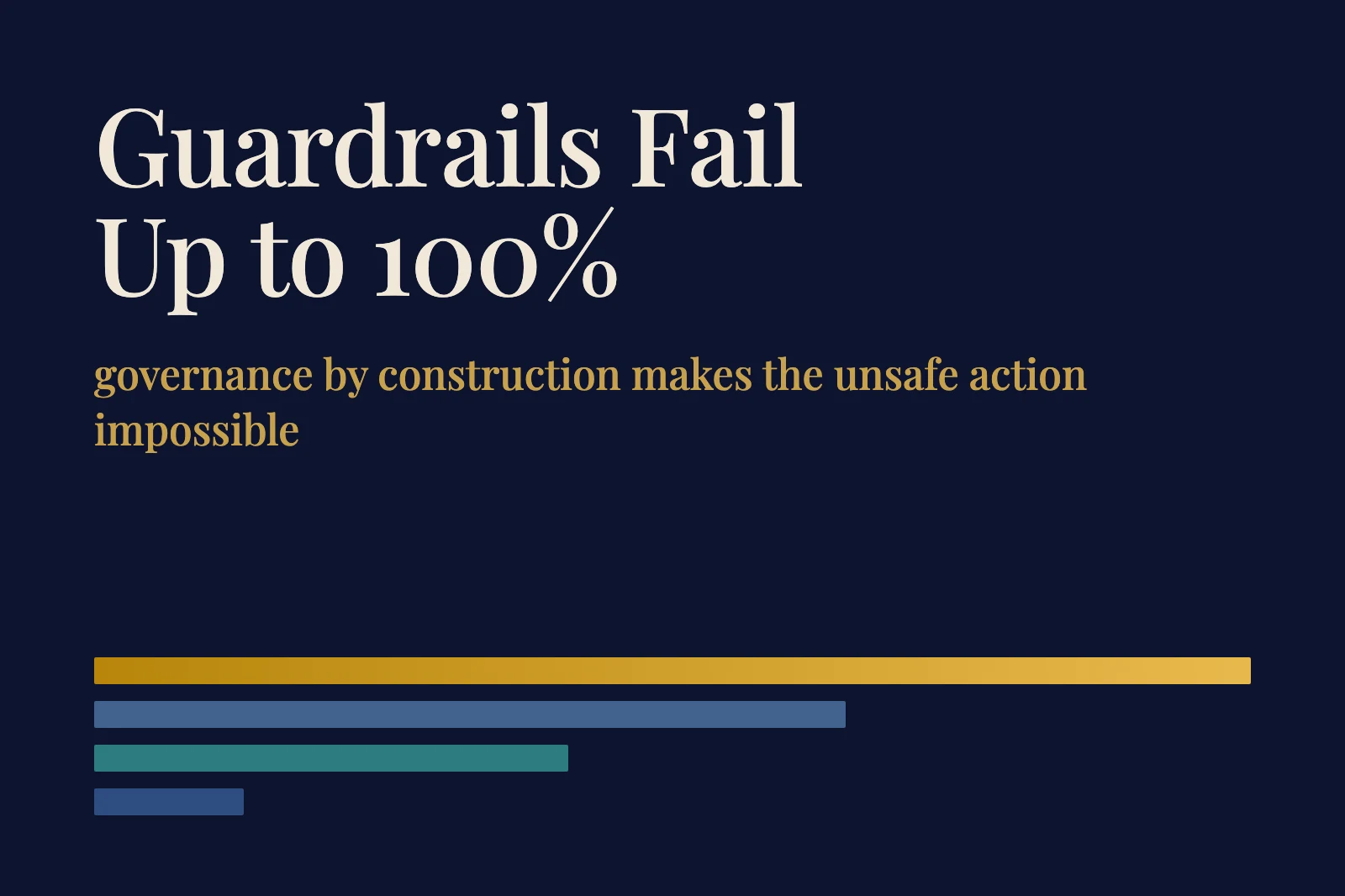
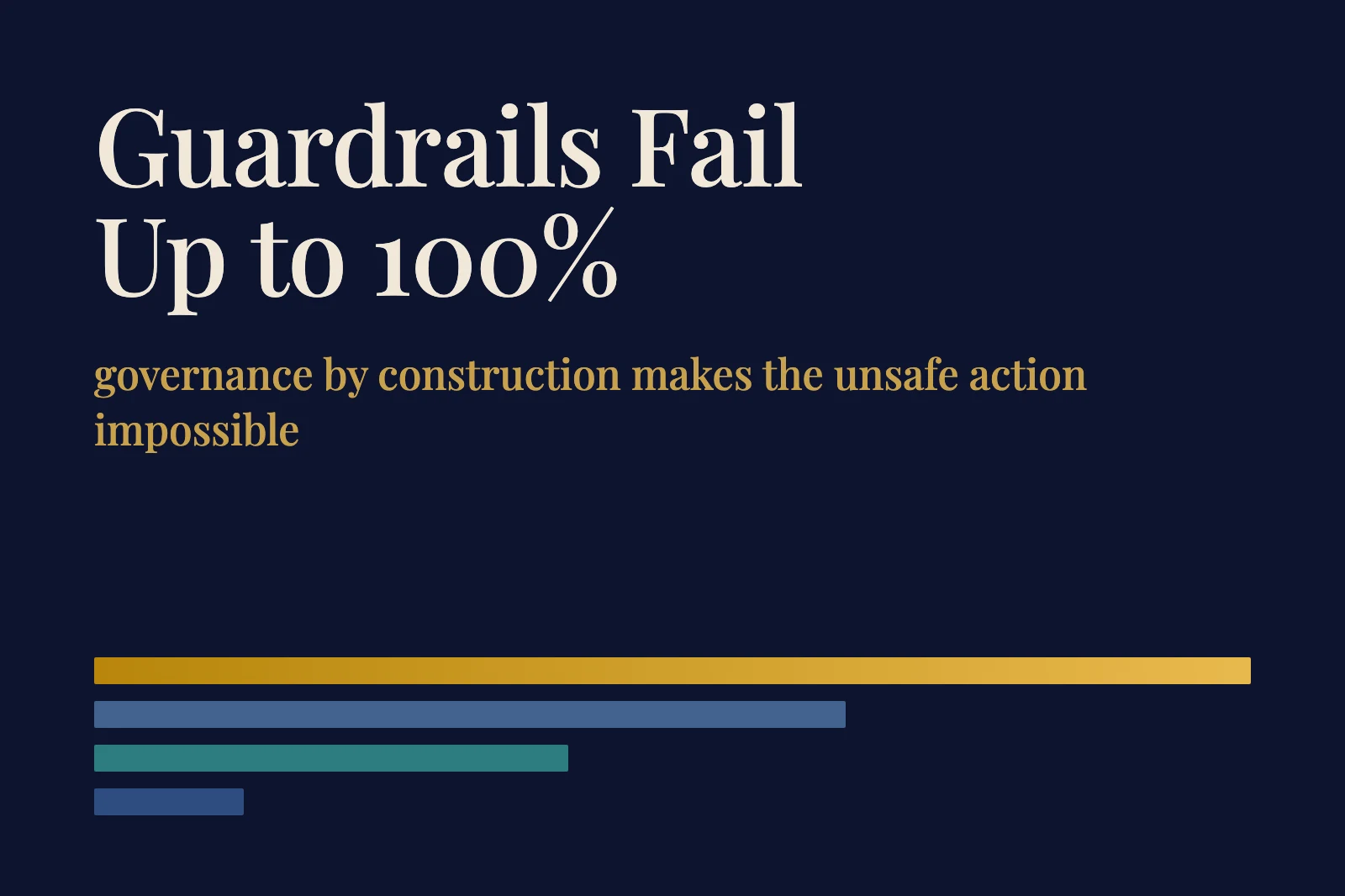
Six popular LLM guardrails were bypassed at 12–100% rates. Governance by construction builds the unsafe action out of the agent - nothing left to evade.

Yes - in most major markets, with duties attached. We tracked 17 jurisdictions: 8 permit with guidance, 2 restrict (EU, Qatar), 7 say nothing at all.

1,598 verified court cases now involve AI-fabricated citations, up from 200 a year ago. Landmark sanctions, the rate curve, and the fix. Updated monthly.

The 2026 map of legal AI in MENA: named startups across 8 countries, who has raised what (HAQQ's $3M leads), and Harvey's entry through Al Tamimi.

From CourtListener to Mike: the full 2026 map of open source legal software, what HAQQ ships back, and why the real bottleneck is data, not models.

Copy-ready AI prompts for lawyers by practice area, the Role + Context + Task + Format formula, seven techniques, and a free 168-prompt library.

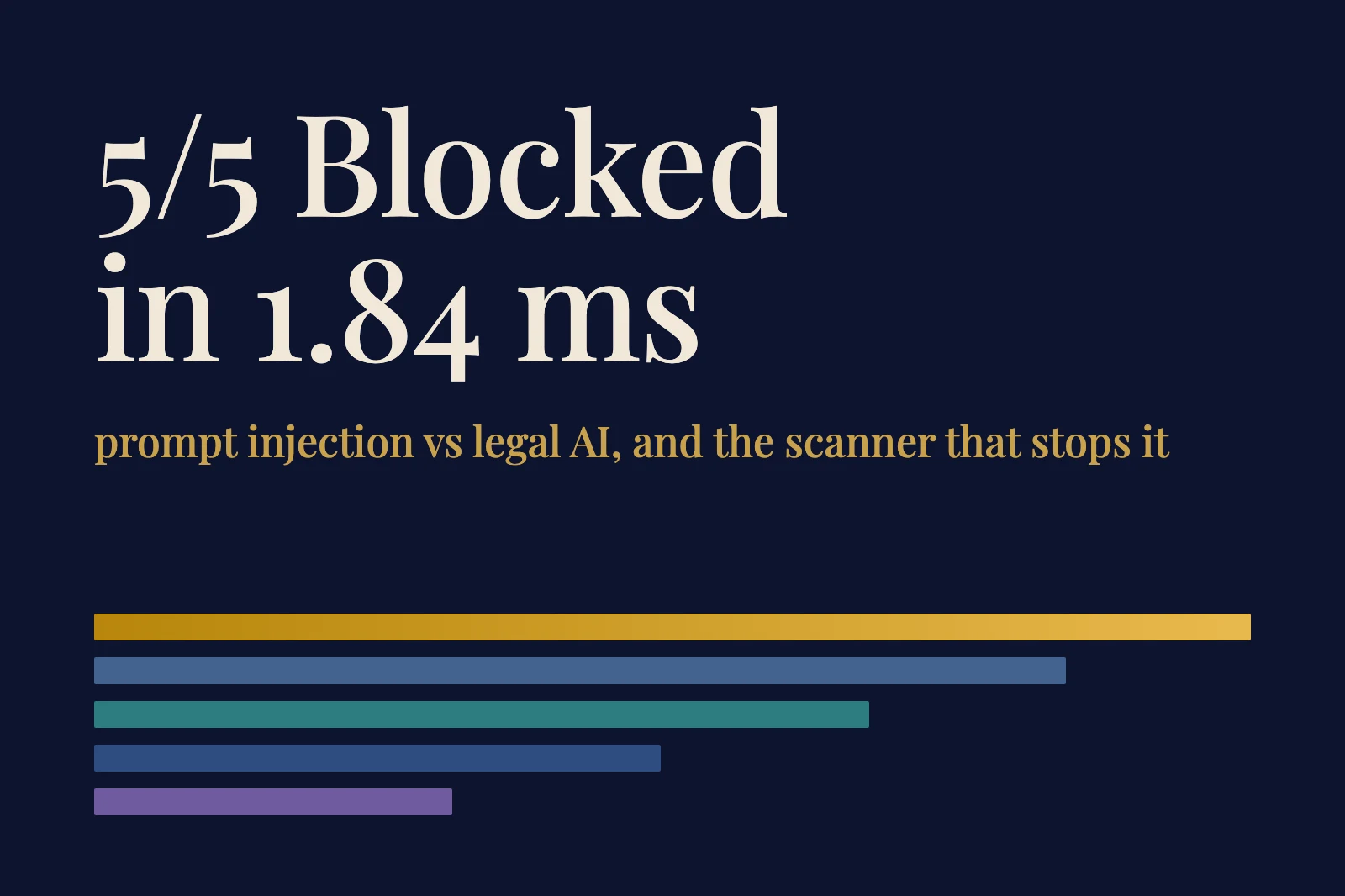
Five adversarial NDAs, five prompt-injection payloads, one zero-dependency scanner - all blocked in under 2 ms. How injection hits legal AI and what stops it.

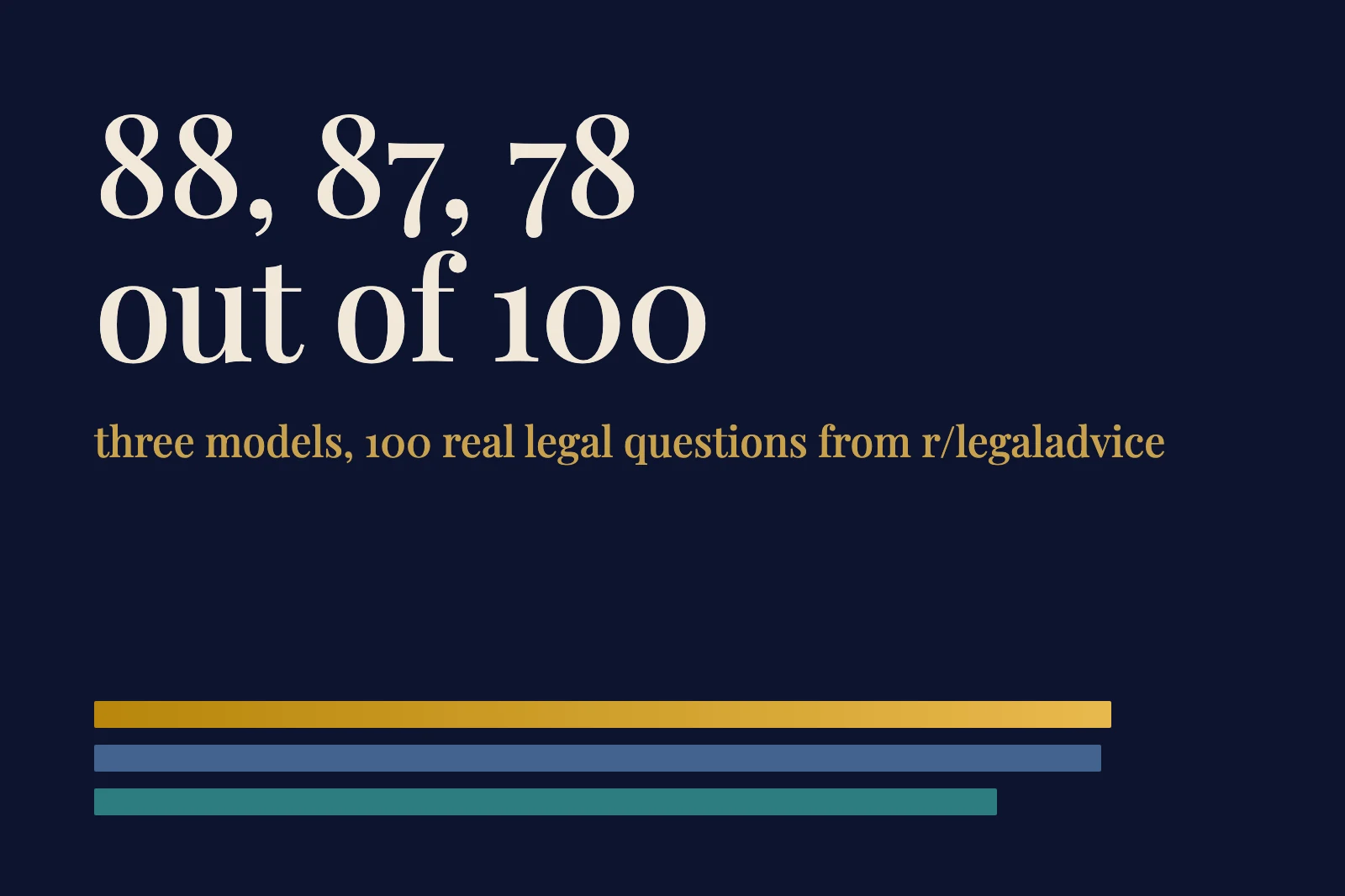
We scored Claude, GPT-4o and Gemini on 100 real legal questions from r/legaladvice. Pass rates 78–88% - and the weakest dimension wasn't accuracy.

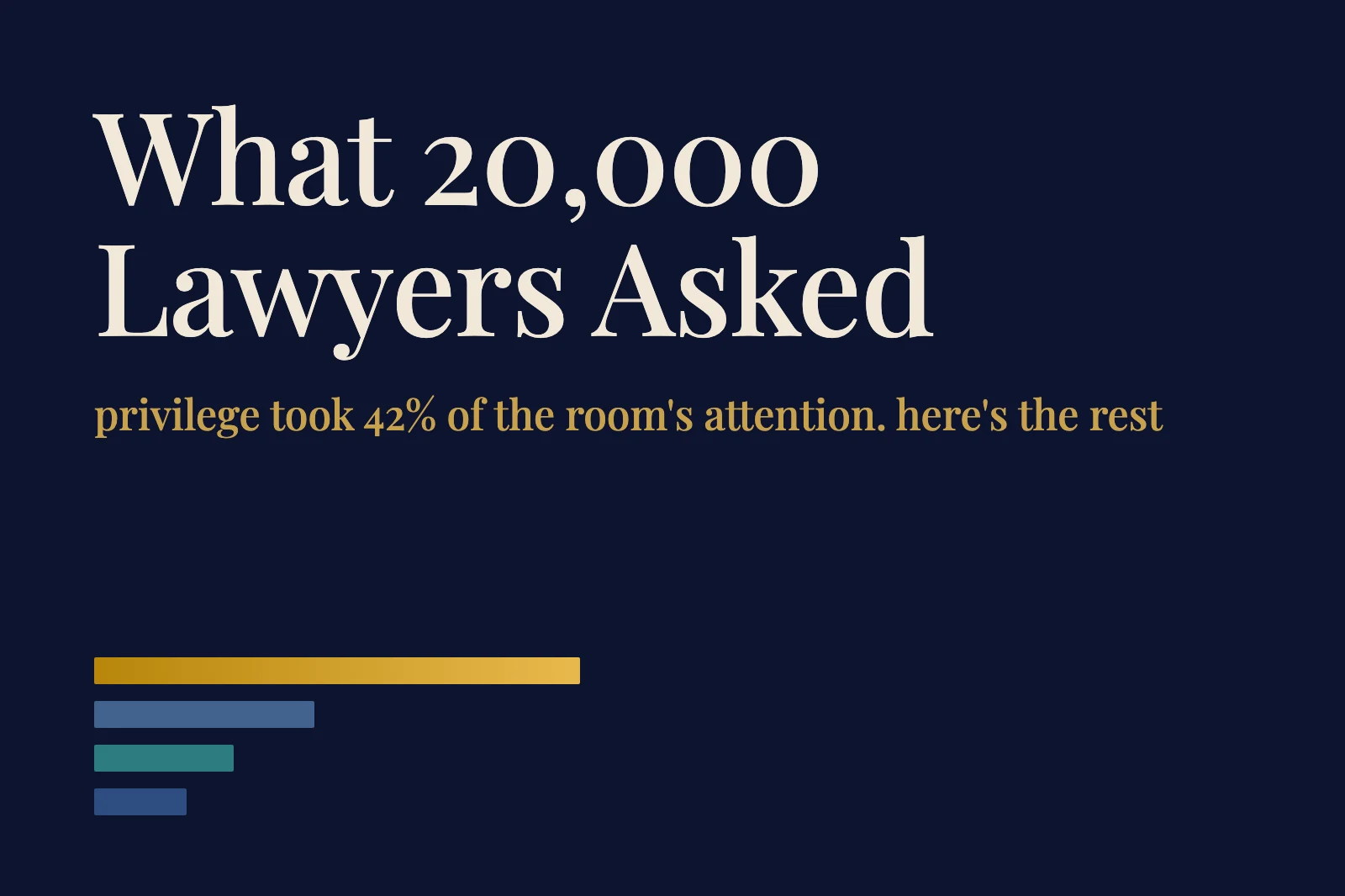
Anthropic's legal webinar drew 20,000 registrants and 51 upvoted questions. What lawyers asked about privilege, hallucinations and Claude - answered.

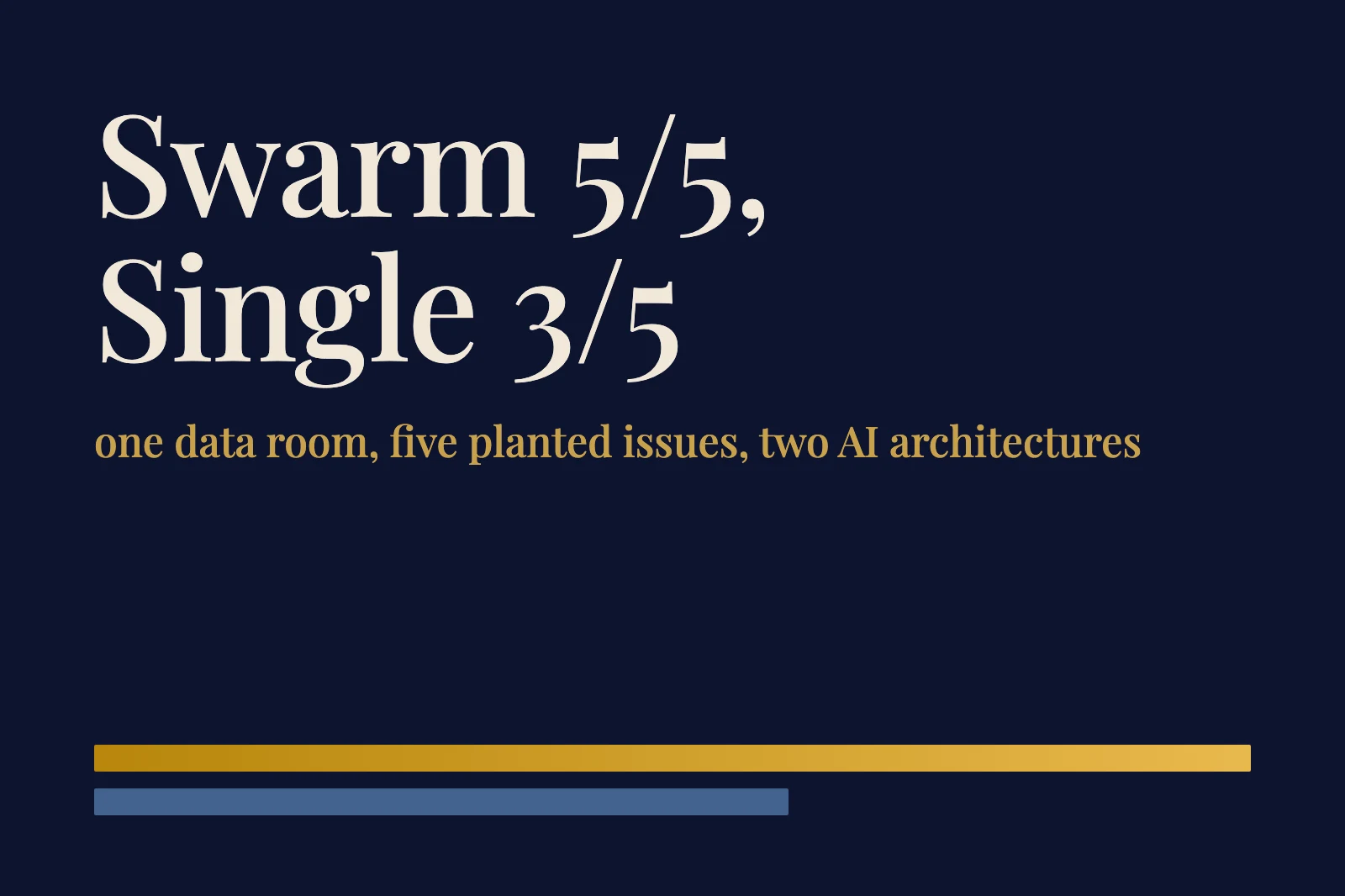
Same model, same 30-doc data room. A single prompt caught 3/5 planted issues; a 3-agent swarm caught 5/5. The misses are structural - here is why.

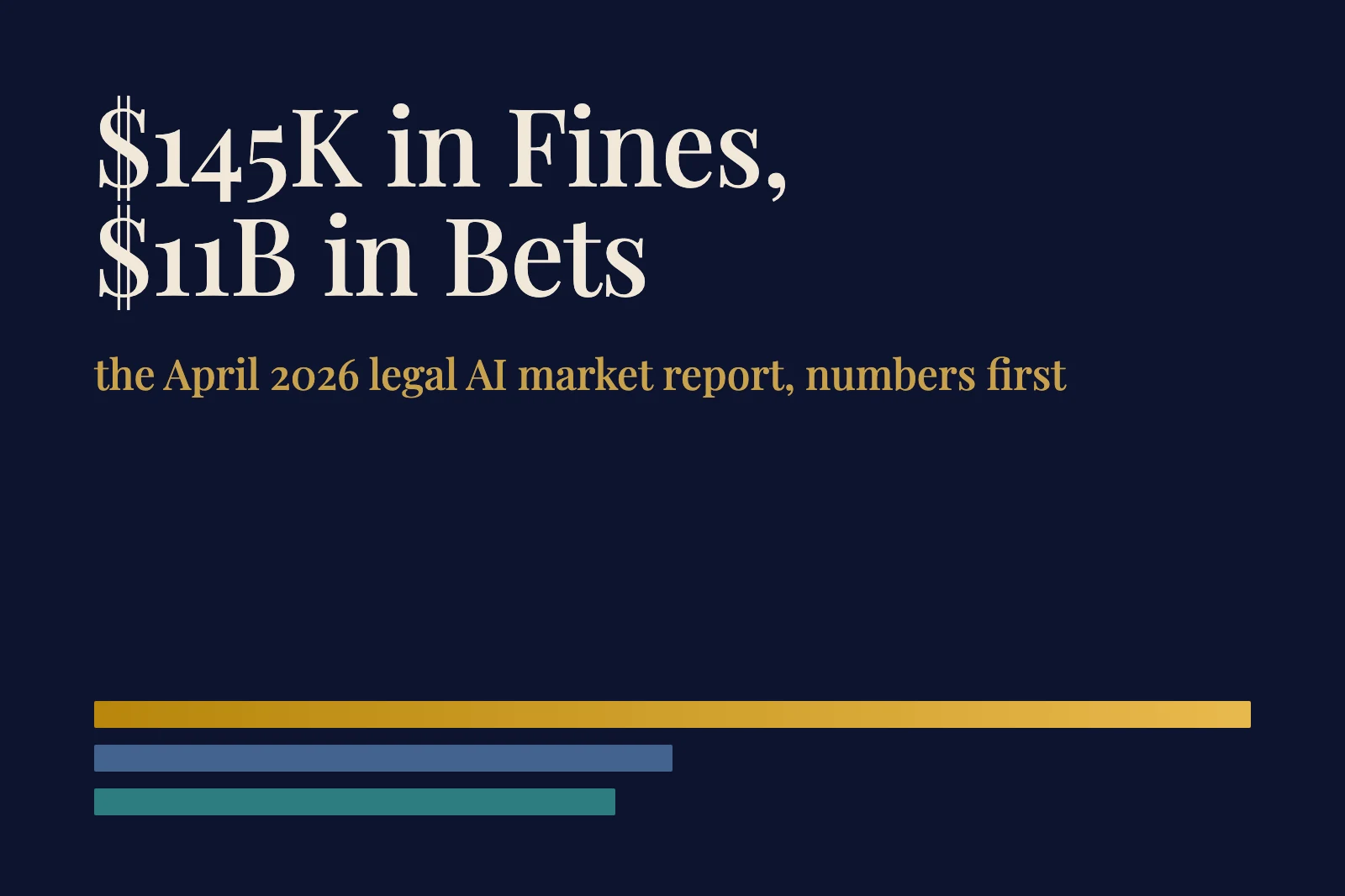
Q1 2026: $145K in AI sanctions, Harvey at $11B, Legora $5.55B, and a ruling that public AI outputs aren't privileged. The full legal AI market report.

1,372 long-horizon legal tasks, 24 practice areas, ~78,000 rubric criteria, all-pass grading. The first legal agent benchmark built for civil law and MENA.

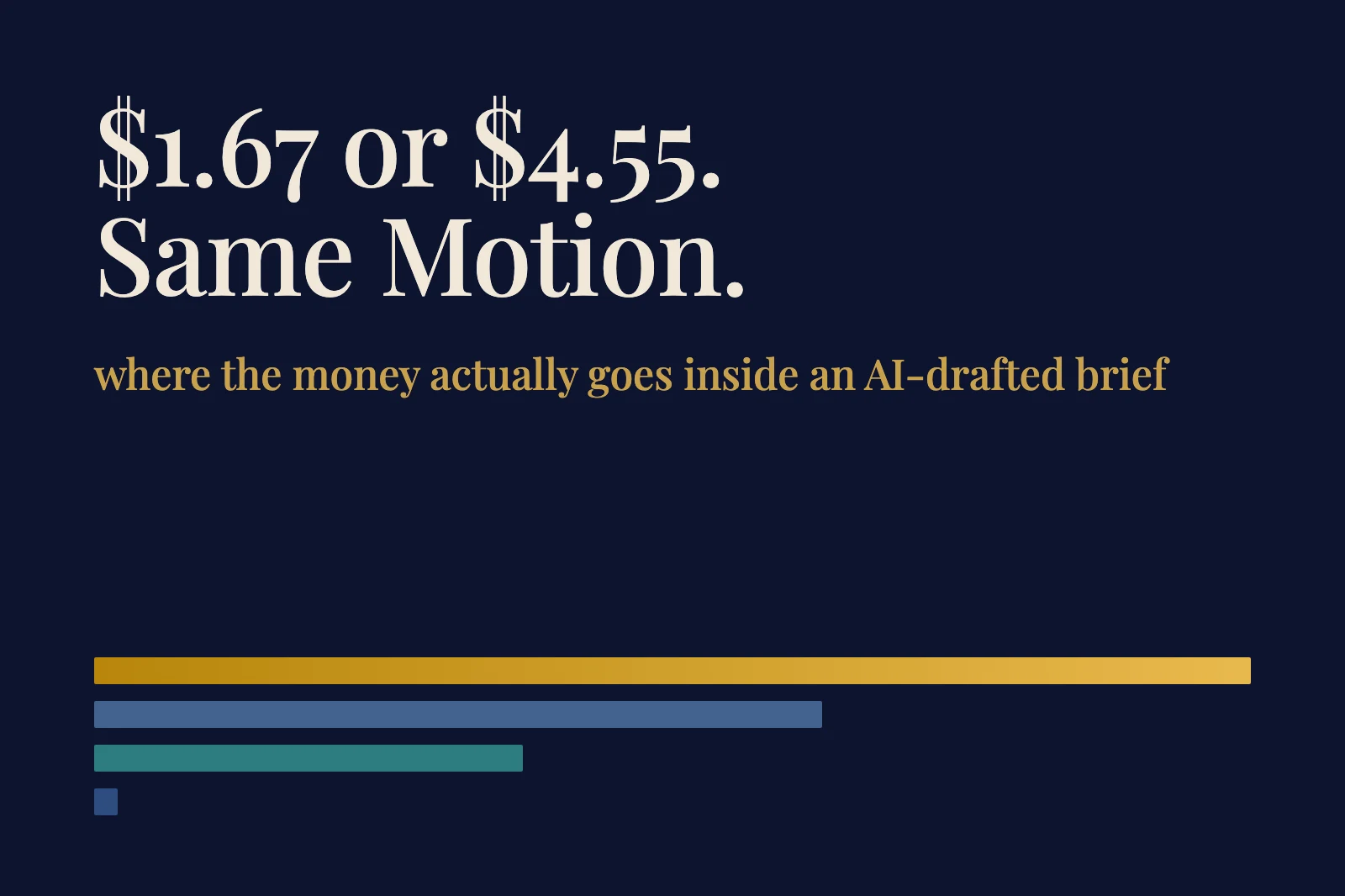
An AI-drafted motion to dismiss costs $1.67 - or $4.55 if you run everything on the biggest model. Where the money goes, stage by stage, and the fix.

Project Workspaces gives every legal matter one home: a unified file library, linked eFirm records, and project-scoped AI chats. Available on all paid plans.

Three US attorneys asked how HAQQ differs from ChatGPT. The answer: a 20-page NDA cross-analysis in 90 seconds and an engine that says 'I don't know'.

45 red flags across 8 criteria - security, privacy, robustness, cost - to check before signing any legal AI contract. From the first buyer-led framework.

Claude for Word is genuinely good - but data deleted in 30 days, no audit logs, and a Team/Enterprise paywall matter for law firms. The honest breakdown.

Claude drafted real co-founder and IP agreements; HAQQ found 13 critical issues plus 5 German-law fixes Claude missed. Five rounds, 10 pages to 32.

A legal ontology replaced 300 MCP tools with 7 and cut AI costs from $0.60 to $0.02 per message. Why RAG fails for law, plus the 7-step build playbook.

We ran 3 parallel simulations with 72 AI agents and 1,543 interactions to score legal AI's future: Harvey IPO odds, AI malpractice settlements, BigLaw cuts.

A partner cross-references six years of depositions in 90 seconds with NotebookLM. What AI memory tools do well for lawyers - and where they stop.

HAQQ and Tawqi3i join forces to combine AI-powered legal intelligence with secure digital signatures, enabling fully digital legal workflows across the region.

A real Series B secondary through a nominee SPV: preference stacks, ROFR timing, warranty survival gaps and the five places deals break in diligence.

HAQQ Inc has entered into a strategic partnership with ONEIC, establishing a framework to expand sovereign legal AI infrastructure in the Sultanate of Oman.

HAQQ Legal AI has raised $3M to date, led by Sowlutions Ventures, to scale its Justinian legal AI engine and practice management platform worldwide.

We made a frontier model impersonate a legal database. It refused to invent fake cases, then cited a real law for the wrong thing, the hallucination that survives a lawyer's review.

How divorce and family-law attorneys actually use AI across the matter, from intake to court prep, what stays human, and how to pick a tool that does not create a privilege or malpractice problem.

UAE divorce now runs on two tracks: the civil path under Federal Decree-Law No. 41 of 2022, and personal-status law. Here is which applies, what talaq and khula mean, and where AI helps.

A 2026 federal ruling says AI chats are not privileged. In a divorce, that turns your ChatGPT history into discoverable evidence. Here is what is safe, what is not, and how lawyers use AI inside the privilege.

An honest 2026 CLM benchmark: 13 vendors compared on AI, deployment, pricing and reviews, plus the real Gartner positions and ownership map nobody shows.

Spellbook is great inside Microsoft Word. For solo, mobile-first or Arabic-speaking lawyers, here are the real alternatives by price, platform and language.

HAQQ CEO Antoine Kanaan on building a legal AI for everyone: closing the justice gap for 5 billion people, why every lawyer must adopt AI, and why HAQQ started in Lebanon.

What you're owed if you're dismissed or resign in the UAE: end-of-service gratuity (21/30 days), arbitrary-dismissal compensation, and how to file a MOHRE complaint.

Your rights when breaking a tenancy or facing eviction in Dubai: the 12-month notice rule, rent-increase caps (RERA index), early-termination penalties, and the Rental Disputes Center.

When you resign or are terminated in the UAE: work-permit cancellation, the grace period to stay, moving to a new employer, labour bans, and passport rules.

How end-of-service gratuity works under Saudi Labor Law: the half-month/full-month formula, what you get if you resign (Article 85), and unfair-dismissal compensation (Article 77).

How end-of-service indemnity and arbitrary dismissal work under Kuwait Labour Law No. 6 of 2010: the indemnity formula, resignation tiers (Art. 53), notice, and PAM disputes.

Qatar's end-of-service gratuity (3 weeks/year on basic wage, not 21/30), notice under Decree-Law 18/2020, and arbitrary-dismissal remedies under Law No. 14 of 2004.

Bahrain's leaving indemnity (Art. 116), the 2024 SIO change for expats, and arbitrary-dismissal compensation (Art. 111: min 1, max 12 months) under Law No. 36 of 2012.
Oman's new 2023 Labour Law (RD 53/2023): end-of-service raised to one month per year (Art. 61), notice (Art. 38), and arbitrary-dismissal remedies (Art. 11).

Egypt's new Labour Law No. 14 of 2025: arbitrary-dismissal compensation (2 months/year, Art. 165), 3-month notice (Art. 156), and the new resignation-ratification rules.

Jordan: Art. 32 indemnity vs Social Security coverage, arbitrary-dismissal compensation (Art. 25), notice (Art. 23), and filing via the Hemayeh platform.

Lebanon: NSSF end-of-service indemnity (1 month/year), arbitrary-dismissal damages (Art. 50: 2–12 months), notice tiers, and the impact of the currency crisis on payouts.

Federal Iraq under Labour Law 37/2015: restricted termination grounds, two-weeks/year gratuity, 30-day notice, and the Service Termination Committee vs labour court route.

Morocco's Labour Code (Law 65-99): severance after 6 months (Art. 53 hours tiers), unfair-dismissal damages (Art. 41: 1.5 months/year, cap 36), notice and the 90-day deadline.

Tunisia's Labour Code: severance one day/month capped at 3 months (Art. 22), unfair-dismissal damages 1–2 months/year capped at 3 years (Art. 23 bis), notice and the 1-year deadline.

Algeria under Law 90-11: dismissal only for serious misconduct (Art. 73), unfair-dismissal remedy of reinstatement or min 6 months' salary (Art. 73-4), notice and the 6-month deadline.

Saudi tenancy via Ejar/REGA: no national rent cap (Riyadh 5-year freeze), 5% deposit cap, no self-help eviction, and the Enforcement Court route.

Kuwait Lease Law 35/1978 (amended 2024): 5-year rent freeze, the 50%-below-market increase rule, eviction grounds, and the Rental Division.

Qatar Law 4/2008: no active rent cap, eviction grounds, 2-month deposit cap, and the Rent Disputes Settlement Committee (hotline 184).

Bahrain Law 27/2014: rent +5% after 2 years (Art. 27), no eviction in first 3 years (Art. 35), Article 38 grounds, and the Rents Disputes Committee.

Oman RD 6/89 + new RD 12/2025: no increase for 3 years then 7%/yr, no termination before 4 years, and the new 90-day dispute committee.

Egypt's two rent regimes and the 2025 old-rent reform: zone-based recalculation, 15% annual rise, the 7-year phase-out, and fast-track eviction.

Jordan Owners & Tenants Law 11/1994: old vs new contracts (31 Aug 2000 cutoff), no self-help eviction, and succession protection (Art. 7).

Lebanon's 23 July 1992 split: COC 3-year protection for new leases, the old-rent phase-out (2014/2017 reform), and court-only eviction.

Federal Iraq Lease Law 87/1979: 5% annual rent cap, enumerated eviction grounds, automatic lease extension, and the 15-day notary cure.

Morocco Law 67-12 + 07-03: rent revision capped at 8% after 3 years, 2-month eviction notice, and a deposit capped at 2 months (Art. 20).

Tunisia: residential leases under the COC (Arts. 727–804), no general rent control, court-only eviction (Art. 796), and old protected tenancies (Law 76-35).

Algeria's Civil Code as amended by Law 07-05: free fixed-term leases, the mandatory written/dated lease (Art. 467 bis), and 2-month early-exit notice.

Saudi work permits and the Iqama after the 2021 Labor Reform: Qiwa sponsor transfer without consent, final exit, Premium Residency, and the passport-withholding ban.

Kuwait's Article 18 work-and-residence visa: the new residency law, sponsor transfer (3-year rule), the 2025 exit permit, and family-sponsorship income.

Qatar after Law 18/2020: NOC abolished, exit permits removed for most, the residence-permit grace period (reduced to 14 days), and the passport ban.

Bahrain's LMRA work permit and residence: sponsor transfer after one year, the self-sponsorship Flexi Permit, family-sponsorship income, and the passport ban.

Oman's labour clearance and ROP visa: the abolished NOC / 2-year ban (since 2021), conditions to transfer, family-sponsorship income (OMR 150), and the passport ban.

Syria: unjustified-dismissal compensation of 2 months/year capped at 150× minimum wage (Art. 65), end-of-service gratuity (Art. 63), and 2-month notice (Art. 56).

Libya: court-set unjustified-dismissal compensation (Art. 76), end-of-service reward for non-nationals (Art. 78), 30-day notice (Art. 71), and the conciliation/arbitration route.

Yemen: end-of-service gratuity of 1 month/year (Art. 120), arbitrary-dismissal compensation capped at 6 months, notice by pay period, and the region-dependent dispute forum.

How to set up a company in the UAE: mainland 100% foreign ownership, no LLC minimum capital, mainland vs free zone, and licensing under Decree-Law 32/2021.

Setting up in Saudi Arabia: 100% foreign ownership via MISA registration, the new Companies Law, capital expectations, and the Regional HQ program.

Setting up in Kuwait: the 49% cap vs 100% via a KDIPA license, the WLL (KD 1,000 capital), and MOCI registration under Companies Law 1/2016.

Setting up in Qatar: up to 100% foreign ownership under Law 1/2019, no LLC minimum capital, and mainland vs the Qatar Financial Centre.

Setting up in Bahrain: 100% foreign ownership in most sectors, no WLL minimum capital (Decree 28/2020), and registration via the Sijilat portal.

Setting up in Oman: up to 100% foreign ownership under the Foreign Capital Investment Law, the negative list, eased minimum capital, and the Invest Easy portal.

Setting up in Egypt: 100% foreign ownership in most sectors, LLC vs JSC capital, the exceptions (agency/import), and GAFI's one-stop-shop.

Setting up in Jordan: up to 100% ownership (50% cap on retail/wholesale, prohibited list), the abolished JOD 50,000 minimum, and CCD registration.

Setting up in Lebanon: 100% foreign-owned SARL, restricted sectors, SARL/SAL capital, the mandatory lawyer, and the post-2019 banking reality.

Setting up in federal Iraq: the 2019 reversal to a 49% foreign cap, 100% via an NIC license / branch / Kurdistan, IQD 1m minimum, and the Companies Registrar.

Setting up in Morocco: 100% foreign ownership in most sectors, no SARL minimum capital, the Office des Changes convertibility, and the CRI one-stop-shop.

Setting up in Tunisia: the 49% onshore cap vs 100% offshore-exporting, SARL/SA capital, the negative list, and the RNE one-stop platform.

Setting up in Algeria: the 51/49 rule lifted for non-strategic sectors (100% allowed), no SARL minimum capital, strategic-sector caveats, and the CNRC + AAPI.

A no-hype map of San Francisco's legal-AI startups in 2026: who they are, what they do, who they're for, and how much they raised, from Harvey to Ivo.

GC AI is built for US in-house teams at $500/seat/month. For solo, small-firm, civil-law or Arabic-speaking lawyers, here is an honest alternative.

Eve is an operating system for US plaintiff injury firms. If you practice outside US litigation, here is the alternative built for you.

Ivo is enterprise contract review in Word at ~$6,000/seat/year. For solo, small-firm and multilingual lawyers, here is a mobile-first alternative.

Onit and HAQQ surface in the same searches but solve different problems. An honest comparison of Enterprise Legal Management vs an AI-native legal assistant - and which one you actually need.

What a free AI legal consultation can do in 2026: explain laws, review contracts, draft documents in Arabic or English - and when you still need a human lawyer.

An independent CoCounsel review backed by published benchmark scores: pricing, the Westlaw lock-in reality, and the best CoCounsel alternatives for 2026.

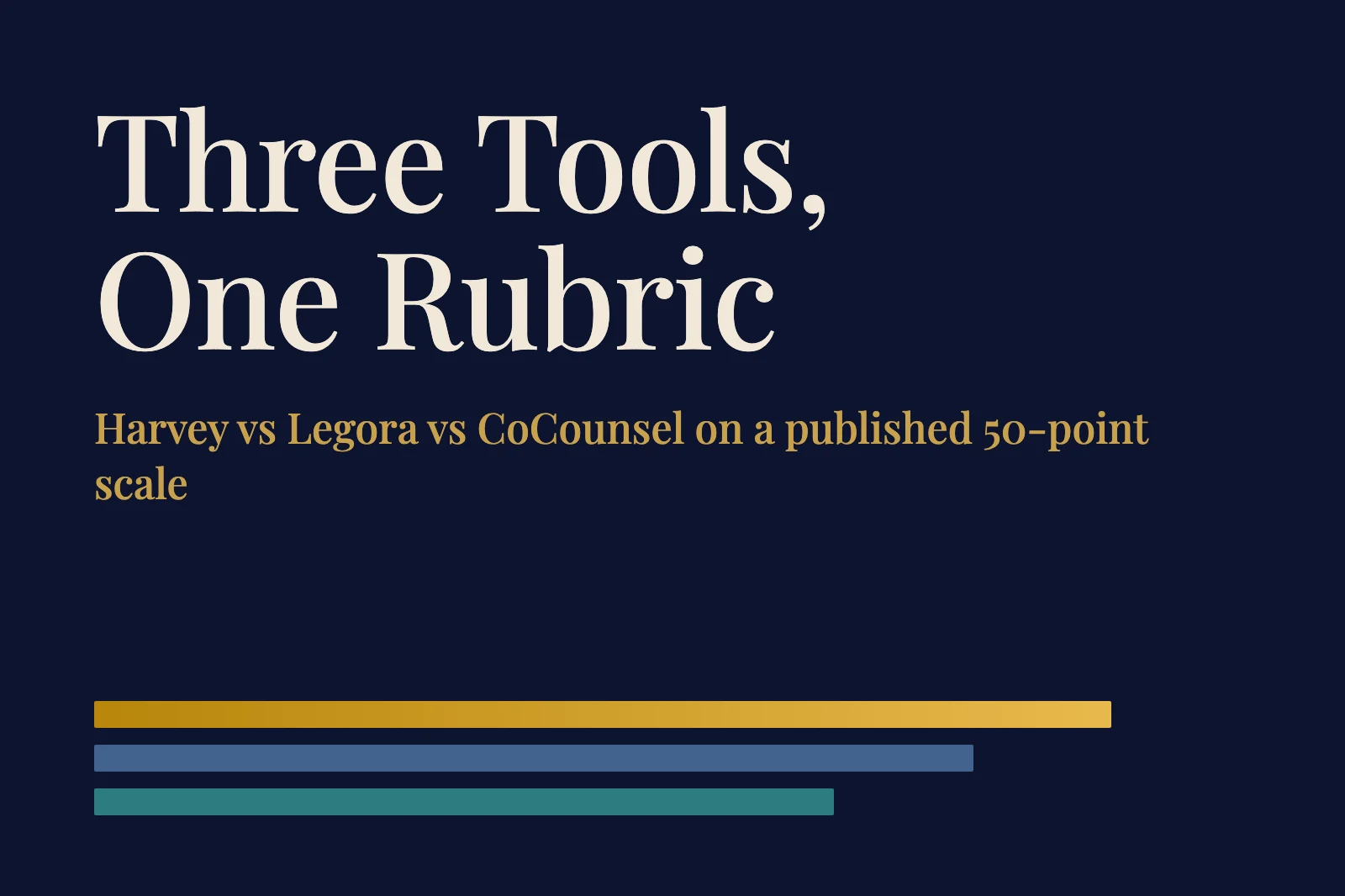
We scored Harvey, Legora, and CoCounsel on one published 50-point rubric: Harvey 38, CoCounsel 37, Legora 35. Closer to each other than to the top.

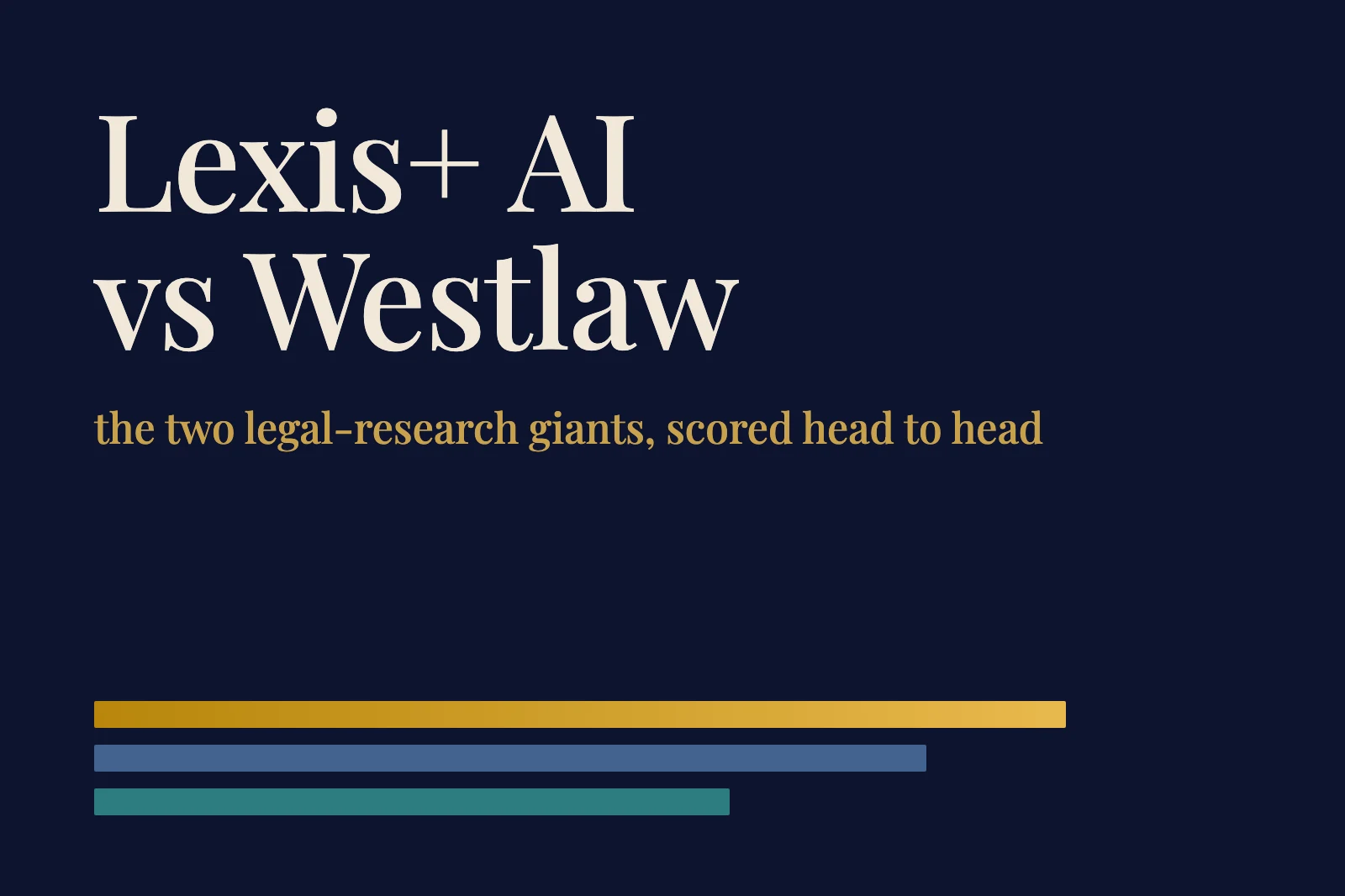
Lexis+ AI review vs Westlaw CoCounsel, scored on an independent 50-point benchmark. Lexis wins research (41), CoCounsel wins drafting. Pricing and the gap.

AI translates Arabic legal documents fast, but legal translation is not general translation. The Arabic traps, and when you still need a sworn translator.

How to calculate UAE end-of-service gratuity, notice and illegal-dismissal pay under Federal Decree-Law 33 of 2021, plus where AI helps with MOHRE complaints.

AI is replacing paralegal tasks, not paralegals. The data on what AI does well, what it fails at, and what paralegals should learn to stay valuable.

The best AI for contract drafting scored 47/50 on our benchmark; 24% of AI legal answers miscite law. The workflow that captures the speed without the risk.

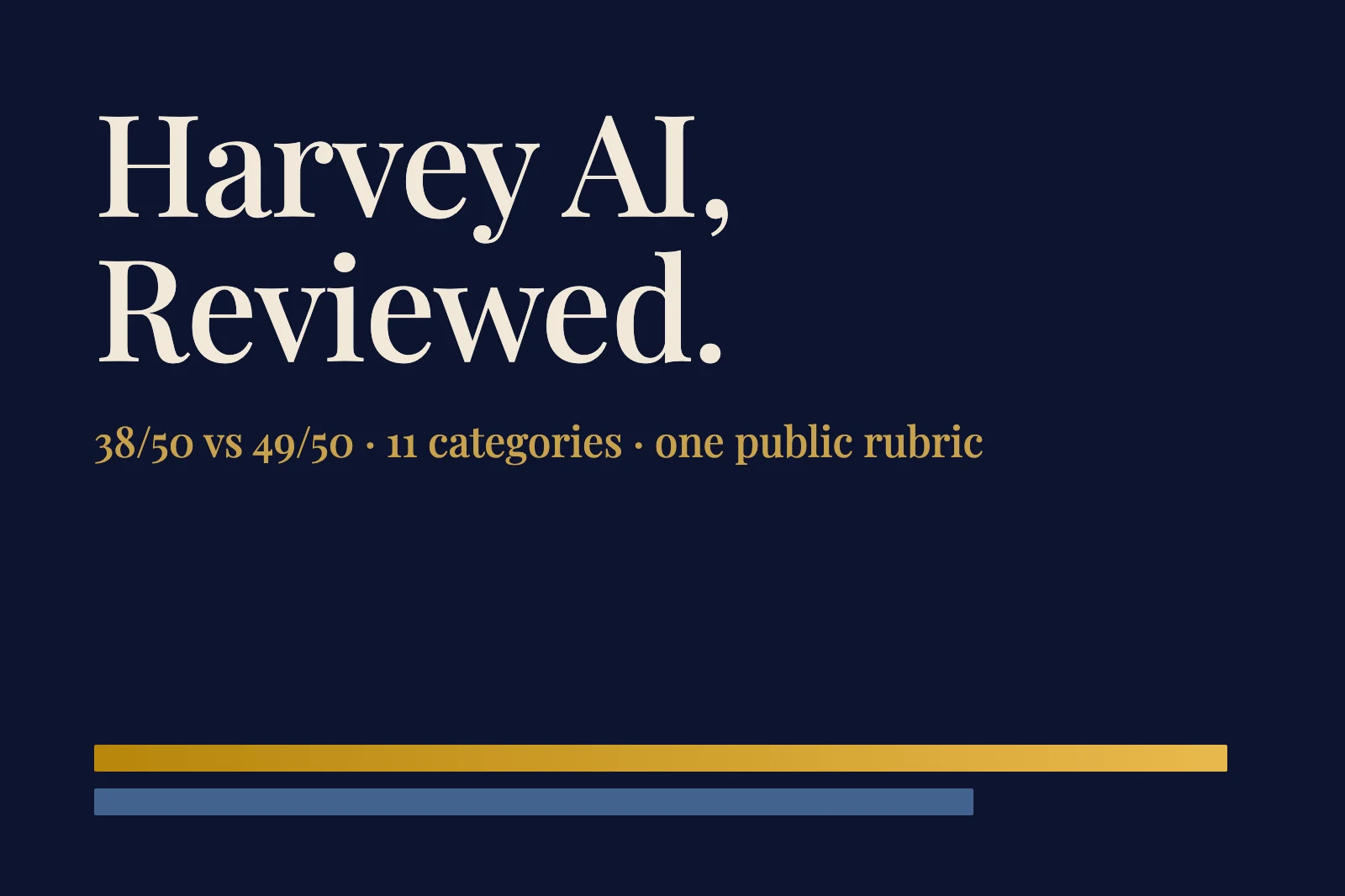
The only Harvey AI review with published benchmark scores: 38/50 vs HAQQ's 49/50. What Harvey does well, what it really costs, and alternatives by use case.

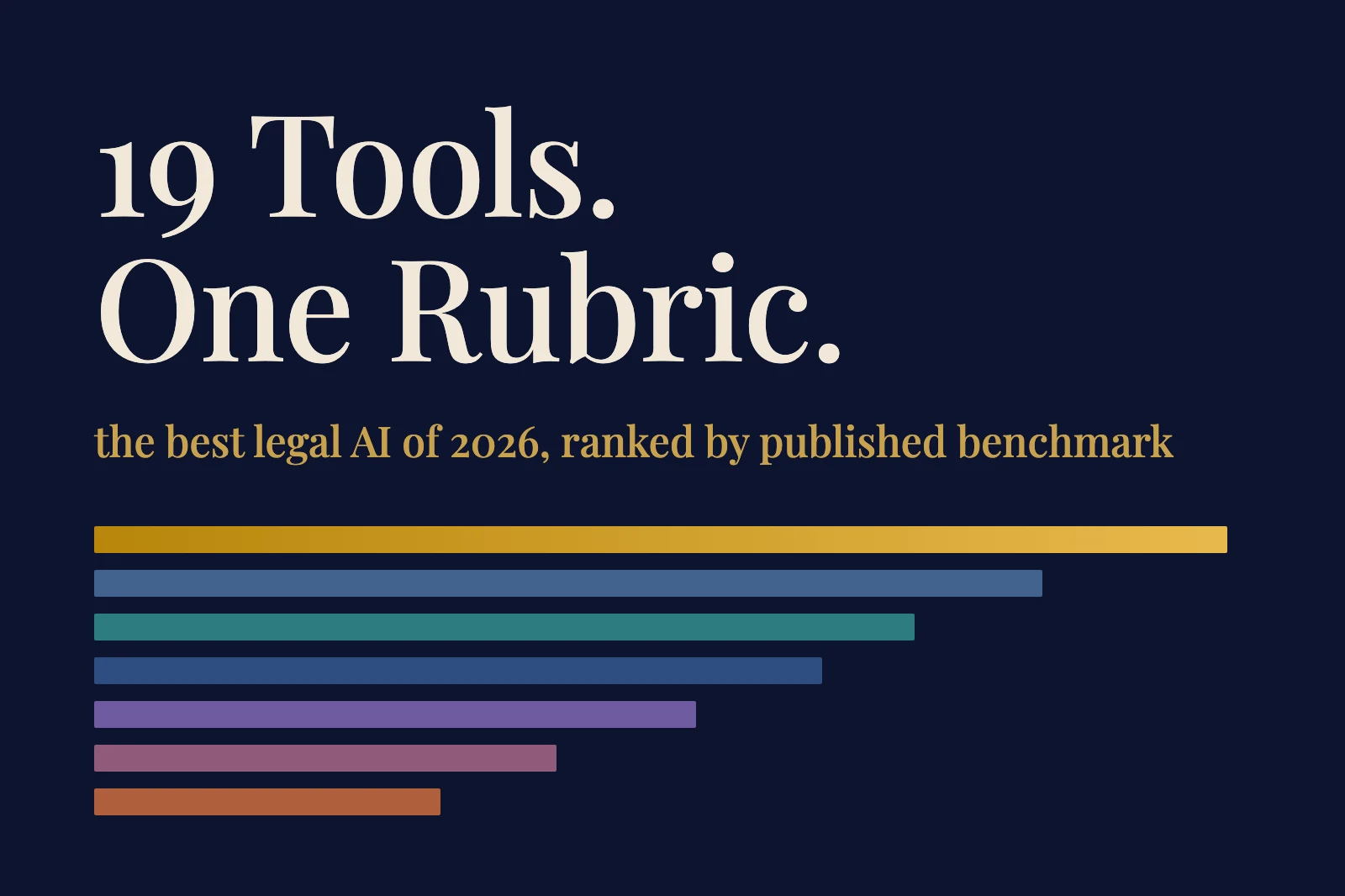
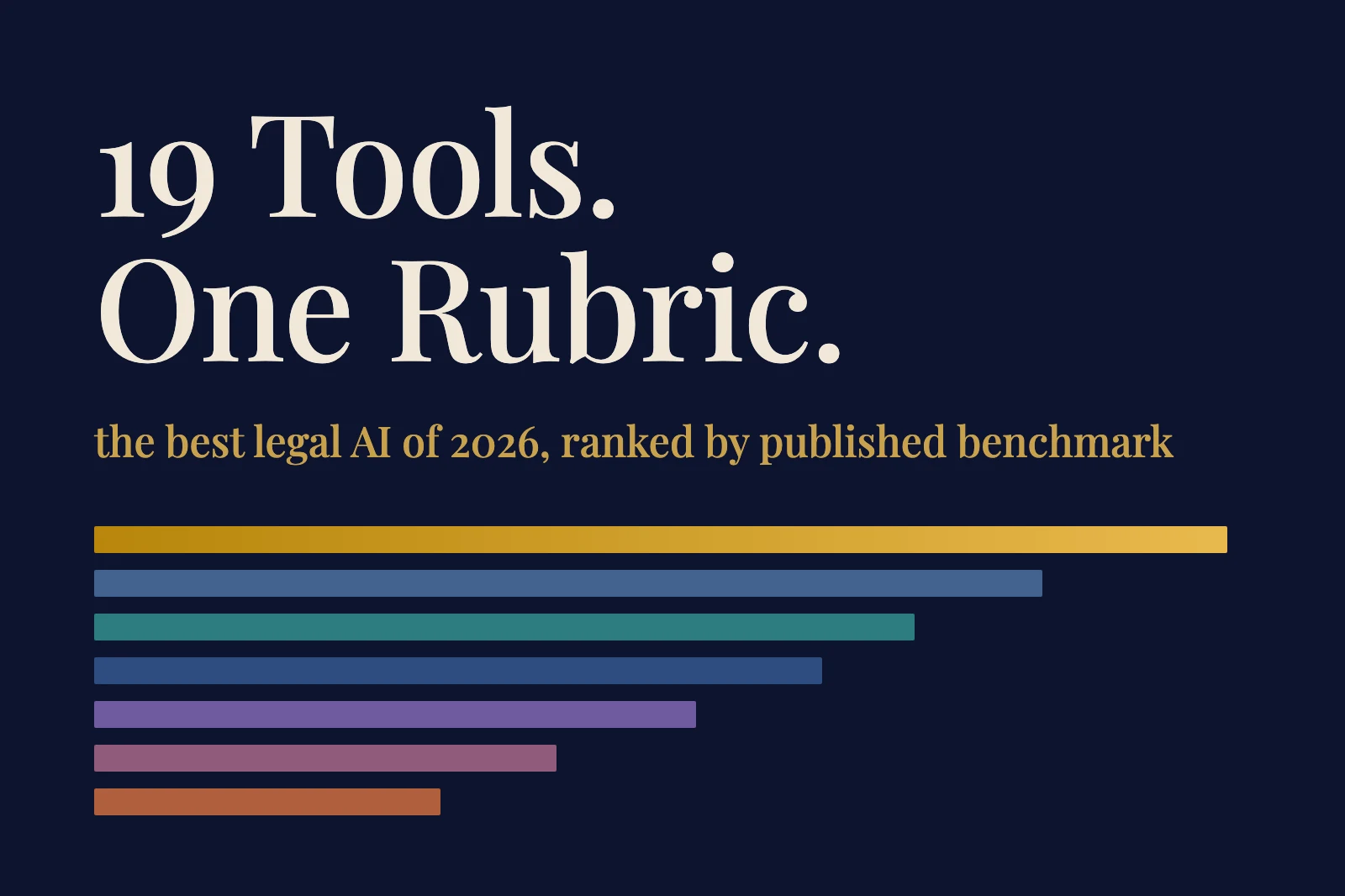
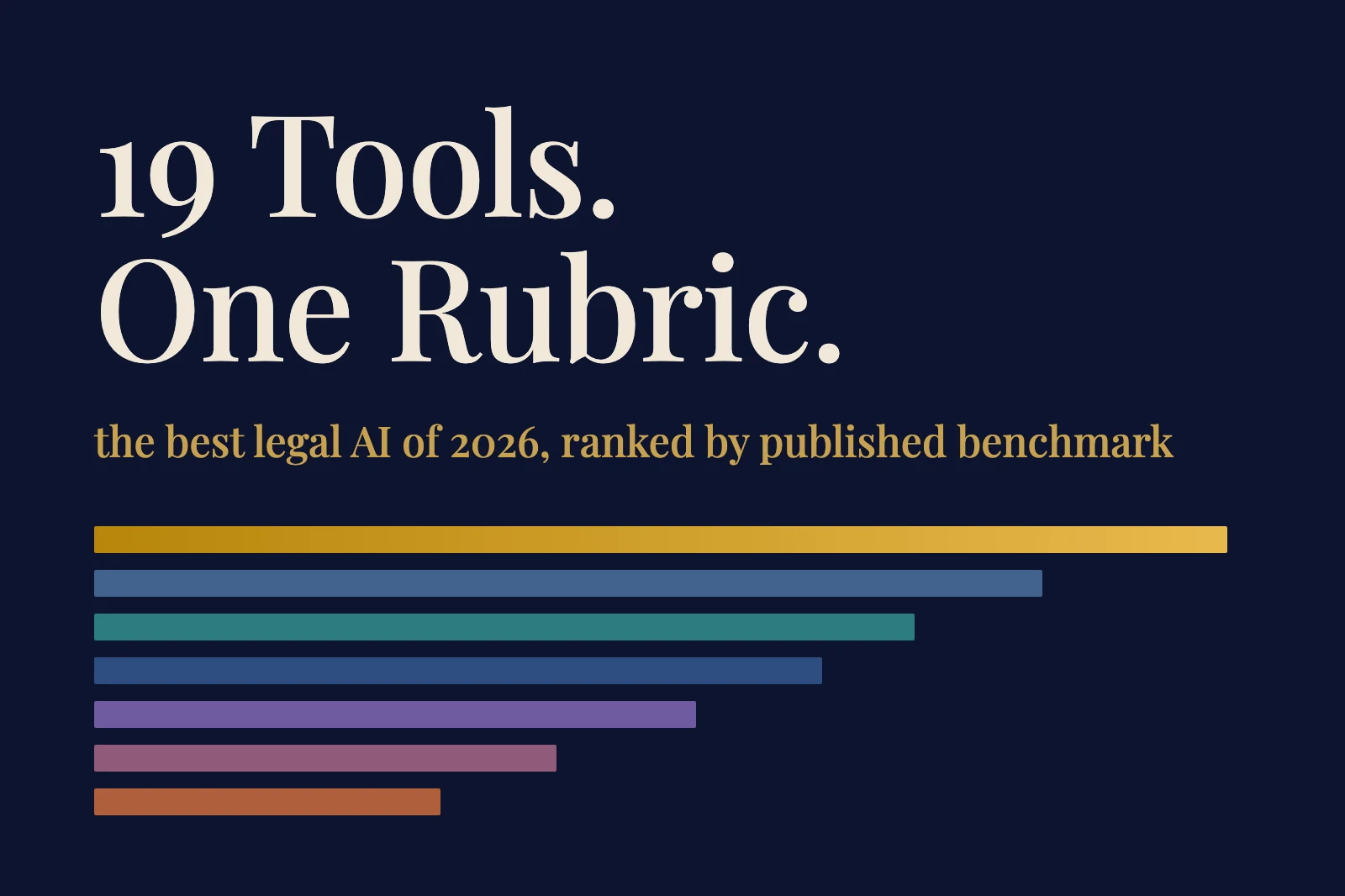
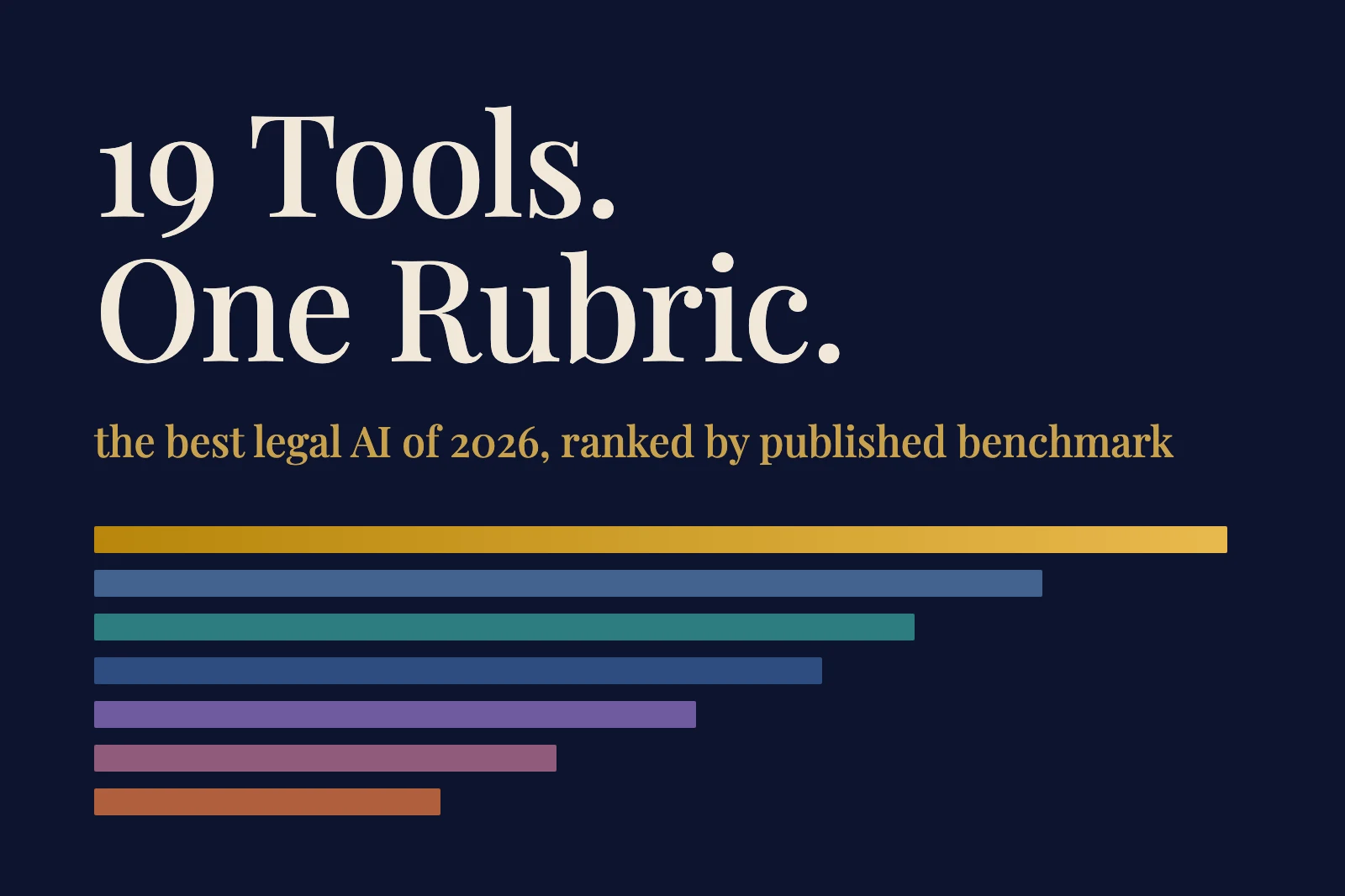
We scored 19 legal AI tools and frontier models on a published 50-point benchmark. The full ranking, what each tool is for, and why most lists lie.

What an AI lawyer can do in the UAE today: labour, tenancy, traffic, contracts. What is free, what is paid, Arabic support, and when you still need a human.

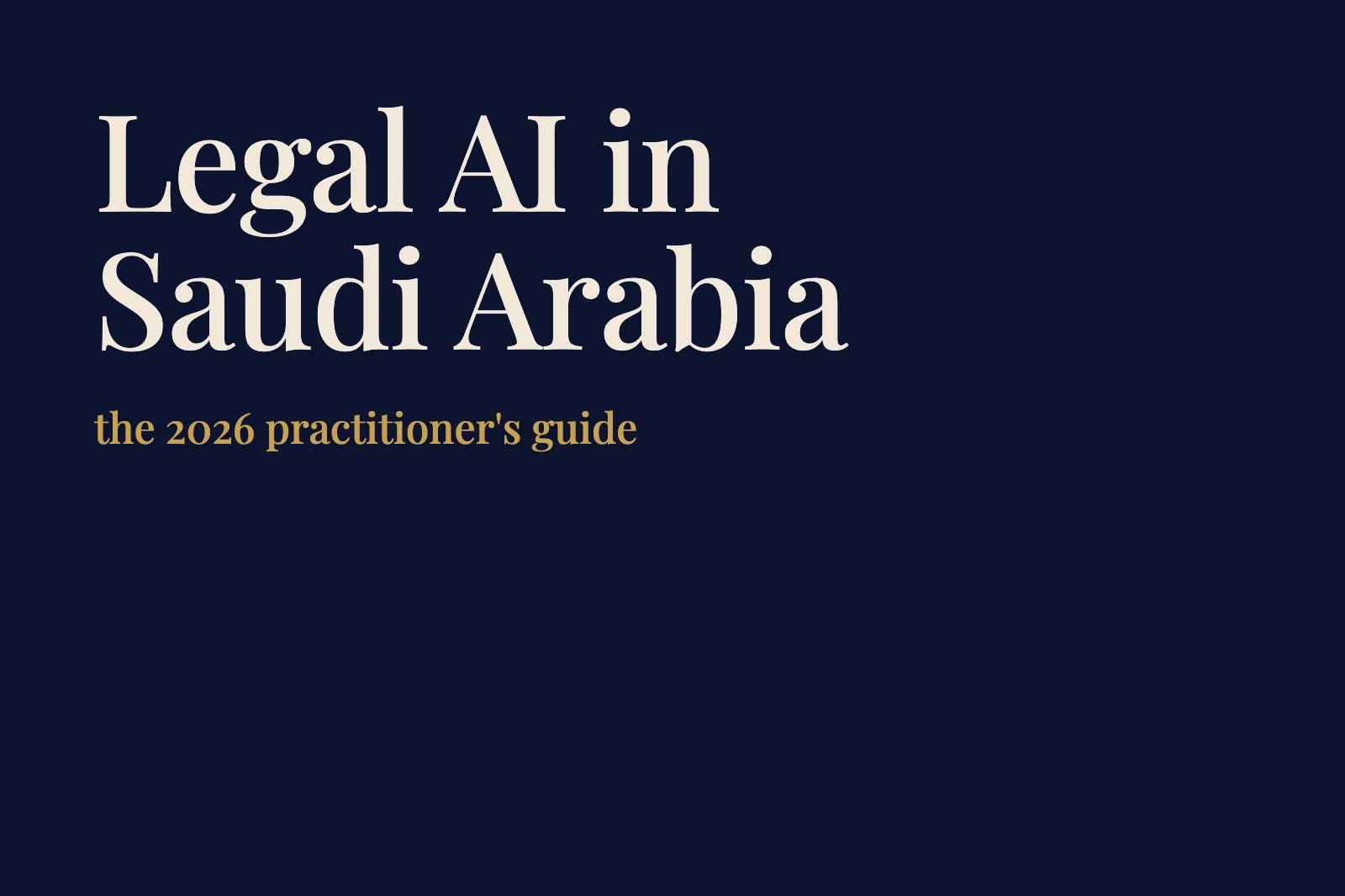
Saudi Arabia codified its civil law, digitized its courts, and grew MENA's deepest legal AI cluster. A practitioner's guide to tools, use cases and PDPL.

How many lawyers use AI in 2026? Between 26% and 92%, depending who you ask. 38 verified legal AI statistics, plus benchmark data nobody else has.

Can AI give legal advice? Legally no, and we are the only ones who measured the rest: 3 frontier models, 100 real legal questions, 78-88% pass rates.

Solo and 1-10 lawyer firms don't need six subscriptions. Real cost math, 3,000 graded answers, and the 5 capabilities that actually matter in legal AI.

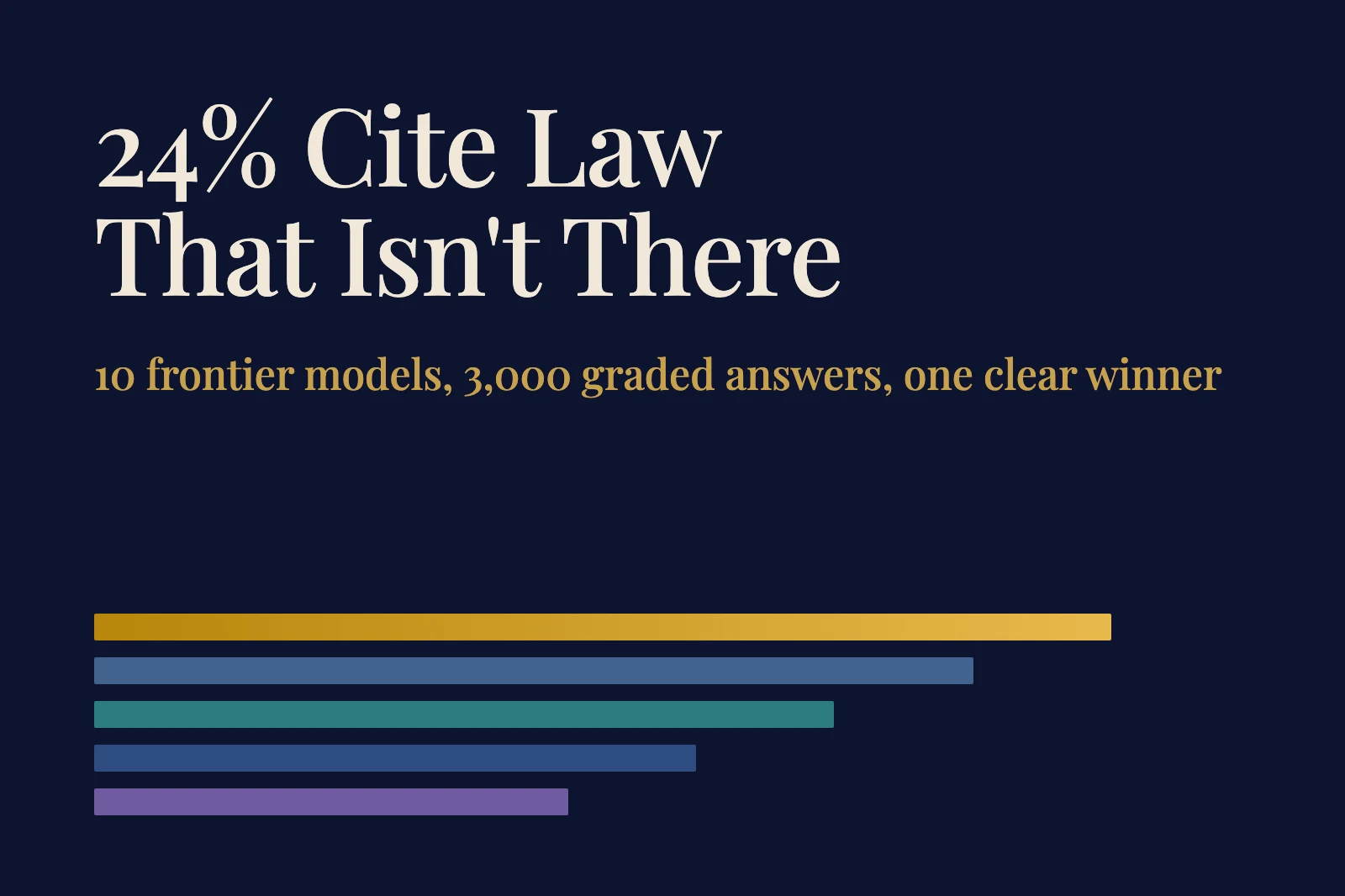
We graded 3,000 answers from 10 frontier models on 300 legal tasks. Claude Opus wins, GPT-5.5 is most accurate - and 24% cite law that doesn't back them.

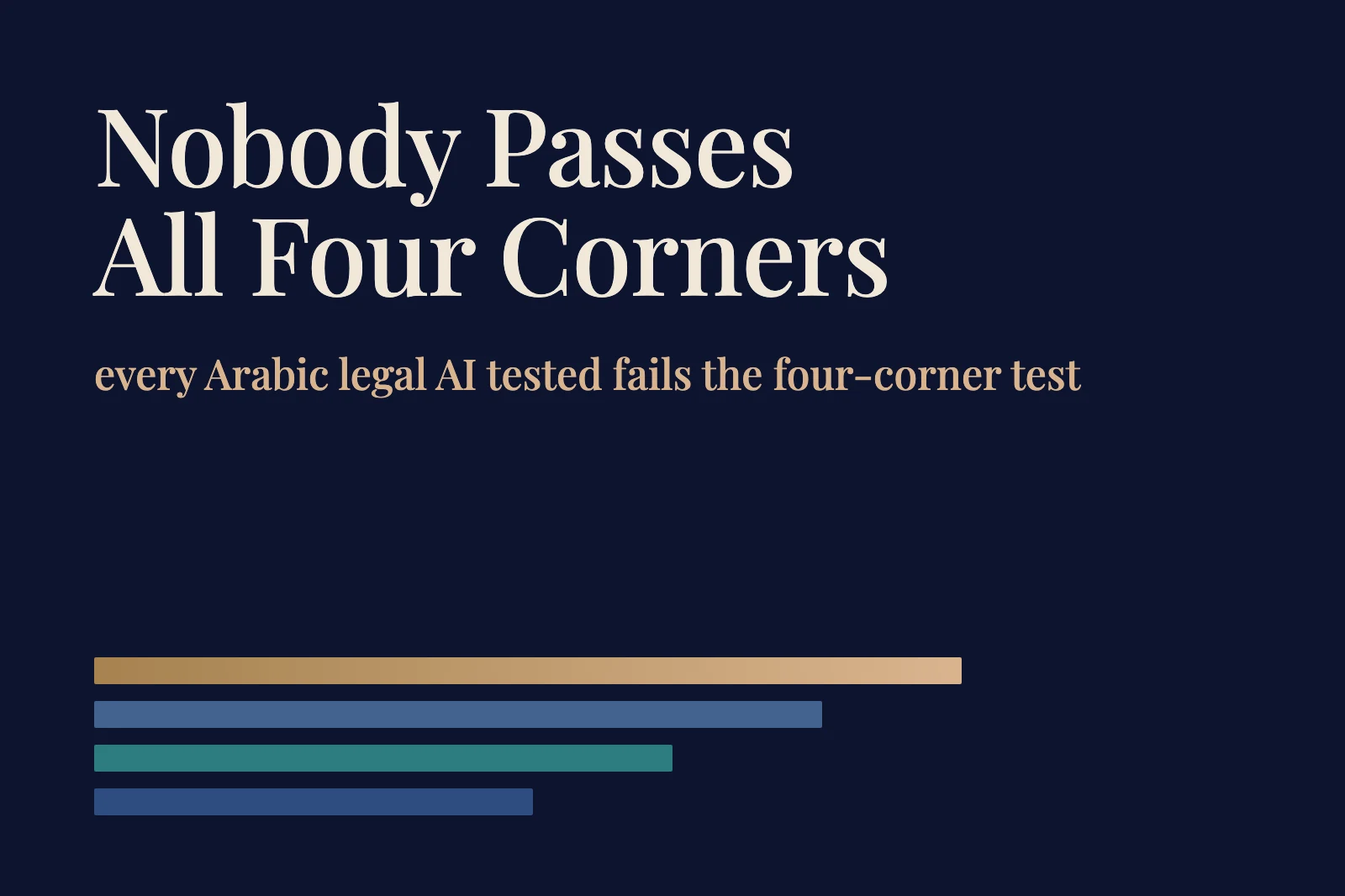
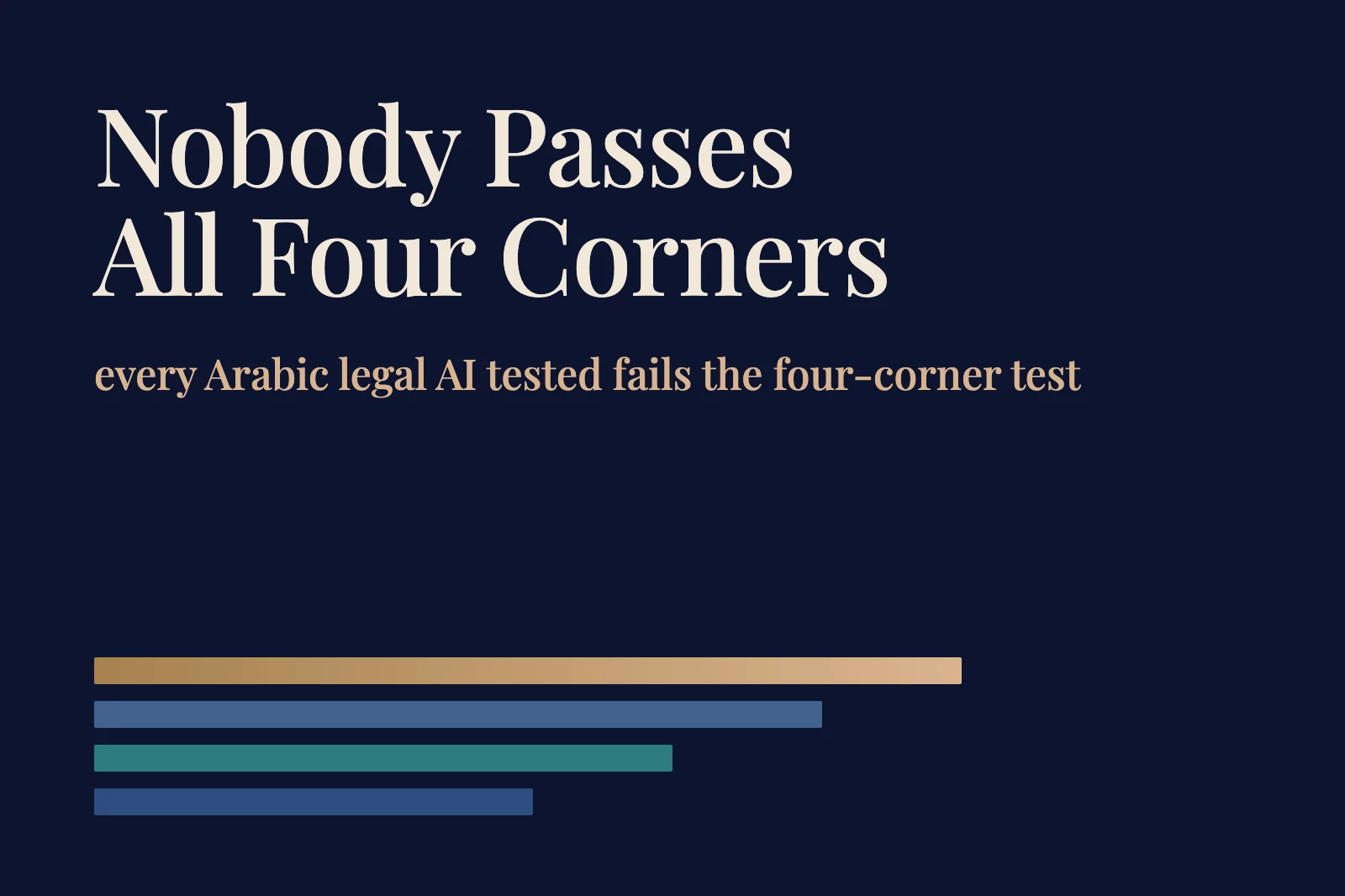
18 Arabic legal AI products compared - Adel, Shwra, Arabic.ai, Laiwyer - on four corners: consumer, mobile, multi-country, native Arabic. None hits all four.

We mapped all ~110 consumer AI lawyer apps - ratings, pricing, jurisdictions, and what AI is inside. Only 1 of 110 discloses its model. The honest list.

Lawyers in Dubai bill AED 500–5,000+/hr; UAE contingency fees are now capped at 25%. Real 2026 fee ranges by matter type, plus the AI-assisted cost.

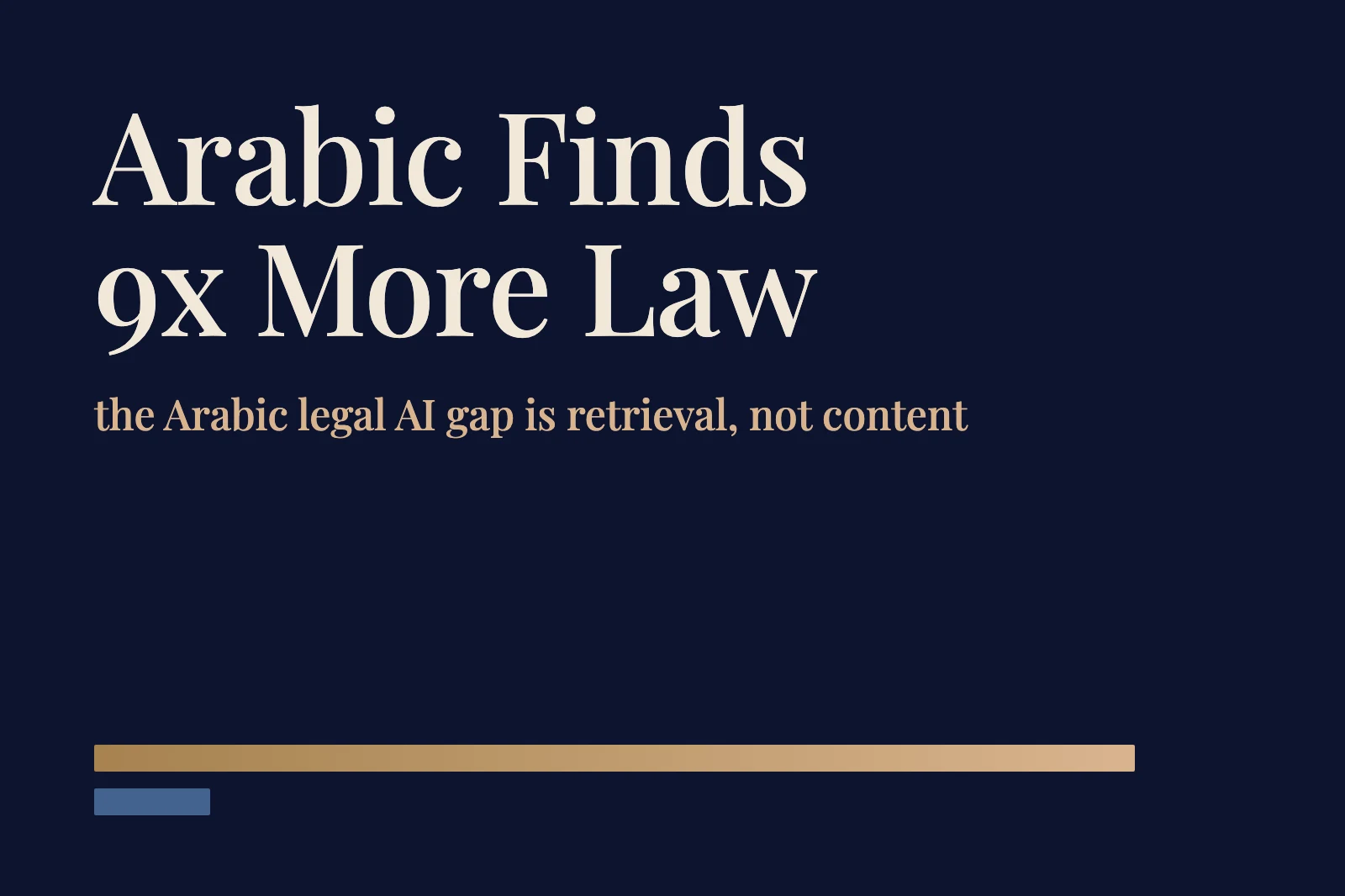
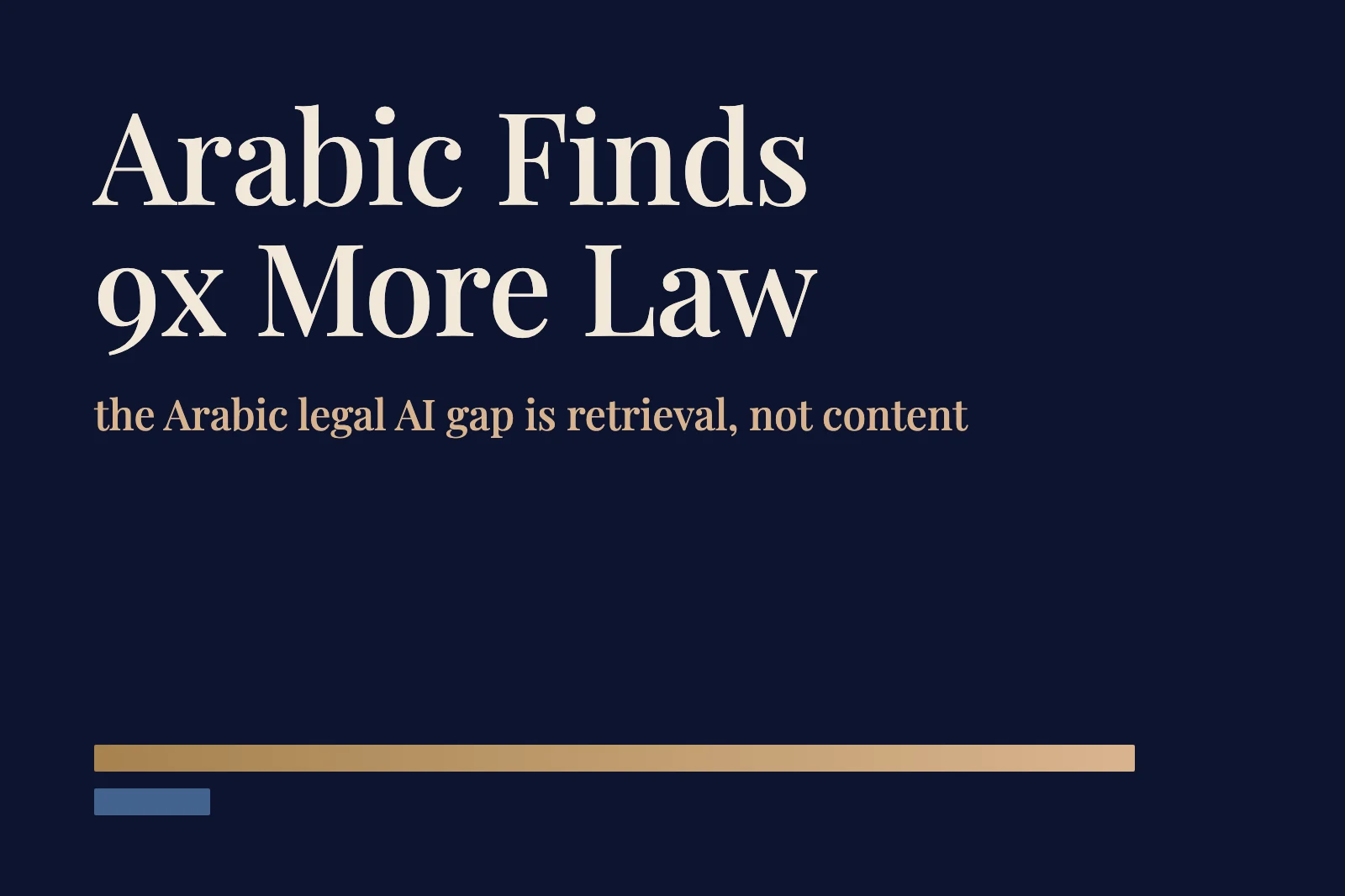
We ran the same legal queries in English and Arabic. Arabic returned 9x more primary law plus silent wrong-country errors. The gap is retrieval, not content.

Gulf courts adopted AI before most US bars wrote rules, yet Arabic legal data stays scarce. Who's building, who's buying, and where the gap really is.

Spellbook vs HAQQ in 2026: what the Word add-in does well, where document-level AI stops, and how to choose between a contract copilot and a legal OS.

Parse PDFs, Word and scanned files into clean Markdown with Docling, the open-source Python library. Install steps, chunking and RAG-ready code examples.

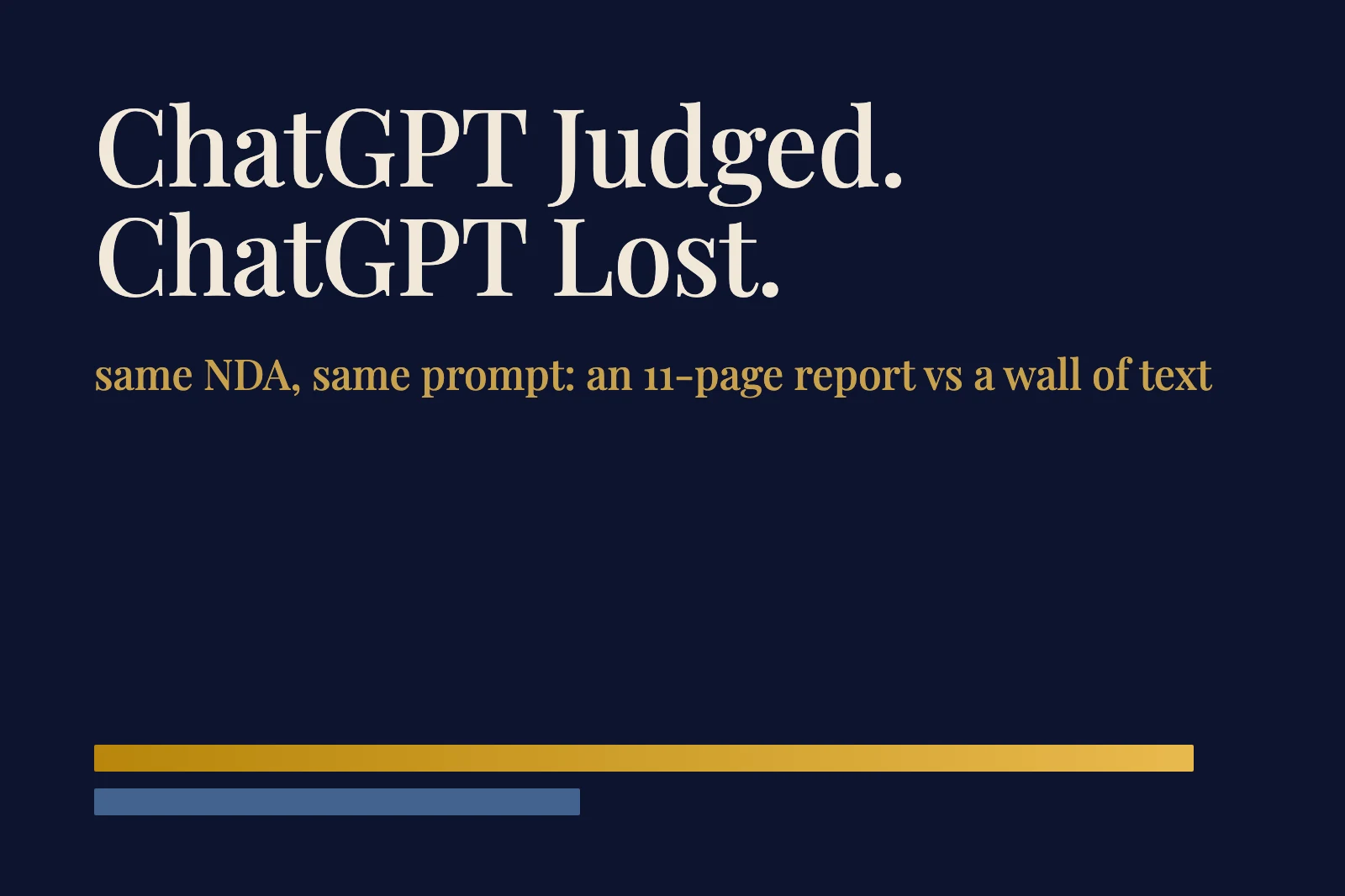
We ran the same NDA review on ChatGPT and HAQQ. One returned commentary; the other an 11-page exportable risk report. ChatGPT itself scored the winner.

Legal AI plugins handle tasks - contract review, NDA triage, clause drafting. Here is where browser and Word plugins stop, and what a legal OS adds on top.

How large language models work, why they hallucinate, and how to prompt them safely - a plain-English 2026 guide for practicing lawyers. No CS degree needed.

ABA Opinion 512, UN and EU frameworks, and the lawyer duties of competence, confidentiality, candour and supervision - what ethical AI use requires in 2026.

Seven prompt engineering principles for lawyers - context, role assignment, few-shot examples, verification - that produce accurate, defensible legal output.

Why multi-agent architectures beat single-LLM tools at legal work: task routing, jurisdiction-aware retrieval, citation verification, structured output.

Ten types of legal work, each with different risk and AI fit - from drafting to advocacy strategy. The map to read before buying any legal AI tool.

How AI contract review works in 2026: clause detection, risk scoring, playbook enforcement, and how to choose software your lawyers will actually use.

RAG chunking destroys legal document structure. How knowledge graphs, span-level search and extractive entity linking power portfolio-scale review.

Legal tech in 2026: who got funded (Ivo $55M, Lawhive $60M, HAQQ $3M), who consolidated, what courts sanctioned, and why MENA is the regulatory lab.

Intake, scheduling and first drafts are automating fast. Where legal AI workflows break - the compliance wall, the last mile - and what works instead.

Legal engineering, explained: the TIRO pattern and the multi-agent pipelines that turn one AI model into partner-level legal work product (2026 guide).

Context engineering is what makes legal AI reliable. Retrieval, grounding, 200K-token context windows, and the three failure modes every lawyer should know.

Most legal tech implementations fail - and it's rarely the software. The configuration trap, six human pitfalls, and the framework winning firms use.

What human-in-the-loop means in legal AI, the five failure modes only lawyers catch, and how to design oversight that satisfies EU AI Act and ABA rules.

How to draft a will with AI, step by step: the exact prompt, jurisdiction-aware succession rules for UAE expats, and a full video walkthrough.

We built a working A* litigation planner in 517 lines - then refused to use it. The four gates any AI planner must pass before touching a real matter.

Claude's legal plugin didn't replace the legal stack - it exposed the weak layer. What it actually replaces, what it can't touch, and where it fits.

Nippon Life v. OpenAI: a $10M suit alleging ChatGPT practised law without a licence, cited a fake case and told a claimant to fire her attorney.

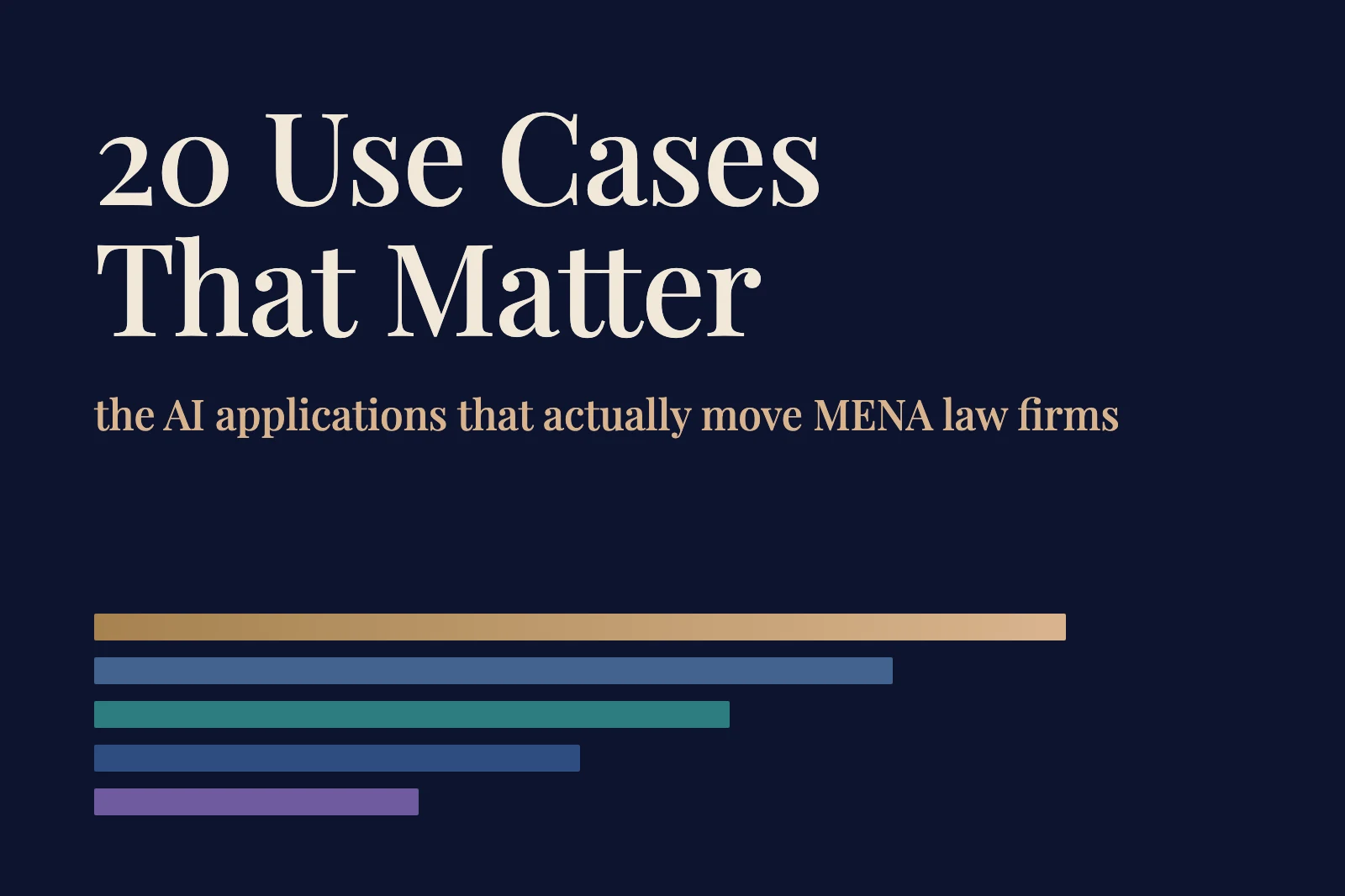
Most AI use cases in law firms do not produce competitive advantage. Here are 20 that actually move the needle - and why they fail without structured data.

HAQQ and Highworth have come together in a strategic collaboration to make international growth into Europe simpler, more transparent, and more accessible for founders and growing businesses.

Won your Dubai labour case but the employer filed a criminal complaint? The two-track strategy to clear your name and still enforce your judgment.

Oman's legal reforms in plain terms: 100% foreign ownership under Royal Decree 50/2019, the Personal Data Protection Law, and Vision 2040's framework.

A federal judge ruled 31 AI-generated documents are not privileged. Why AI chats are discoverable, and what lawyers must change in engagement letters now.

HAQQ has signed a strategic MoU with Mani Group, establishing a long-term framework for cooperation across mutual marketing, professional training, and complementary service delivery.

HAQQ Legal AI offers law students and professors 30-50% off paid access. Jurisdiction-aware research, drafting and citations at a student price.

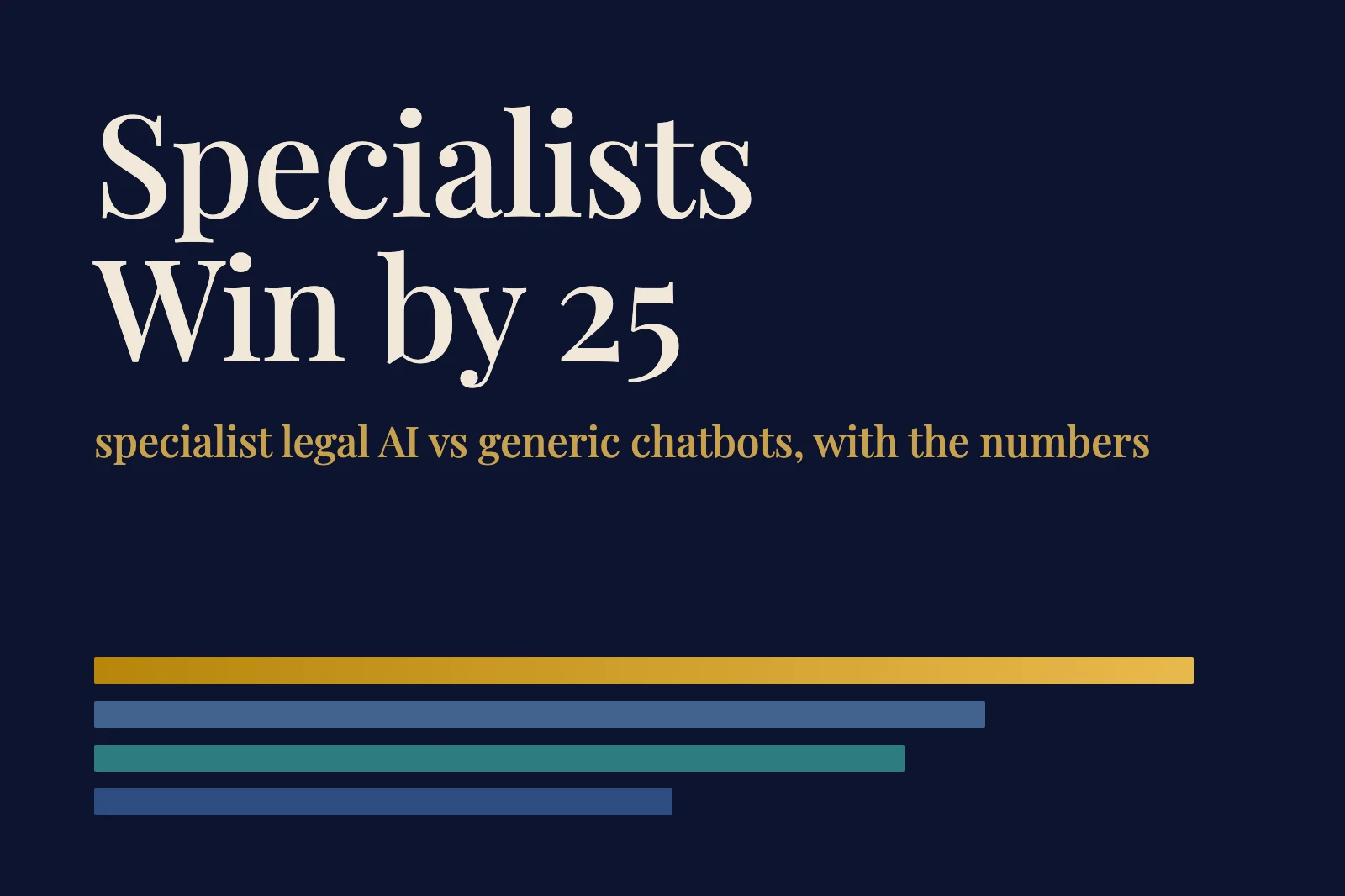
Specialist legal AI beat lawyer baselines 94.8% vs 70.1% on document Q&A. Generic chatbots hallucinate and leak data. The gap, and who it hurts most.

HAQQ and Amman Arab University explore strategic partnership to integrate AI-powered legal technologies into legal education and advance e-litigation and artificial intelligence in Jordan.

HAQQ Legal AI and the Jordanian Arbitrators Association partner to empower arbitrators and enhance the efficiency of the arbitration ecosystem in Jordan through advanced legal AI technologies.

We plugged an autonomous AI agent into HAQQ's prompt library to draft a cross-border JV contract. It scored 99% on our internal legal quality index.

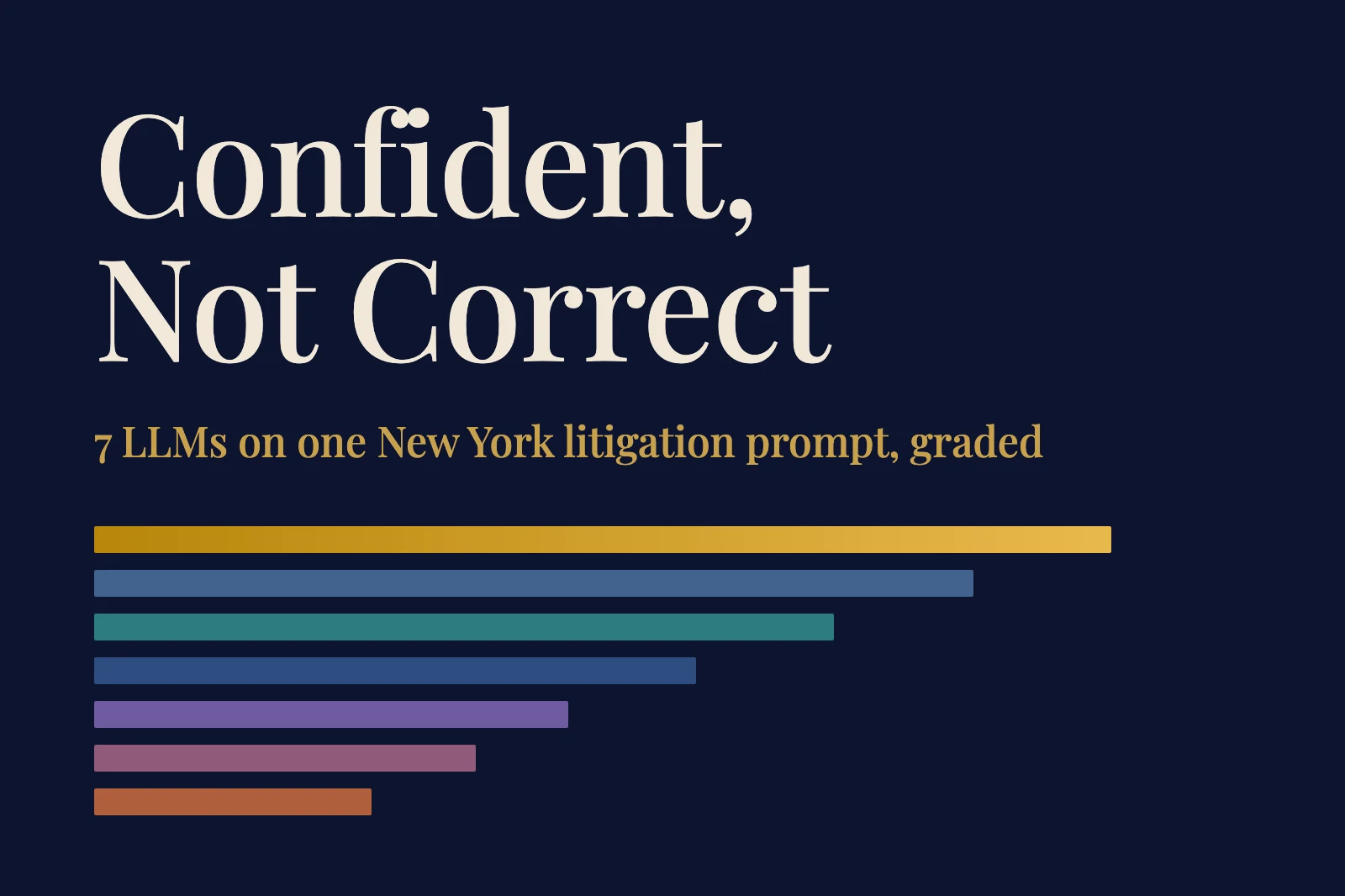
Seven AI models, one $250,000 unpaid-invoice prompt under New York law. Most sounded confident; few got CPLR procedure and collection strategy right.

Four trends reshaping legal work in 2026: AI-embedded workflows, shared knowledge, security as table stakes, and the end of pure hourly billing.

A curated calendar of the legal and legal-tech events worth attending in 2026 - Legalweek, ABA TECHSHOW, ClioCon, plus the MENA rooms most lists miss.

A Legal AI Twin built to draft, analyze, and manage legal work the way real lawyers do. HAQQ Legal AI Chat is the intelligence layer of the HAQQ platform.

Law firms differ in workflows, jurisdictions and drafting style, yet most legal software ships rigid. How HAQQ reshapes itself around your firm's work.

HAQQ's mobile app brings Legal AI Chat to iOS and Android: contract review, clause analysis and structured legal drafts, free to download worldwide.

1,313 court proceedings, 496 sanctioned attorneys, five enforcement tracks across 106 countries. The global report on AI hallucinations in law.

Independent Legora review for 2026: indicative pricing, the LLM stack, who owns it, and how it compares with HAQQ, Harvey, Spellbook and CoCounsel.

Which LLM should write your legal articles? We ranked the three Legal GPTs, Claude with the legal plugin, and purpose-built legal AI - with prompts that work.
Every major legal AI benchmark is common-law; civil law governs 60%+ of the world. HAQQ-LAB: 16 open-source MENA tasks, 4 traps - 0% vs 100% adherence.
Six popular LLM guardrails were bypassed at 12–100% rates. Governance by construction builds the unsafe action out of the agent - nothing left to evade.
Yes - in most major markets, with duties attached. We tracked 17 jurisdictions: 8 permit with guidance, 2 restrict (EU, Qatar), 7 say nothing at all.
1,598 verified court cases now involve AI-fabricated citations, up from 200 a year ago. Landmark sanctions, the rate curve, and the fix. Updated monthly.
The 2026 map of legal AI in MENA: named startups across 8 countries, who has raised what (HAQQ's $3M leads), and Harvey's entry through Al Tamimi.
From CourtListener to Mike: the full 2026 map of open source legal software, what HAQQ ships back, and why the real bottleneck is data, not models.
Copy-ready AI prompts for lawyers by practice area, the Role + Context + Task + Format formula, seven techniques, and a free 168-prompt library.
Five adversarial NDAs, five prompt-injection payloads, one zero-dependency scanner - all blocked in under 2 ms. How injection hits legal AI and what stops it.
We scored Claude, GPT-4o and Gemini on 100 real legal questions from r/legaladvice. Pass rates 78–88% - and the weakest dimension wasn't accuracy.
Anthropic's legal webinar drew 20,000 registrants and 51 upvoted questions. What lawyers asked about privilege, hallucinations and Claude - answered.
Same model, same 30-doc data room. A single prompt caught 3/5 planted issues; a 3-agent swarm caught 5/5. The misses are structural - here is why.
Q1 2026: $145K in AI sanctions, Harvey at $11B, Legora $5.55B, and a ruling that public AI outputs aren't privileged. The full legal AI market report.
1,372 long-horizon legal tasks, 24 practice areas, ~78,000 rubric criteria, all-pass grading. The first legal agent benchmark built for civil law and MENA.
An AI-drafted motion to dismiss costs $1.67 - or $4.55 if you run everything on the biggest model. Where the money goes, stage by stage, and the fix.
Project Workspaces gives every legal matter one home: a unified file library, linked eFirm records, and project-scoped AI chats. Available on all paid plans.
Three US attorneys asked how HAQQ differs from ChatGPT. The answer: a 20-page NDA cross-analysis in 90 seconds and an engine that says 'I don't know'.
45 red flags across 8 criteria - security, privacy, robustness, cost - to check before signing any legal AI contract. From the first buyer-led framework.
Claude for Word is genuinely good - but data deleted in 30 days, no audit logs, and a Team/Enterprise paywall matter for law firms. The honest breakdown.
Claude drafted real co-founder and IP agreements; HAQQ found 13 critical issues plus 5 German-law fixes Claude missed. Five rounds, 10 pages to 32.
A legal ontology replaced 300 MCP tools with 7 and cut AI costs from $0.60 to $0.02 per message. Why RAG fails for law, plus the 7-step build playbook.
We ran 3 parallel simulations with 72 AI agents and 1,543 interactions to score legal AI's future: Harvey IPO odds, AI malpractice settlements, BigLaw cuts.
A partner cross-references six years of depositions in 90 seconds with NotebookLM. What AI memory tools do well for lawyers - and where they stop.
HAQQ and Tawqi3i join forces to combine AI-powered legal intelligence with secure digital signatures, enabling fully digital legal workflows across the region.
A real Series B secondary through a nominee SPV: preference stacks, ROFR timing, warranty survival gaps and the five places deals break in diligence.
HAQQ Inc has entered into a strategic partnership with ONEIC, establishing a framework to expand sovereign legal AI infrastructure in the Sultanate of Oman.
HAQQ Legal AI has raised $3M to date, led by Sowlutions Ventures, to scale its Justinian legal AI engine and practice management platform worldwide.
We made a frontier model impersonate a legal database. It refused to invent fake cases, then cited a real law for the wrong thing, the hallucination that survives a lawyer's review.
How divorce and family-law attorneys actually use AI across the matter, from intake to court prep, what stays human, and how to pick a tool that does not create a privilege or malpractice problem.
UAE divorce now runs on two tracks: the civil path under Federal Decree-Law No. 41 of 2022, and personal-status law. Here is which applies, what talaq and khula mean, and where AI helps.
A 2026 federal ruling says AI chats are not privileged. In a divorce, that turns your ChatGPT history into discoverable evidence. Here is what is safe, what is not, and how lawyers use AI inside the privilege.
An honest 2026 CLM benchmark: 13 vendors compared on AI, deployment, pricing and reviews, plus the real Gartner positions and ownership map nobody shows.
Spellbook is great inside Microsoft Word. For solo, mobile-first or Arabic-speaking lawyers, here are the real alternatives by price, platform and language.
HAQQ CEO Antoine Kanaan on building a legal AI for everyone: closing the justice gap for 5 billion people, why every lawyer must adopt AI, and why HAQQ started in Lebanon.
What you're owed if you're dismissed or resign in the UAE: end-of-service gratuity (21/30 days), arbitrary-dismissal compensation, and how to file a MOHRE complaint.
Your rights when breaking a tenancy or facing eviction in Dubai: the 12-month notice rule, rent-increase caps (RERA index), early-termination penalties, and the Rental Disputes Center.
When you resign or are terminated in the UAE: work-permit cancellation, the grace period to stay, moving to a new employer, labour bans, and passport rules.
How end-of-service gratuity works under Saudi Labor Law: the half-month/full-month formula, what you get if you resign (Article 85), and unfair-dismissal compensation (Article 77).
How end-of-service indemnity and arbitrary dismissal work under Kuwait Labour Law No. 6 of 2010: the indemnity formula, resignation tiers (Art. 53), notice, and PAM disputes.
Qatar's end-of-service gratuity (3 weeks/year on basic wage, not 21/30), notice under Decree-Law 18/2020, and arbitrary-dismissal remedies under Law No. 14 of 2004.
Bahrain's leaving indemnity (Art. 116), the 2024 SIO change for expats, and arbitrary-dismissal compensation (Art. 111: min 1, max 12 months) under Law No. 36 of 2012.
Oman's new 2023 Labour Law (RD 53/2023): end-of-service raised to one month per year (Art. 61), notice (Art. 38), and arbitrary-dismissal remedies (Art. 11).
Egypt's new Labour Law No. 14 of 2025: arbitrary-dismissal compensation (2 months/year, Art. 165), 3-month notice (Art. 156), and the new resignation-ratification rules.
Jordan: Art. 32 indemnity vs Social Security coverage, arbitrary-dismissal compensation (Art. 25), notice (Art. 23), and filing via the Hemayeh platform.
Lebanon: NSSF end-of-service indemnity (1 month/year), arbitrary-dismissal damages (Art. 50: 2–12 months), notice tiers, and the impact of the currency crisis on payouts.
Federal Iraq under Labour Law 37/2015: restricted termination grounds, two-weeks/year gratuity, 30-day notice, and the Service Termination Committee vs labour court route.
Morocco's Labour Code (Law 65-99): severance after 6 months (Art. 53 hours tiers), unfair-dismissal damages (Art. 41: 1.5 months/year, cap 36), notice and the 90-day deadline.
Tunisia's Labour Code: severance one day/month capped at 3 months (Art. 22), unfair-dismissal damages 1–2 months/year capped at 3 years (Art. 23 bis), notice and the 1-year deadline.
Algeria under Law 90-11: dismissal only for serious misconduct (Art. 73), unfair-dismissal remedy of reinstatement or min 6 months' salary (Art. 73-4), notice and the 6-month deadline.
Saudi tenancy via Ejar/REGA: no national rent cap (Riyadh 5-year freeze), 5% deposit cap, no self-help eviction, and the Enforcement Court route.
Kuwait Lease Law 35/1978 (amended 2024): 5-year rent freeze, the 50%-below-market increase rule, eviction grounds, and the Rental Division.
Qatar Law 4/2008: no active rent cap, eviction grounds, 2-month deposit cap, and the Rent Disputes Settlement Committee (hotline 184).
Bahrain Law 27/2014: rent +5% after 2 years (Art. 27), no eviction in first 3 years (Art. 35), Article 38 grounds, and the Rents Disputes Committee.
Oman RD 6/89 + new RD 12/2025: no increase for 3 years then 7%/yr, no termination before 4 years, and the new 90-day dispute committee.
Egypt's two rent regimes and the 2025 old-rent reform: zone-based recalculation, 15% annual rise, the 7-year phase-out, and fast-track eviction.
Jordan Owners & Tenants Law 11/1994: old vs new contracts (31 Aug 2000 cutoff), no self-help eviction, and succession protection (Art. 7).
Lebanon's 23 July 1992 split: COC 3-year protection for new leases, the old-rent phase-out (2014/2017 reform), and court-only eviction.
Federal Iraq Lease Law 87/1979: 5% annual rent cap, enumerated eviction grounds, automatic lease extension, and the 15-day notary cure.
Morocco Law 67-12 + 07-03: rent revision capped at 8% after 3 years, 2-month eviction notice, and a deposit capped at 2 months (Art. 20).
Tunisia: residential leases under the COC (Arts. 727–804), no general rent control, court-only eviction (Art. 796), and old protected tenancies (Law 76-35).
Algeria's Civil Code as amended by Law 07-05: free fixed-term leases, the mandatory written/dated lease (Art. 467 bis), and 2-month early-exit notice.
Saudi work permits and the Iqama after the 2021 Labor Reform: Qiwa sponsor transfer without consent, final exit, Premium Residency, and the passport-withholding ban.
Kuwait's Article 18 work-and-residence visa: the new residency law, sponsor transfer (3-year rule), the 2025 exit permit, and family-sponsorship income.
Qatar after Law 18/2020: NOC abolished, exit permits removed for most, the residence-permit grace period (reduced to 14 days), and the passport ban.
Bahrain's LMRA work permit and residence: sponsor transfer after one year, the self-sponsorship Flexi Permit, family-sponsorship income, and the passport ban.
Oman's labour clearance and ROP visa: the abolished NOC / 2-year ban (since 2021), conditions to transfer, family-sponsorship income (OMR 150), and the passport ban.
Syria: unjustified-dismissal compensation of 2 months/year capped at 150× minimum wage (Art. 65), end-of-service gratuity (Art. 63), and 2-month notice (Art. 56).
Libya: court-set unjustified-dismissal compensation (Art. 76), end-of-service reward for non-nationals (Art. 78), 30-day notice (Art. 71), and the conciliation/arbitration route.
Yemen: end-of-service gratuity of 1 month/year (Art. 120), arbitrary-dismissal compensation capped at 6 months, notice by pay period, and the region-dependent dispute forum.
How to set up a company in the UAE: mainland 100% foreign ownership, no LLC minimum capital, mainland vs free zone, and licensing under Decree-Law 32/2021.
Setting up in Saudi Arabia: 100% foreign ownership via MISA registration, the new Companies Law, capital expectations, and the Regional HQ program.
Setting up in Kuwait: the 49% cap vs 100% via a KDIPA license, the WLL (KD 1,000 capital), and MOCI registration under Companies Law 1/2016.
Setting up in Qatar: up to 100% foreign ownership under Law 1/2019, no LLC minimum capital, and mainland vs the Qatar Financial Centre.
Setting up in Bahrain: 100% foreign ownership in most sectors, no WLL minimum capital (Decree 28/2020), and registration via the Sijilat portal.
Setting up in Oman: up to 100% foreign ownership under the Foreign Capital Investment Law, the negative list, eased minimum capital, and the Invest Easy portal.
Setting up in Egypt: 100% foreign ownership in most sectors, LLC vs JSC capital, the exceptions (agency/import), and GAFI's one-stop-shop.
Setting up in Jordan: up to 100% ownership (50% cap on retail/wholesale, prohibited list), the abolished JOD 50,000 minimum, and CCD registration.
Setting up in Lebanon: 100% foreign-owned SARL, restricted sectors, SARL/SAL capital, the mandatory lawyer, and the post-2019 banking reality.
Setting up in federal Iraq: the 2019 reversal to a 49% foreign cap, 100% via an NIC license / branch / Kurdistan, IQD 1m minimum, and the Companies Registrar.
Setting up in Morocco: 100% foreign ownership in most sectors, no SARL minimum capital, the Office des Changes convertibility, and the CRI one-stop-shop.
Setting up in Tunisia: the 49% onshore cap vs 100% offshore-exporting, SARL/SA capital, the negative list, and the RNE one-stop platform.
Setting up in Algeria: the 51/49 rule lifted for non-strategic sectors (100% allowed), no SARL minimum capital, strategic-sector caveats, and the CNRC + AAPI.
A no-hype map of San Francisco's legal-AI startups in 2026: who they are, what they do, who they're for, and how much they raised, from Harvey to Ivo.
GC AI is built for US in-house teams at $500/seat/month. For solo, small-firm, civil-law or Arabic-speaking lawyers, here is an honest alternative.
Eve is an operating system for US plaintiff injury firms. If you practice outside US litigation, here is the alternative built for you.
Ivo is enterprise contract review in Word at ~$6,000/seat/year. For solo, small-firm and multilingual lawyers, here is a mobile-first alternative.
Onit and HAQQ surface in the same searches but solve different problems. An honest comparison of Enterprise Legal Management vs an AI-native legal assistant - and which one you actually need.
What a free AI legal consultation can do in 2026: explain laws, review contracts, draft documents in Arabic or English - and when you still need a human lawyer.
An independent CoCounsel review backed by published benchmark scores: pricing, the Westlaw lock-in reality, and the best CoCounsel alternatives for 2026.
We scored Harvey, Legora, and CoCounsel on one published 50-point rubric: Harvey 38, CoCounsel 37, Legora 35. Closer to each other than to the top.
Lexis+ AI review vs Westlaw CoCounsel, scored on an independent 50-point benchmark. Lexis wins research (41), CoCounsel wins drafting. Pricing and the gap.
AI translates Arabic legal documents fast, but legal translation is not general translation. The Arabic traps, and when you still need a sworn translator.
How to calculate UAE end-of-service gratuity, notice and illegal-dismissal pay under Federal Decree-Law 33 of 2021, plus where AI helps with MOHRE complaints.
AI is replacing paralegal tasks, not paralegals. The data on what AI does well, what it fails at, and what paralegals should learn to stay valuable.
The best AI for contract drafting scored 47/50 on our benchmark; 24% of AI legal answers miscite law. The workflow that captures the speed without the risk.
The only Harvey AI review with published benchmark scores: 38/50 vs HAQQ's 49/50. What Harvey does well, what it really costs, and alternatives by use case.
We scored 19 legal AI tools and frontier models on a published 50-point benchmark. The full ranking, what each tool is for, and why most lists lie.
What an AI lawyer can do in the UAE today: labour, tenancy, traffic, contracts. What is free, what is paid, Arabic support, and when you still need a human.
Saudi Arabia codified its civil law, digitized its courts, and grew MENA's deepest legal AI cluster. A practitioner's guide to tools, use cases and PDPL.
How many lawyers use AI in 2026? Between 26% and 92%, depending who you ask. 38 verified legal AI statistics, plus benchmark data nobody else has.
Can AI give legal advice? Legally no, and we are the only ones who measured the rest: 3 frontier models, 100 real legal questions, 78-88% pass rates.
Solo and 1-10 lawyer firms don't need six subscriptions. Real cost math, 3,000 graded answers, and the 5 capabilities that actually matter in legal AI.
We graded 3,000 answers from 10 frontier models on 300 legal tasks. Claude Opus wins, GPT-5.5 is most accurate - and 24% cite law that doesn't back them.
18 Arabic legal AI products compared - Adel, Shwra, Arabic.ai, Laiwyer - on four corners: consumer, mobile, multi-country, native Arabic. None hits all four.
We mapped all ~110 consumer AI lawyer apps - ratings, pricing, jurisdictions, and what AI is inside. Only 1 of 110 discloses its model. The honest list.
Lawyers in Dubai bill AED 500–5,000+/hr; UAE contingency fees are now capped at 25%. Real 2026 fee ranges by matter type, plus the AI-assisted cost.
We ran the same legal queries in English and Arabic. Arabic returned 9x more primary law plus silent wrong-country errors. The gap is retrieval, not content.
Gulf courts adopted AI before most US bars wrote rules, yet Arabic legal data stays scarce. Who's building, who's buying, and where the gap really is.
Spellbook vs HAQQ in 2026: what the Word add-in does well, where document-level AI stops, and how to choose between a contract copilot and a legal OS.
Parse PDFs, Word and scanned files into clean Markdown with Docling, the open-source Python library. Install steps, chunking and RAG-ready code examples.
We ran the same NDA review on ChatGPT and HAQQ. One returned commentary; the other an 11-page exportable risk report. ChatGPT itself scored the winner.
Legal AI plugins handle tasks - contract review, NDA triage, clause drafting. Here is where browser and Word plugins stop, and what a legal OS adds on top.
How large language models work, why they hallucinate, and how to prompt them safely - a plain-English 2026 guide for practicing lawyers. No CS degree needed.
ABA Opinion 512, UN and EU frameworks, and the lawyer duties of competence, confidentiality, candour and supervision - what ethical AI use requires in 2026.
Seven prompt engineering principles for lawyers - context, role assignment, few-shot examples, verification - that produce accurate, defensible legal output.
Why multi-agent architectures beat single-LLM tools at legal work: task routing, jurisdiction-aware retrieval, citation verification, structured output.
Ten types of legal work, each with different risk and AI fit - from drafting to advocacy strategy. The map to read before buying any legal AI tool.
How AI contract review works in 2026: clause detection, risk scoring, playbook enforcement, and how to choose software your lawyers will actually use.
RAG chunking destroys legal document structure. How knowledge graphs, span-level search and extractive entity linking power portfolio-scale review.
Legal tech in 2026: who got funded (Ivo $55M, Lawhive $60M, HAQQ $3M), who consolidated, what courts sanctioned, and why MENA is the regulatory lab.
Intake, scheduling and first drafts are automating fast. Where legal AI workflows break - the compliance wall, the last mile - and what works instead.
Legal engineering, explained: the TIRO pattern and the multi-agent pipelines that turn one AI model into partner-level legal work product (2026 guide).
Context engineering is what makes legal AI reliable. Retrieval, grounding, 200K-token context windows, and the three failure modes every lawyer should know.
Most legal tech implementations fail - and it's rarely the software. The configuration trap, six human pitfalls, and the framework winning firms use.
What human-in-the-loop means in legal AI, the five failure modes only lawyers catch, and how to design oversight that satisfies EU AI Act and ABA rules.
How to draft a will with AI, step by step: the exact prompt, jurisdiction-aware succession rules for UAE expats, and a full video walkthrough.
We built a working A* litigation planner in 517 lines - then refused to use it. The four gates any AI planner must pass before touching a real matter.
Claude's legal plugin didn't replace the legal stack - it exposed the weak layer. What it actually replaces, what it can't touch, and where it fits.
Nippon Life v. OpenAI: a $10M suit alleging ChatGPT practised law without a licence, cited a fake case and told a claimant to fire her attorney.
Most AI use cases in law firms do not produce competitive advantage. Here are 20 that actually move the needle - and why they fail without structured data.
HAQQ and Highworth have come together in a strategic collaboration to make international growth into Europe simpler, more transparent, and more accessible for founders and growing businesses.
Won your Dubai labour case but the employer filed a criminal complaint? The two-track strategy to clear your name and still enforce your judgment.
Oman's legal reforms in plain terms: 100% foreign ownership under Royal Decree 50/2019, the Personal Data Protection Law, and Vision 2040's framework.
A federal judge ruled 31 AI-generated documents are not privileged. Why AI chats are discoverable, and what lawyers must change in engagement letters now.
HAQQ has signed a strategic MoU with Mani Group, establishing a long-term framework for cooperation across mutual marketing, professional training, and complementary service delivery.
HAQQ Legal AI offers law students and professors 30-50% off paid access. Jurisdiction-aware research, drafting and citations at a student price.
Specialist legal AI beat lawyer baselines 94.8% vs 70.1% on document Q&A. Generic chatbots hallucinate and leak data. The gap, and who it hurts most.
HAQQ and Amman Arab University explore strategic partnership to integrate AI-powered legal technologies into legal education and advance e-litigation and artificial intelligence in Jordan.
HAQQ Legal AI and the Jordanian Arbitrators Association partner to empower arbitrators and enhance the efficiency of the arbitration ecosystem in Jordan through advanced legal AI technologies.
We plugged an autonomous AI agent into HAQQ's prompt library to draft a cross-border JV contract. It scored 99% on our internal legal quality index.
Seven AI models, one $250,000 unpaid-invoice prompt under New York law. Most sounded confident; few got CPLR procedure and collection strategy right.
Four trends reshaping legal work in 2026: AI-embedded workflows, shared knowledge, security as table stakes, and the end of pure hourly billing.
A curated calendar of the legal and legal-tech events worth attending in 2026 - Legalweek, ABA TECHSHOW, ClioCon, plus the MENA rooms most lists miss.
A Legal AI Twin built to draft, analyze, and manage legal work the way real lawyers do. HAQQ Legal AI Chat is the intelligence layer of the HAQQ platform.
Law firms differ in workflows, jurisdictions and drafting style, yet most legal software ships rigid. How HAQQ reshapes itself around your firm's work.
HAQQ's mobile app brings Legal AI Chat to iOS and Android: contract review, clause analysis and structured legal drafts, free to download worldwide.
1,313 court proceedings, 496 sanctioned attorneys, five enforcement tracks across 106 countries. The global report on AI hallucinations in law.
Independent Legora review for 2026: indicative pricing, the LLM stack, who owns it, and how it compares with HAQQ, Harvey, Spellbook and CoCounsel.
Which LLM should write your legal articles? We ranked the three Legal GPTs, Claude with the legal plugin, and purpose-built legal AI - with prompts that work.