AI will not replace lawyers. It can't be licensed, can't be held liable, and can't exercise judgment in your specific situation.
"Replace vs. augment" is the wrong debate. AI's real job is to be the first step: a first opinion that routes you to the right human, who still owns the responsibility.
The lawyers who use AI won't be replaced by AI. They'll replace the ones who don't. A contract in five minutes beats one in two weeks.
The question everyone asks (and who keeps answering it)
Every few weeks someone asks us a version of the same thing: is AI going to replace lawyers?
It's the wrong question, and you can tell by who keeps answering it. Search it and you'll find two camps. Law firms writing "AI will never replace human judgment." Software vendors writing "AI makes lawyers 10x faster." Both are arguing about the lawyer. Almost nobody is talking about the person standing outside the system who never gets in. For most legal problems in the world, that is the actual story.
We build a legal AI, so you'd expect us to promise the robot lawyer is coming. We won't, because it isn't, and pretending otherwise gets the whole thing backwards.
What AI genuinely cannot do
Start with the honest limits, because they define everything else.
A model can't be licensed to practice law. It can't be disbarred, sanctioned, or held in contempt. It doesn't carry professional liability, so when an answer is wrong, there is no one standing behind it. It doesn't sit under attorney-client privilege, so what you type into a general chatbot isn't protected the way a conversation with your lawyer is. And it can't read the room, the business relationship you're trying to preserve, the risk you're willing to take, the thing you didn't say out loud but a good lawyer hears anyway.
Those aren't temporary gaps that a bigger model closes next year. They're structural. Judgment and accountability are the product a lawyer sells. AI doesn't sell that, and it shouldn't pretend to.
HAQQ's co-founder and CEO, Antoine Kanaan (himself a lawyer before he built the company) put the boundary plainly in a recent interview:
AI is not a replacement for the lawyer. It's the first step. You take a first opinion, then you go to the right specialized lawyer. There's responsibility behind legal work, and AI doesn't carry that responsibility. (Antoine Kanaan, CEO and Co-Founder of HAQQ)
The real barrier was never legal knowledge
If AI isn't the lawyer, what is it for? Here's the reframe that matters.
Think about how a legal problem actually starts. Something happens. A contract you don't understand, a landlord who won't return a deposit, a co-founder falling out, a job offer with a clause that feels off. You don't know if it's serious. You don't know what kind of lawyer even handles it. You don't know the words to describe it. So you do nothing, or you search it and drown in results that don't fit your case.
The obstacle there isn't a shortage of legal intelligence in the world. It's the wall in front of an ordinary person before any legal question even gets asked. Antoine describes it as three barriers stacked on top of each other: actually reaching a lawyer, knowing which lawyer to trust, and knowing who you're even supposed to talk to. Most people quit at the first one.
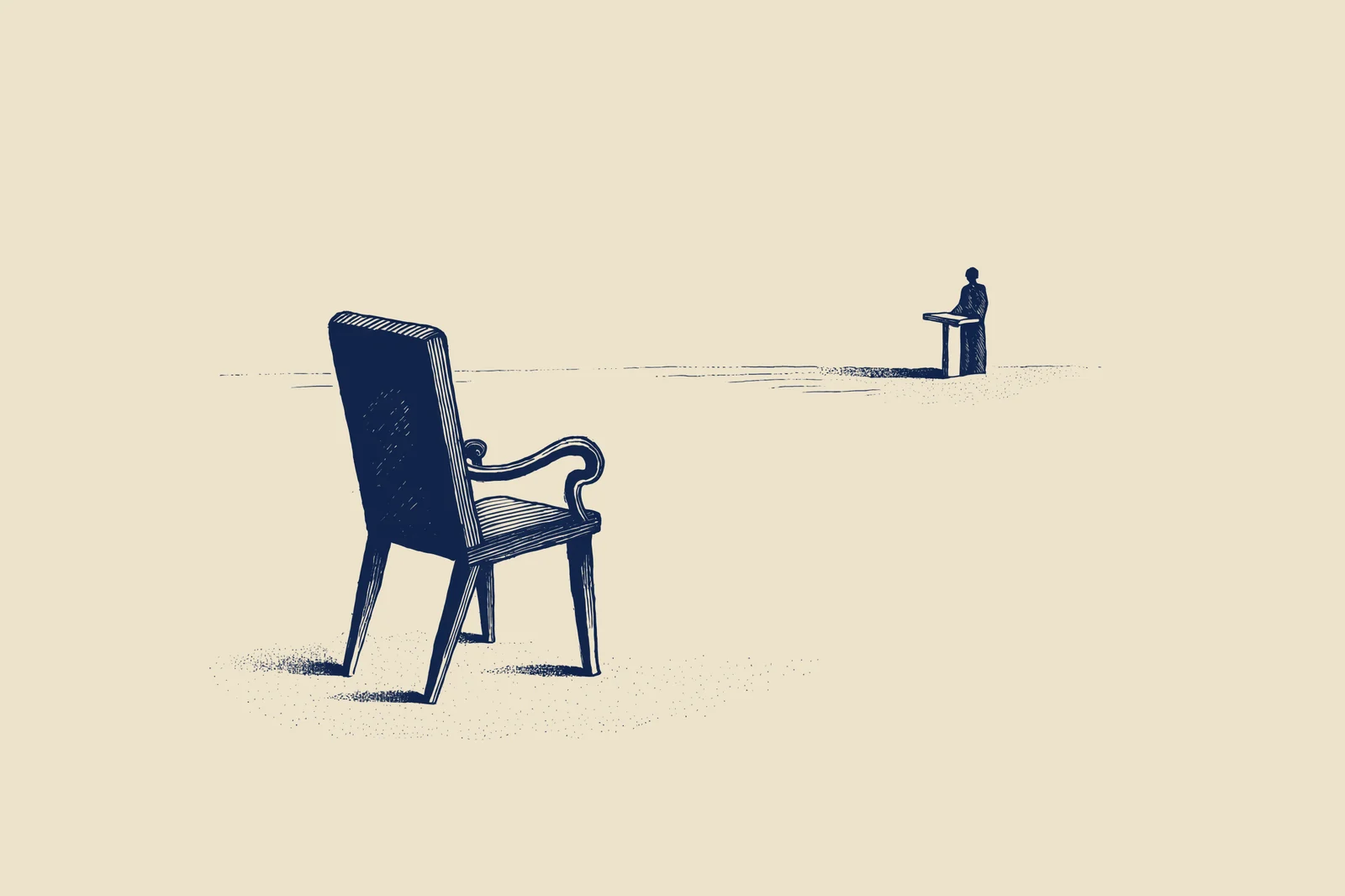
That's the space AI clears. Not the lawyer's chair. The empty room before it.
What AI is actually for: the first step
Picture the same problem with a first step in it. You describe the situation in plain language, in Arabic or English, however you'd say it to a friend. You get a first read: what you're likely dealing with, what the relevant terms mean, whether this is a "handle it yourself" or a "call someone today." And then you get pointed at the right kind of specialist, so you walk into that conversation oriented instead of lost.
The lawyer takes it from there and carries the responsibility, because that's their job and it was never AI's. First opinion, then the right human. That's the whole model.
Notice what this does to the original question. "Can AI replace lawyers?" assumes the bottleneck is the lawyer's skill. It isn't. The bottleneck is the distance between a worried person and any lawyer at all. Close that distance and you haven't replaced the lawyer. You've finally connected them to the people who never reached them. (We go deep on that gap, and the billions it affects, in our piece on AI and access to justice.)
"AI doesn't replace us. It liberates us"
The fear underneath "will AI replace lawyers" is really "will AI replace me." Antoine's answer flips the frame:
I don't think AI comes to replace us. It comes to liberate us, from the work we didn't want to do in the first place. It gives us back time and energy. (Antoine Kanaan, CEO and Co-Founder of HAQQ)
For lawyers specifically, the drudgery is the point. First-pass research, clause comparison, due diligence, template drafting, summarizing a stack of documents before a call, this is the 60–70% of legal work that's necessary, billable, and mostly joyless. Hand that to a machine and the lawyer isn't diminished. They're freed to do the part only they can do: advise, negotiate, advocate, decide.
The lawyers who adopt will replace the ones who don't
Here's the sharper version, and it's where the honest threat actually lives. It isn't AI versus lawyers. It's lawyers-with-AI versus lawyers-without.
Antoine's example: two lawyers, same client, same request for a contract. One uses AI and turns it around in a couple of hours. The other works the way they always have and comes back in two weeks. Same quality bar at the end, but one of them just served the client at a speed and price the other can't match, and can take on many more clients because of it. Over a year, that's not a small edge. That's who's still in business.
So the takeaway for the profession isn't "AI is coming for your job." It's "the version of you that uses AI is coming for the version that doesn't." The people who adopt benefit from the shift. The ones who refuse to evolve are the ones with a real problem, and that's true well beyond law.
Why this matters to everyone, not just lawyers
It's easy to hear "legal help" and picture a courtroom. But law quietly governs almost everything you'll do this year.
Antoine ran through it half-joking, and it stuck with us. Taking a new job, that's a contract. Starting a company, law. Buying a car, law. Getting married, very much law. Most people brush past all of it until something breaks, and by then the cheap early moment to get oriented is gone.
That's why the "first step" isn't a small feature. The value of a fast, honest first read isn't only about justice in the courtroom sense. It's economic: the job you negotiate better, the clause you catch before signing, the dispute you avoid because you understood your position on day one instead of month six.
A quick, load-bearing caveat: a first opinion is only as good as the system behind it, and general chatbots are genuinely unreliable on law. That's a whole topic on its own (accuracy, hallucinations, and privacy) which we cover in is AI legal advice safe and accurate?
HAQQ's take
We're building HAQQ around exactly this handoff. Not an "AI lawyer". We don't believe in that, and now you know why. A first step. You bring the situation in your own words, you get a clear first opinion and an understanding of where you stand, and when it's time for a human, you're routed to the right specialist instead of guessing.
The goal was never to remove lawyers from the equation. It's to remove the empty space before the lawyer, the part where most people give up. Get that right, and "can AI replace lawyers" stops being an interesting question. The interesting question becomes how many more people finally make it through the door.
Key takeaways
- AI can't replace lawyers because it can't hold liability, a license, or judgment, those are structural, not temporary, limits.
- The right frame is "first step, then the right human," not "replace vs. augment."
- Within the profession, AI adopters will replace non-adopters; a five-minute contract beats a two-week one.
- Law touches your job, company, car, and marriage. A fast first read is economic, not just legal.
Read next in this series
- HAQQ CEO Antoine Kanaan on AI and access to justice for 5 billion people
- Is AI Legal Advice Safe and Accurate?
Further reading
Try HAQQ AI Free
Experience AI-powered legal drafting and research