AI Research Behind Justinian
HAQQ has a research lab. Justinian was built there. We keep running experiments in legal AI, building tools and publishing open research.
Everything we publish
Everything HAQQ Labs publishes about Justinian in one place: research, whitepapers, prototypes, open-source projects and libraries, plus the articles we write about them.
 LibraryClause Library
 LibrarySkills Library
 LibraryTools Library
 LibraryDocument Library
 LibraryLegal Guides
 LibraryAcademy and Certifications
 ResearchCase Theory
 ResearchTracing Justinian
 WhitepaperLegal Ontology System
 WhitepaperHAQQ Legal AI Index
 WhitepaperThe State of Sovereign AI
 WhitepaperLegal AI Landscape
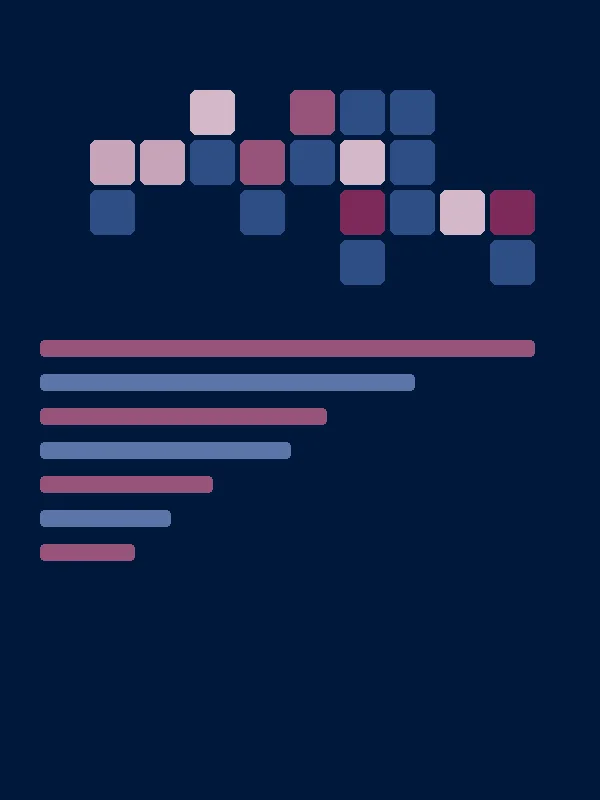 ResearchLegal AI in Numbers
 ResearchLegal Benchmarks
 ResearchLaw Firm Marketing Kit
 ResearchStart a Law Firm
 PrototypeFactories
 PrototypeLegal Taxonomy
 PrototypeLaw Town
 PrototypeModel Museum
 PrototypeAI Hardware Bible
 Open SourceNomos
 Open SourceLouis
 Open SourceMENA Legal Atlas

Complex Legal Work: What a Legal AI Actually Has to Do
Long documents, several jurisdictions, multi-step tasks, exact citations and the judgement to decline. What a legal AI has to do on a real matter, why single-prompt tests miss it, and how HAQQ thinks about evaluating it.

MENA Legal AI Benchmark: Scope and Method
Which jurisdictions, languages and task types the HAQQ MENA legal evaluation covers, how answer keys are built from primary sources, and where source coverage is still thin. Results follow the next run.

Buying Legal AI in the GCC: 4 Questions to Ask Every Vendor
Is the interface in Arabic? Is Sharia covered? Is the gazette current? Where are prompts processed? A buyer's checklist for law firms in the Gulf, with a test for each.

Confidentiality Is the Next Hallucination: AI Client Confidentiality for Lawyers
Fake AI citations went from curiosity to a docket of thousands. AI client confidentiality is on the same curve. The triggers, our forecast and four controls.

Primary Sources Decide Whether Lawyers Trust Legal AI: A 10-Minute Test
A legal AI citation is worth the text behind it. A 10-minute test for any tool, plus where official laws live across nine GCC and MENA jurisdictions.

How to Test a Legal AI: 5 Trap Questions, 4 Frontier Models
We asked four frontier models for court judgments backing an article that doesn't exist. Two declined. Two named 16 between them. Here are the five tests.

We Tested Nine AI Systems on a Lebanese Waqf Matter. Most Got the Decisive Article Wrong.
One real Arabic client instruction, a 1947 Lebanese statute, and every citation checked article by article. Justinian V2 scored 88. The highest-scoring general model reached 82.

Claude Opus 5.5 for Legal Work: We Ran Our Own Benchmark and Could Not Pick a Winner
We put Opus 5.5, Opus 5 and Fable 5.1 through ten lawyer-grade prompts and 120 blind verdicts. They finished four verdicts apart, in a loop. Only price separated them.

Jev Inside a Legal AI Harness: 8 Decision Patterns, and the Boundary We Measured
We ran TypeSafe's Jev across our legal AI stack for under $0.20. It reranks statutes well. It also scored fabricated citations higher than honest ones.

The Legal AI Landscape in 2026: What It Is Made Of
We tested the legal AI market instead of reading about it. 65% of vendors are a prompt layer over somebody else's model, and 3% train on legal data.

We Ran GPT-6 Astra Against 41 Real Legal Questions
We ran GPT-6 Astra against 41 real legal questions, alongside Claude Opus 5 and GPT-5.6 Luna Pro. Every model we tested got Saudi or Egyptian law wrong while citing the correct article, the failure no citation checker catches.

What Happens Before a Legal AI Answers Your Question
Many legal AI products pass your prompt straight to a general model. What a system does before that call shapes the answer. The architecture, and four demo tests.

Legal AI Benchmark 2026: How HAQQ Performed in an Independent Evaluation
An independent evaluator ran HAQQ through 61 hard legal tasks in 21 jurisdictions, twice. It passed 27.0% overall, and 5.9% on the hardest subset against 1.1% for the average legal AI. Full numbers inside.

Legal AI Hallucination: The Fake Citation That Passes Every Check
We made a frontier model impersonate a legal database. It refused to invent fake cases, then cited a real law for the wrong thing, the hallucination that survives a lawyer's review.

Can AI Give Legal Advice? We Tested It on 100 Real Questions
Under US unauthorized-practice rules and OpenAI's own policy, AI cannot give legal advice. What our 2026 tests show it gets right on legal questions, and where it fails.

Best AI for Legal Work in 2026: October Update + 3,000 Graded Answers
October 2026: Claude Opus 5.5 and GPT-6 Astra lead our latest legal tests. Plus 3,000 graded answers from 10 models, 24% of which cite law that does not back them.

AI Hallucination Cases: The 2,202-Case Sanctions Tracker
2,202 court decisions now involve AI-fabricated citations, per the Charlotin database (Oct 2026). Sanctions by country, the growth curve and how to avoid them.

Prompt Injection in Legal AI: 5 Attacks, 5 Blocks, 1.84 ms
Five adversarial NDAs, five prompt-injection payloads, one zero-dependency scanner, all blocked in under 2 ms. How injection hits legal AI and what stops it.

Best AI for Legal Research? 3 Models vs 100 Real Questions (May 2026 Run)
Our May 2026 run: Claude Sonnet 4, GPT-4o and Gemini 2.5 Flash on 100 real r/legaladvice questions. Pass rates 78 to 88%, caveats the weak spot. Newer runs linked.

M&A Due Diligence AI: Single Prompt vs a 3-Agent Swarm
Same model, same 30-doc data room. A single prompt caught 3/5 planted issues; a 3-agent swarm caught 5/5. The misses are structural, here is why.

Legal Ontology AI: How a Knowledge Graph Cut Legal AI Costs by 97%
A Mexican labour-law ontology replaced 300 MCP tools with 7 and cut cost per message from $0.60 to $0.02. The method, the Stanford hallucination data and a build plan.

Legal AI Predictions to 2030: What 72 AI Agents Forecast
We ran 3 parallel simulations with 72 AI agents and 1,543 interactions to score legal AI's future: Harvey IPO odds, AI malpractice settlements, BigLaw cuts.
Researchers
The people at HAQQ who run the experiments and write them up.