Skip to content
    HAQQ
    Log in
    Contact sales
    Try HAQQ
    Try HAQQ
    1. Home
    2. Blog
    3. The Maker Cannot Be the Checker: A Verification Protocol for Legal AI
    Guides & How-To

    The Maker Cannot Be the Checker: A Verification Protocol for Legal AI

    Regulators in London, Abu Dhabi, Dubai and Doha now say the same thing: AI doesn't move your responsibility. A six-step protocol for checking AI work before it leaves the firm.

    Stephane BoghossianStephane Boghossian|
    October 27, 2026
    3 min read
    The Maker Cannot Be the Checker: A Verification Protocol for Legal AI

    Banks learned this decades ago. The person who books a trade doesn't approve it. Law firms are learning it again with AI.

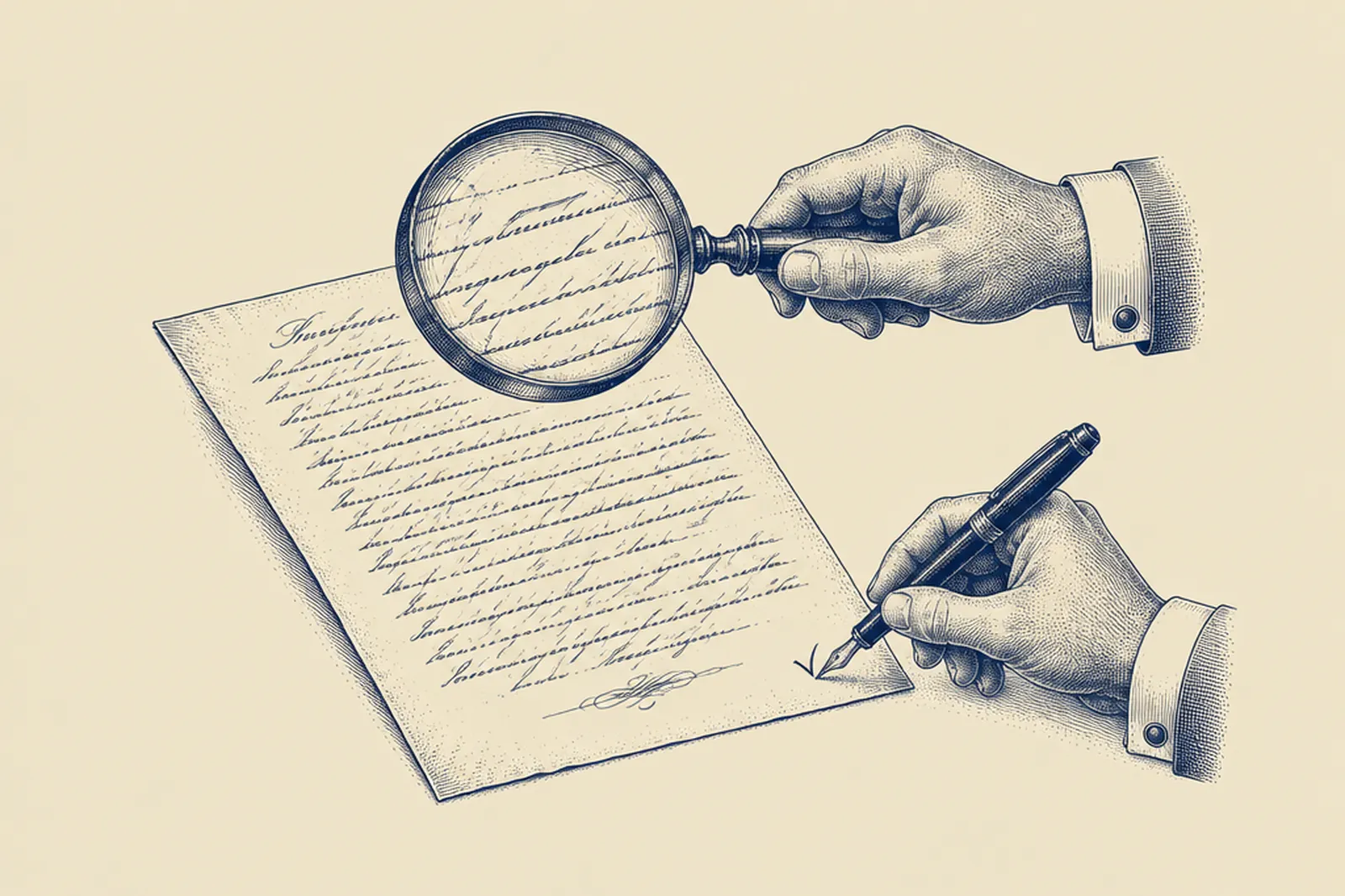
    A model that drafts a memo cannot also be the proof that the memo is right. Asking the same tool "are you sure?" is not a check. It's a second draft.

    The short answer

    • Responsibility stays with the lawyer. The SRA says the use of AI "does not diminish or transfer your professional responsibilities." The Law Society's October 2026 note says AI is not a legal entity.
    • Courts are pricing the failure. In Arabyads v Alam, ADGM ordered AED 282,508 in wasted costs over unverified authorities. Qatar's QICDRC can refer lawyers to regulators.
    • Verification needs a separate path. Different person, different source, or a different method from the one that produced the output.

    What the regulators actually require

    Regulator or courtWhat it says about checkingSource
    SRA (England and Wales), 17 Aug 2026Be assured that all named case law authorities you submit are genuine. AI does not diminish or transfer your responsibilities.
    Law Society (England and Wales), Oct 2026AI is not a legal entity. Solicitors must keep the ability to carry out and scrutinise work without AI.
    DIFC Courts, PGN 2/2023Don't rely on AI content without first verifying its accuracy, and check the sources the tool relied on.
    ADGM Courts, *Arabyads v Alam*Failing to verify AI research was reckless and a breach of the Rules of Conduct.
    QICDRC (Qatar), PD 1/2026All citations must be checked against primary sources or recognised legal databases.

    Five bodies, three continents, one rule. Check against the primary source, and own the result.

    The six-step protocol

    1. Separate maker and checker

    The person who prompted the tool should not sign off alone. On small teams, at least rotate: whoever drafted with AI reviews someone else's AI-drafted work.

    2. Check every authority at the source

    Open the judgment, the law or the regulation itself. A summary from the same tool, or from another chatbot, is not a source. This is the one step every regulator in the table names.

    3. Check the pin cite, not just the case

    Fake cases get caught. Real cases cited for a point they don't make get through. Arabyads involved both: authorities that didn't exist, and others that didn't support the point.

    4. Ask the same question three times

    Run the key question again, in a fresh session, with different wording. If the answers disagree on the law, the number or the outcome, treat all of them as unverified. Consistency doesn't prove an answer right. Inconsistency proves you can't trust it yet.

    5. Check the Arabic against the Arabic

    For Gulf and Levant work, verify the Arabic text of the article you cite, and its current version after amendments. A correct English summary of an outdated Arabic article is still wrong.

    6. Keep a record of what you checked

    Log the tool, the task, the sources you opened and who verified them. In DIFC you may need to declare AI use. Anywhere, you may need to explain it. A record written only by the AI proves only that the AI wrote it.

    A one-page checklist

    Before any AI-assisted document leaves the firm:

    • [ ] A second person reviewed it, or the maker reviewed it against primary sources only
    • [ ] Every authority opened at the source
    • [ ] Every pin cite read in context
    • [ ] Key conclusions re-asked in a fresh session, with consistent answers
    • [ ] Arabic texts checked in Arabic, current version
    • [ ] Client consent on file for confidential inputs
    • [ ] Verification logged on the matter

    Where HAQQ Legal AI fits

    HAQQ Legal AI is designed to make step 2 faster. It cross-checks verified sources and shows where each answer came from, so you can open the source in one click. It speeds up checking. It doesn't replace the checker.

    Try HAQQ AI Free

    Experience AI-powered legal drafting and research

    Frequently asked questions

    Can I use a second AI model to check the first?

    As a filter, yes. As proof, no. Disagreement between models is a useful warning. Agreement isn't verification, because both can draw on the same wrong summary.

    Do I have to tell the court I used AI?

    In DIFC, the guidance expects early declaration. In Qatar, only if the court asks. In onshore UAE and Saudi courts, there is no specific rule yet. See The Three AI Rulebooks a UAE Lawyer Works Under.

    What did the lawyers in Arabyads get wrong?

    They filed a defence relying on authorities that didn't exist or didn't support the point, without verifying the AI-assisted research.

    Does this slow us down?

    Steps 2 and 3 take minutes per authority. Arabyads cost AED 282,508.

    Sources and further reading

    • SRA, "Warning notice: misuse of AI", 17 August 2026
    • Artificial Lawyer, "'AI Is Not A Legal Entity' Says Law Society", 21 October 2026
    • Legal Cheek, "AI is no substitute for junior lawyers, Law Society warns", 22 October 2026
    • Oxford Institute of Technology and Justice, UAE AI Justice Atlas, March 2026
    • Matouk Bassiouny & Hennawy (counsel to the claimant), via Legal 500
    • Morgan Lewis, February 2026
    • QICDRC Practice Direction No. 1 of 2026, as analysed by HAQQ Legal AI
    • DIFC Courts, Practical Guidance Note No. 2 of 2023
    Written by

    Stephane Boghossian
    Stephane Boghossian

    Head of Growth

    Stephane leads growth at HAQQ and writes the AI & Legal Tech section: model benchmarks, tool comparisons and the engineering behind legal AI that holds up in practice.

    All articles by this authorLinkedIn

    Related Resources

    AI hallucination cases trackerHow legal AI invents a citationOnshore, DIFC, ADGM: the three AI rulebooksAI Legal Research

    Related Posts

    Qatar's AI Practice Direction: What QICDRC No. 1 of 2026 Actually Requires

    Qatar's AI Practice Direction: What QICDRC No. 1 of 2026 Actually Requires

    Onshore, DIFC, ADGM: The Three AI Rulebooks a UAE Lawyer Works Under

    Onshore, DIFC, ADGM: The Three AI Rulebooks a UAE Lawyer Works Under

    Legal Tech in the Middle East: The 2026 Field Guide

    Legal Tech in the Middle East: The 2026 Field Guide

    Frequently asked questions

    Can I use a second AI model to check the first?

    As a filter, yes. As proof, no. Disagreement between models is a useful warning. Agreement isn't verification, because both can draw on the same wrong summary.

    Do I have to tell the court I used AI?

    In DIFC, the guidance expects early declaration. In Qatar, only if the court asks. In onshore UAE and Saudi courts, there is no specific rule yet. See [The Three AI Rulebooks a UAE Lawyer Works Under](/blog/uae-ai-rules-for-lawyers-onshore-difc-adgm).

    What did the lawyers in Arabyads get wrong?

    They filed a defence relying on authorities that didn't exist or didn't support the point, without verifying the AI-assisted research.

    Does this slow us down?

    Steps 2 and 3 take minutes per authority. *Arabyads* cost AED 282,508.

    What's Next?

    Try HAQQ AI Free

    Experience AI-powered legal drafting and research

    Calculate Your ROI

    See how much time and money HAQQ saves your firm

    Browse 600+ Legal Prompts

    Ready-to-use prompts for every legal task

    Back to Blog

    Previous article

    HAQQ Expands Institutional Partnerships in Egypt Through Strategic Agreement with Southern Giza Bar Association

    Next article

    Who Keeps the AI Saving: A Matter-Cost Model for Gulf Law Firms

    On this page

    3 min read

    1. 01The short answer
    2. 02What the regulators actually require
    3. 03The six-step protocol
    4. 1. Separate maker and checker
    5. 2. Check every authority at the source
    6. 3. Check the pin cite, not just the case
    7. 4. Ask the same question three times
    8. 5. Check the Arabic against the Arabic
    9. 6. Keep a record of what you checked
    10. 04A one-page checklist
    11. 05Where HAQQ Legal AI fits
    12. 06Frequently asked questions
    13. Can I use a second AI model to check the first?
    14. Do I have to tell the court I used AI?
    15. What did the lawyers in Arabyads get wrong?
    16. Does this slow us down?
    17. 07Sources and further reading

    Share this article

    Put this to work

    Ask HAQQ the question this article raised for you.

    HAQQ across all devices
    HAQQ Legal AI Platform Logo

    Your Legal AI Twin & Practice Management System for drafting, billing, and winning.

    Download on theApp StoreGet it onGoogle Play

    Documentations

    • Docs opens in a new tab
    • Getting Started opens in a new tab
    • Newsroom opens in a new tab
    • Product Updates opens in a new tab
    • Status opens in a new tab
    • Trust opens in a new tab
    • Security
    • FAQ opens in a new tab
    • Community opens in a new tab
    • Support opens in a new tab

    Academy

    • Partner opens in a new tab
    • Course opens in a new tab
    • Certifications opens in a new tab
    • Prompt opens in a new tab
    • Labs opens in a new tab

    Website

    • eFirm
    • Legal AI Chat
    • Mobile App
    • Justinian AI Engine
    • HAQQ eBar
    • HAQQ eWallet
    • Pricing
    • Compare Us
    • Solutions
    • Blog
    • Meet Team
    • Join Us opens in a new tab
    Open App
    • Localesenarfresitdeptrohi
    • Contactinfo@haqq.ai
    • Statusoperational·grounded
    • Terms of Service
    • Privacy Policy
    • Cookie Policy
    • Data Processing
    • Humans opens in a new tabLawyers opens in a new tabSecurity opens in a new tab
    © 2026 HAQQ Inc. All rights reserved.Product engineered in-house by HAQQ. Website built with modern web tools.