Skip to content
    HAQQ
    • Prețuri
    Începeți gratuit
    Începeți gratuitRezervați o demonstrație
    Autentificare
    1. Acasă
    2. Blog
    3. Etica AI în Drept: Opinia ABA 512, Legea UE privind AI și ce trebuie să facă avocații
    Înapoi la blogGhiduri și instrucțiuni

    Etica AI în Drept: Opinia ABA 512, Legea UE privind AI și ce trebuie să facă avocații

    Opinia ABA 512, cadrele ONU și UE și obligațiile avocatului privind competența, confidențialitatea, onestitatea și supravegherea - ce impune utilizarea etică a AI în 2026.

    May 19, 2026
    3 min de citit
    |
    Issam Amro
    Etica AI în Drept: Opinia ABA 512, Legea UE privind AI și ce trebuie să facă avocații

    Artificial intelligence is rapidly transforming how legal services are delivered. But with that transformation comes a responsibility that every practitioner, firm, and institution must take seriously: ensuring that AI is used ethically, accountably, and in a manner consistent with the duties lawyers owe to their clients and to the courts.

    Key facts

    Încearcă HAQQ AI gratuit

    Experimentează redactarea și cercetarea juridică cu inteligență artificială

    • ABA Formal Opinion 512 (July 2024) — the ABA's first formal ethics opinion on generative AI — covers six dimensions: competence, confidentiality, communication, candour toward the tribunal, supervisory responsibilities, and fees.
    • UNESCO's Judges Initiative trains judicial operators in over 160 countries on applying human rights standards to AI.

    International Guidelines Setting the Standard

    Several leading international bodies have issued frameworks that directly shape how AI should be used in professional legal contexts.

    The United Nations has adopted ten core principles for the ethical use of AI across all UN system entities, grounded in human rights and ethics. These include: do no harm; defined purpose, necessity and proportionality; safety and security; fairness and non-discrimination; sustainability; right to privacy and data governance; human autonomy and oversight; transparency and explainability; responsibility and accountability; and inclusion and participation.

    The European Union's High-Level Expert Group on AI published its Ethics Guidelines for Trustworthy AI, setting out that trustworthy AI must be lawful, ethical, and robust. The EU framework identifies four core ethical principles: respect for human autonomy; prevention of harm; fairness; and explicability.

    UNESCO operates its Judges Initiative in over 160 countries, training judicial operators to apply international human rights standards to AI-related challenges including bias, discrimination, privacy, and transparency.

    The American Bar Association (ABA) issued Formal Opinion 512 in July 2024 — its first formal ethics opinion on generative AI — confirming that lawyers using AI must fully consider their ethical obligations under the Model Rules of Professional Conduct. The Opinion covers six key ethical dimensions: competence, confidentiality, communication, candour toward the tribunal, supervisory responsibilities, and fees.

    The Core Ethical Challenges

    Competence and Verification

    AI outputs — particularly from generative tools — can be confidently wrong. The ABA has made clear that a lawyer's uncritical reliance on AI output without appropriate independent verification may constitute a breach of the duty of competence.

    Confidentiality and Data Privacy

    Lawyers handle privileged, sensitive, and client-confidential information as a matter of course. Uploading such materials to a general-purpose AI tool — where data may be used for model training — creates a direct conflict with the duty of confidentiality. The ABA's Opinion 512 explicitly addresses this risk, requiring lawyers to evaluate the data-handling practices of any AI tool before using it with client information.

    Candour Toward the Tribunal

    The hallucination problem in AI is not merely an inconvenience — in a legal context, it is an ethical crisis. Lawyers have a duty of candour to courts under rules such as ABA Model Rules 3.1, 3.3, and 8.4(c). Submitting AI-generated content containing fabricated citations or misrepresented law to a court is not just embarrassing; it may be a sanctionable ethical violation.

    Supervisory Responsibility

    The ABA Opinion requires managerial lawyers to establish clear policies on permissible AI use, and supervisory lawyers to ensure that all staff — including non-lawyers — are trained in the ethical and practical use of AI tools. This obligation extends to work outsourced to third parties who use AI in their processes.

    A Path Forward

    Ethical AI adoption in legal practice is not about avoiding AI — it is about deploying it responsibly.

    Firms that invest in purpose-built legal AI tools, establish clear usage policies, and train their people to verify and supervise AI outputs will be best positioned to harness AI's genuine benefits while honouring the duties that define the profession.
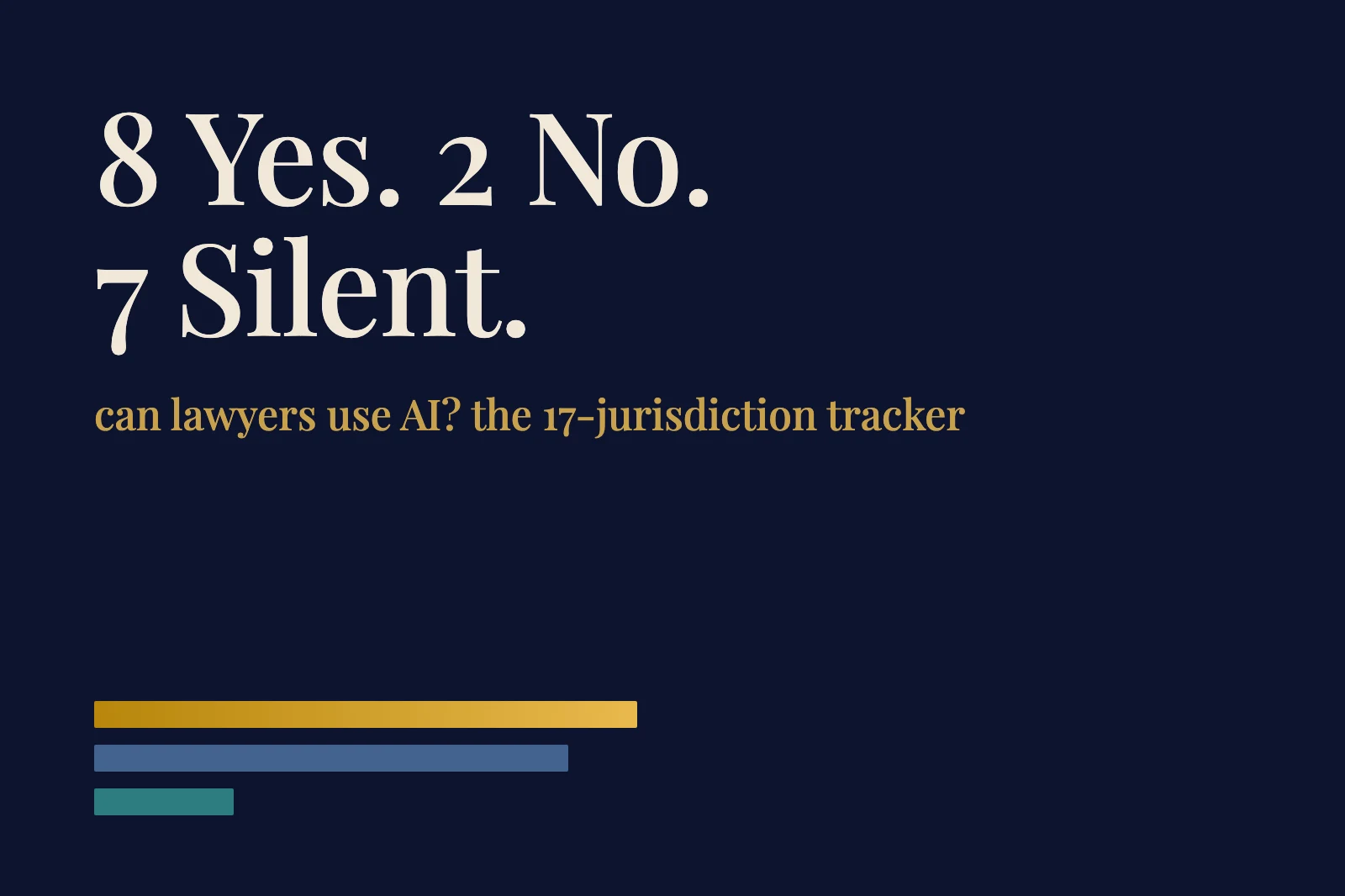

    • country-by-country tracker of bar AI rules
    • 1,313 court proceedings and 496 sanctioned attorneys
    • human-in-the-loop review
    • how LLMs actually work and why they fabricate
    • Learn About HAQQ Legal AI Security
    • Explore HAQQ Legal AI
    • Read About Nippon Life v. OpenAI
    I

    Issam Amro

    Legal Content

    Resurse conexe

    Security & privilegeJustinian: purpose-built legal AILegal AI Chat

    Postări similare

    Pot Avocații Utiliza AI? Un Urmăritor pe Țări (2026)

    Pot Avocații Utiliza AI? Un Urmăritor pe Țări (2026)

    Amendamentele Legii AI din UE 2026: Ce a schimbat Regulamentul (UE) 2026/1744

    Amendamentele Legii AI din UE 2026: Ce a schimbat Regulamentul (UE) 2026/1744

    Ce este un Avocat Nativ AI? Ghidul de Supraviețuire

    Ce este un Avocat Nativ AI? Ghidul de Supraviețuire

    Întrebări frecvente

    What is ABA Opinion 512 on AI?

    ABA Formal Opinion 512, issued in 2024, addresses lawyers' ethical use of generative AI under the Model Rules. It covers the duties of competence (Rule 1.1), confidentiality (Rule 1.6), supervision (Rules 5.1 and 5.3), candor (Rule 3.3) and reasonable fees (Rule 1.5), and requires lawyers to understand AI tools well enough to use them responsibly.

    What are the main legal AI ethics frameworks in 2026?

    The main 2026 frameworks are ABA Opinion 512 in the United States, the EU AI Act for high-risk legal AI systems, UNESCO's Recommendation on the Ethics of AI for broader principles, and bar-specific guidance from New York, California, Florida and several European bars.

    Is it ethical for lawyers to use AI?

    Yes, with conditions. Lawyers must understand the tool, protect client confidentiality, supervise AI output, verify citations and disclose use where required. Using a purpose-built legal AI platform with documented security and audit makes compliance with these duties materially easier than using general-purpose AI.

    Do I need to tell my client I am using AI?

    Disclosure depends on jurisdiction, engagement letter terms and the materiality of AI use. ABA Opinion 512 does not impose a blanket disclosure requirement but expects lawyers to consider client expectations and to discuss AI use where the client would reasonably want to know. Many firms now include AI use language in engagement letters.

    Why does purpose-built legal AI matter for ethics?

    Purpose-built legal AI matters for ethics because it ships with the safeguards that the Model Rules and equivalent frameworks expect: confidentiality controls, audit trails, citation grounding, supervision interfaces and security compliance. Bolting general-purpose AI onto legal workflows shifts that burden onto the lawyer.

    Ce urmează?

    Încearcă HAQQ AI gratuit

    Experimentează redactarea și cercetarea juridică cu inteligență artificială

    Calculează-ți ROI-ul

    Vezi cât timp și bani economisește HAQQ firmei tale

    Răsfoiește peste 380 de prompturi juridice

    Prompturi gata de utilizare pentru fiecare sarcină juridică

    Înapoi la blog

    Articolul precedent

    Prompturi AI pentru Avocați: Bibliotecă cu 168 de Prompturi + Ghid 2026

    Următorul articol

    Prompt Engineering pentru Avocați: 7 Principii care rezistă

    Pune asta la treabă

    Adresează-i lui HAQQ întrebarea pe care ți-a ridicat-o acest articol.

    HAQQ across all devices
    HAQQ Legal AI Platform Logo

    Sistemul dvs. Legal AI Twin & Practice Management pentru redactare, facturare și succes.

    Download on theApp StoreGet it onGoogle Play

    Documentații

    • Documentație se deschide într-o filă nouă
    • Noțiuni introductive se deschide într-o filă nouă
    • Presă se deschide într-o filă nouă
    • Actualizări de produs se deschide într-o filă nouă
    • Stare se deschide într-o filă nouă
    • Securitate
    • Întrebări frecvente se deschide într-o filă nouă
    • Comunitate se deschide într-o filă nouă
    • Asistență se deschide într-o filă nouă

    Academie

    • Partener se deschide într-o filă nouă
    • Curs se deschide într-o filă nouă
    • Competențe se deschide într-o filă nouă
    • Clauză se deschide într-o filă nouă
    • Bibliotecă de prompturi se deschide într-o filă nouă
    • Instrumente se deschide într-o filă nouă
    • Centru de Cercetare se deschide într-o filă nouă
    • Documente se deschide într-o filă nouă

    Site web

    • eFirm
    • Legal AI Chat
    • Aplicație mobilă
    • Justinian AI Engine
    • HAQQ eBar
    • HAQQ eWallet
    • Prețuri
    • Comparați-ne
    • Soluții
    • Blog
    • Faceți cunoștință cu echipa
    • Alăturați-vă nouă se deschide într-o filă nouă
    Deschideți aplicația
    • Localear en fr es it de pt
    • Contactinfo@haqq.ai
    • Stareoperațional·întrerupt
    • Termeni și condiții
    • Politica de confidențialitate
    • Politica privind cookie-urile
    • Prelucrarea datelor
    • humans.txt se deschide într-o filă nouălawyers.txt se deschide într-o filă nouăsecurity.txt se deschide într-o filă nouă
    © 2026 HAQQ Inc. Toate drepturile rezervate.Produs dezvoltat intern de HAQQ. Site web construit cu instrumente web moderne.