
Skip to content
    HAQQ
    • Preços
    Começar Grátis
    Começar GrátisAgendar uma Demo
    Entrar
    1. Solutions
    2. Topics
    3. How Is Child Custody Decided
    ChatMobile

    How do courts decide custody?

    The standard is the best interests of the child. Here are the factors that actually move the decision.

    Ask HAQQGet the App
    Ask HAQQExample

    Can HAQQ answer this and show its sources?

    Yes — HAQQ answers in plain language and backs every response with the specific law or clause it used, so nothing is a black box.

    Cited: Primary sources
    15,000+ law firms100,000+ people200+ countriesLegal AI ChateFirm

    What people get wrong

    Custody is not decided on who is the better person

    Parents often go in trying to prove their ex is the worse parent. But courts are not scoring a contest between adults — they are applying a single legal standard to the child, and knowing what actually moves that decision changes how you prepare.
    The short answer

    The short answer

    Courts decide custody on one overriding standard: the best interests of the child. Judges weigh factors like each parent's caregiving role, the child's stability and needs, each parent's ability to provide a safe home, the co-parenting relationship, and sometimes the child's own wishes. The specific factors and how they are weighed vary by jurisdiction.

    The factors that move the decision

    Common factors include the existing caregiving arrangement, each parent's stability and home environment, the child's ties to school and community, each parent's willingness to support the child's relationship with the other, and any history of abuse or neglect. Some jurisdictions weigh an older child's preference. The exact list varies by jurisdiction — confirm locally.

    How a court reaches the decision

    Many cases settle through a parenting plan the parents agree on, which the court reviews against the child's best interests. When they cannot agree, a judge decides, sometimes aided by a custody evaluation or a representative for the child. A history of family violence can override the usual preference for shared parenting. Procedures vary by jurisdiction.

    How HAQQ helps

    Private by design (never trained on your data)

    Available inside HAQQ across chat, mobile, and eFirm workflows.

    Real legal citations

    Available inside HAQQ across chat, mobile, and eFirm workflows.

    Available 24/7 in your language

    Available inside HAQQ across chat, mobile, and eFirm workflows.

    How it works

    1

    Learn your jurisdiction's factors

    Find the specific best-interests factors your court applies. They tell you exactly what evidence matters and what is just noise.

    2

    Build a record around the child

    Document your caregiving, the child's routines, and your support for the other parent's relationship. Concrete, child-centered evidence carries far more weight than complaints about your ex.

    3

    Ask HAQQ to map the factors, then confirm with counsel

    Ask HAQQ privately to explain the best-interests factors where you live and how to prepare for them in your language, then take anything dispositive to a local family lawyer. This is legal information, not legal advice.

    FAQ

    What does "best interests of the child" actually mean?

    It is the legal standard that puts the child's welfare above the parents' preferences. Courts apply it through a list of factors — stability, safety, each parent's role — that varies by jurisdiction.

    Does the child get to choose which parent to live with?

    Not outright in most places, but many jurisdictions let a court consider an older or more mature child's preference as one factor among many. The weight given depends on the child's age and the jurisdiction.

    Does a parent's behavior affect custody?

    Conduct matters when it bears on the child — abuse, neglect, or instability, for example. Misconduct unrelated to parenting usually carries little weight. How conduct is weighed varies by jurisdiction.

    What is a custody evaluation?

    It is an assessment, often by a court-appointed professional, of the family and the child's needs to help the judge decide. Whether one is ordered and who conducts it varies by jurisdiction.

    Related solutions

    Topics
    ChatMobile

    Child custody rights, explained

    Custody has two parts: legal (decisions) and physical (residence). Here is what each parent is typically entitled to.

    Read the guide
    Topics
    ChatMobile

    Joint vs sole custody

    Joint shares decisions and time; sole concentrates them. Here is when courts grant each.

    Read the guide
    Topics
    ChatMobile

    Relocating with children after divorce

    A move that affects the other parent's time usually needs consent or court approval. Here is the standard.

    Read the guide

    Browse other solutions

    By roleBy use caseFeaturesBy firm sizeBy countryBy cityFor individualsSpecialized

    Junte-se a mais de 15.000 escritórios de advocacia que usam o HAQQ

    IA jurídica privada e com fontes citadas, no chat, no telemóvel e no eFirm.

    Comece GrátisVeja em Ação
    HAQQ Legal AI Platform Logo

    O seu Gémeo IA Jurídico & Sistema de Gestão de Prática para redigir, faturar e vencer.

    Download on theApp StoreGet it onGoogle Play

    Documentações

    • Docs abre num novo separador
    • Primeiros passos abre num novo separador
    • Imprensa abre num novo separador
    • Atualizações do produto abre num novo separador
    • Estado abre num novo separador
    • Segurança
    • FAQ abre num novo separador
    • Comunidade abre num novo separador
    • Apoio abre num novo separador

    Academy

    • Curso abre num novo separador
    • Competências abre num novo separador
    • Cláusulas abre num novo separador
    • Biblioteca de prompts abre num novo separador
    • Ferramentas abre num novo separador
    • Centro de investigação abre num novo separador
    • Documentos abre num novo separador

    Site

    • eFirm
    • Chat IA Jurídico
    • App Móvel
    • Motor Justiniano
    • HAQQ eBar
    • HAQQ eWallet
    • Preços
    • Compare-nos
    • Soluções
    • Blog
    • Conhecer a equipa
    • Junte-se a nós abre num novo separador
    Abrir a app
    • Idiomasar en fr es it de pt
    • Contatoinfo@haqq.ai
    • Estadooperacional·fundamentado
    • Termos de Serviço
    • Política de Privacidade
    • Política de Cookies
    • Processamento de Dados abre num novo separador
    • humans.txt abre num novo separadorlawyers.txt abre num novo separadorsecurity.txt abre num novo separador
    © 2026 HAQQ Inc. Todos os direitos reservados.Produto desenvolvido internamente pela HAQQ. Site construído com ferramentas web modernas.
    Connected Intelligence
    Legal AssistantAWhat is the term of this NDA?NDA · Vendor.pdfThe term is 3 years from signing,effective 1 Mar 2024, expiring28 Feb 2027.ADoes confidentiality survive termination?Yes — obligations continue for 2years after expiry, until 28 Feb 2029.Can this agreement be terminated early?
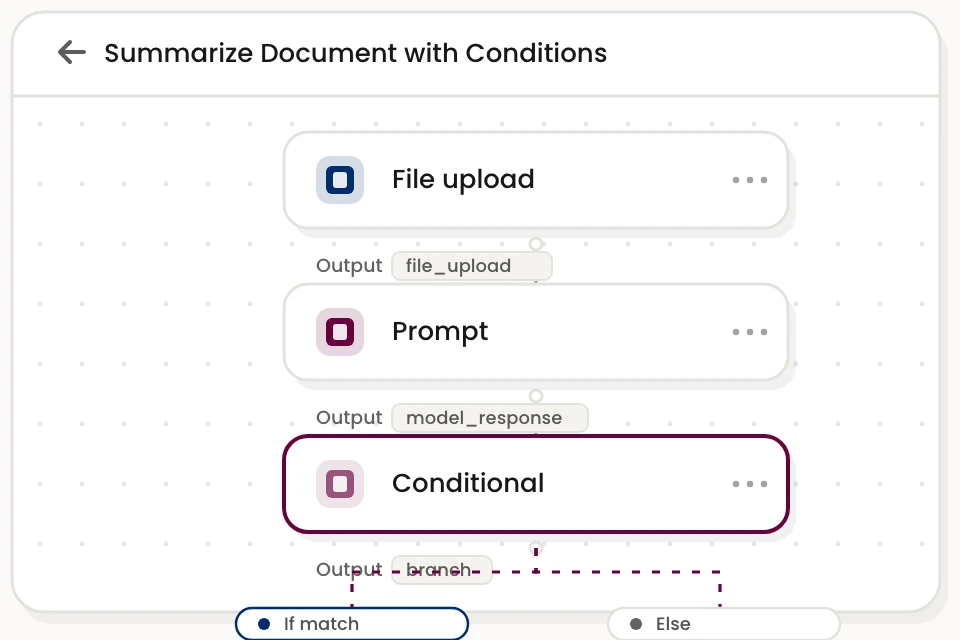
    Summarize Document with ConditionsFile uploadOutputfile_uploadPromptOutputmodel_responseConditionalOutputbranchIf matchElse