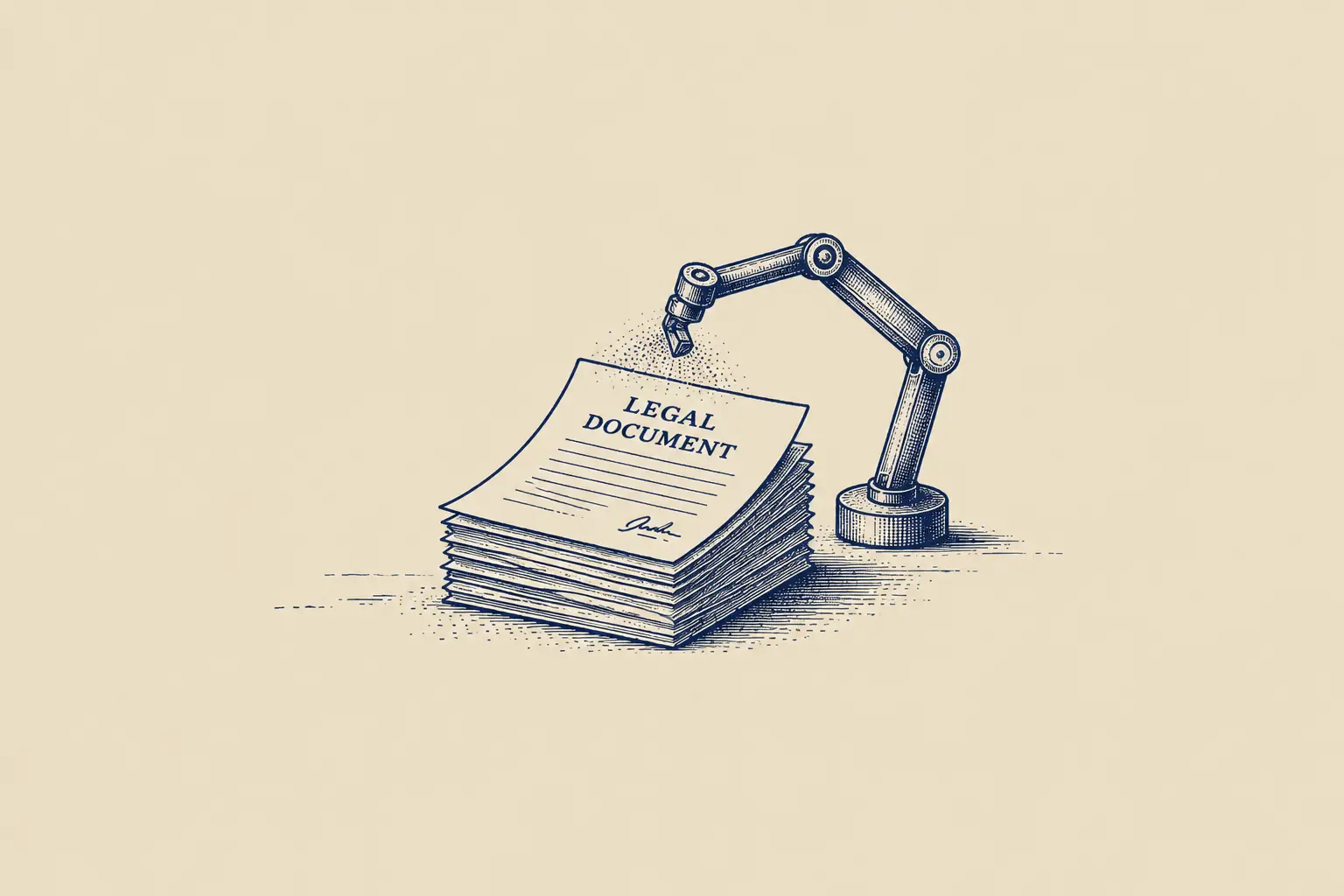
Document automation has been sold to small firms for twenty years, and most small firms still draft from the last similar file. The reason is structural. Most tools in this category produce nothing until someone builds a template library first, and in a four-lawyer firm that is nobody's job.
Short answer. There are two different products both called document automation, and buying the wrong one is the common expensive mistake. Classic template engines assemble a document from questionnaire answers and conditional logic, and they need a template library built and maintained first. AI drafting produces the document from the matter and your existing precedents, with no logic tree to author. A small firm usually wants the second, with the first added later for the two or three documents it produces at real volume. HAQQ sits in the second category: Legal AI Chat drafts and reviews, eFirm holds the matter so the draft arrives with the parties, dates and governing law already in it, and the clause and template libraries give you a starting corpus you did not have to build.
The distinction that decides your purchase
Three categories get sold under overlapping names. Separate them before you look at any pricing page.
- Document assembly, sometimes called template automation. You build a template, add conditional logic, and answer a questionnaire. The output is deterministic and identical every time. Excellent for a form you produce fifty times a month. It does nothing on the first day, because the template does not exist yet.
- Document management. Storage, version control, full-text search, access permissions. It organises documents you already have. It generates nothing. Buying this when you needed generation is the most common miss in legal tech procurement.
- AI drafting. The system produces a draft from an instruction plus the matter file plus your precedents. No template to author, no logic tree. The output varies, which is why every draft is a first version for a lawyer to check.
A small firm's real constraint is that nobody has three weeks to build a template library. That is the argument for starting with AI drafting and adding assembly later, for the narrow set of documents where volume actually justifies the build.
Why a draft that knows the matter beats a draft that does not
This is the part that separates a legal platform from a general chat window, and it is easy to underrate until you have used both.
A draft generated in a standalone chat starts empty. You paste in the party names, the dates, the governing law, the position from the last round. A draft generated on the matter already has them. Over a year of small documents, that difference is most of the time saving, and it is also where most of the error risk sits, because retyping a party name is how the wrong entity ends up on a signature page.
HAQQ's eFirm holds matters, contracts, documents, hearings, tasks, calendar, financials, KYC, leads and email. Legal AI Chat drafts against that. Every chat, draft and document lives on the matter. On the eFirm Purple tier there is also a Legal AI Digital Twin that writes in the firm's voice, so drafts come out in your house style.
The starting corpus problem, and what HAQQ publishes
Every automation tool asks the same first question: where do the templates come from. For a firm with no library, that question is the whole barrier.
HAQQ ships with a starting corpus. There are 70 document templates, 738 real-world clauses in the clause library, and 394 legal prompts across 23 practice areas. There are also 20 free tools that need no signup, including an NDA generator and a contract clause checker, which are a reasonable way to see the output quality before any subscription.
That corpus is a starting point. Your own executed documents still have to go in, and loading them is the first thing to do after buying anything in this category. Your fallback positions are the asset, and no vendor library contains them.
What to test before you buy
Ask each vendor for a pilot on your actual documents. Refuse the scripted demo. Five checks, each graded pass, partial or fail.
- Time to first usable draft. Start the clock at signup. How long until the tool produces something a lawyer would send to a client after review. If the answer requires building a template first, that build time is part of the number.
- Use your own precedents. Upload three of your own executed documents and ask for a fourth in the same style. Check whether your defined terms, your numbering convention and your fallback positions survive.
- Matter data flow. Does the draft pull parties, dates and governing law from the file automatically, or do you retype them. Retyping is where the errors are.
- The edge case. Give it a document with an unusual structure: a side letter, an annex in a second language, a clause your firm always negotiates. Generic tools produce something plausible and generic here.
- What happens after generation. Review routing, version control, and whether the document stays attached to the matter. A tool that drafts well and then hands you a loose file just moves the bottleneck downstream.
Experimente HAQQ AI grátis
Experimente a redação e pesquisa jurídica com IA
Security questions that belong in the contract
Document automation means your executed precedents, your client data and your negotiating positions all live in one vendor's system. Ask the same questions of everyone and get the answers into the agreement. A marketing page commits nobody. Where is data stored, where is it processed, is the sub-processor list published, does it include a model provider, is client data used for training, can you export and delete everything, and what happens to matter data when the contract ends.
For HAQQ specifically: data sits in ISO 27001 and ISO 42001 compliant cloud infrastructure with AES-256 encryption at rest and TLS 1.3 in transit. Default residency is global, Business plans support regional residency in the GCC, the EU or the US, and Enterprise supports custom residency and on-premise deployment. Zero training on customer data is guaranteed from Starter upward, and GDPR compliance applies on every tier. Cross-matter isolation, audit trails, role-based access control and anonymisation are named as governance controls.
What it costs, and why published pricing matters at this size
A four-lawyer firm approves software without a procurement cycle, which makes a published rate worth more to you than to a firm of four hundred. HAQQ publishes in USD. Legal AI Chat starts free, then runs at $30, $100 or $300 per month. eFirm is $25 per user per month on Boutique or $60 on Purple, cheaper billed annually at $250 and $600 per user per year, with a minimum of two seats on Purple. Enterprise is on quote. The two products are separate subscriptions with independent billing and no bundle discount.
Much of the established document automation market prices by quote. That is a legitimate enterprise sales motion, and it also means a small firm cannot evaluate those tools on its own calendar. Whatever you shortlist, count the sales calls as part of the cost.
Where this guide does not help you
- High-volume, highly structured form production, such as thousands of near-identical court forms a month. A dedicated assembly engine with deep conditional logic is built for exactly that and will beat a drafting tool on it.
- Firms that already have a mature, maintained template library. Your build cost is sunk and the calculation is different.
- Pure storage and retrieval. That is document management, a separate category.
- Deciding what your fallback positions should be. Automation reproduces your judgement at speed. Supplying the judgement stays with you.
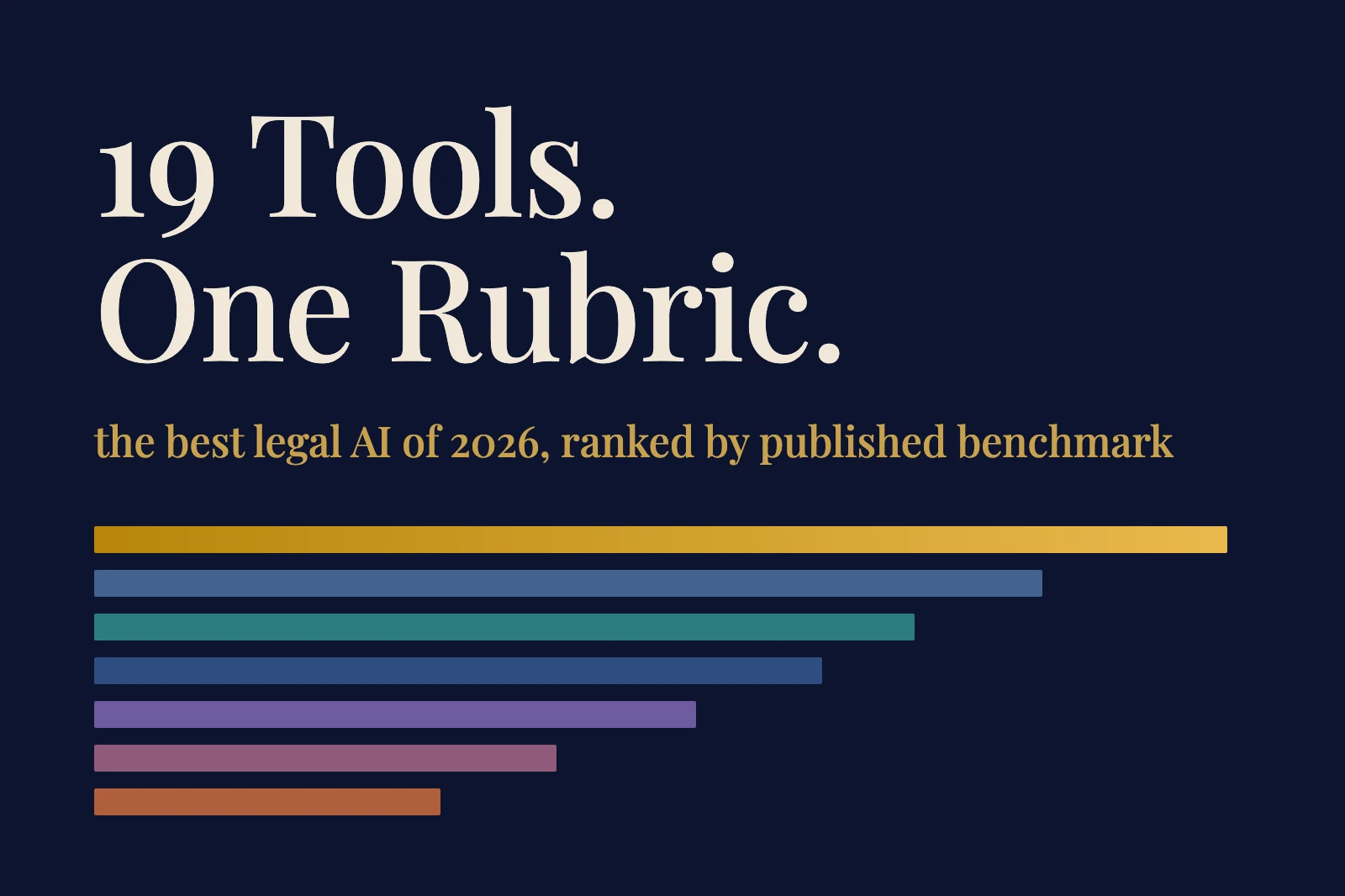
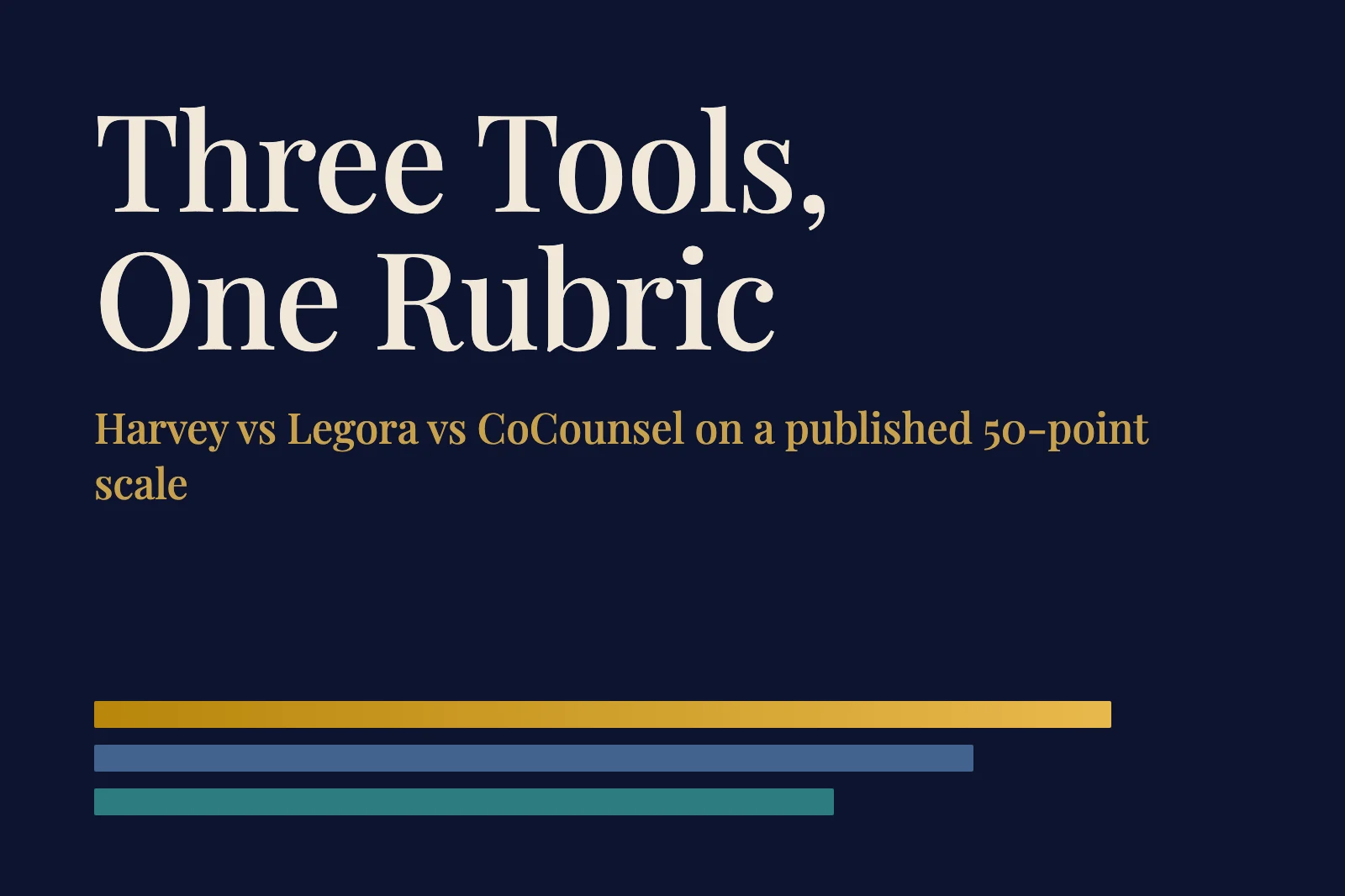
- Redlining all day inside Microsoft Word. On HAQQ's own 50-task benchmark, Spellbook scores 46 out of 50 on contract drafting against HAQQ's 44. HAQQ runs that benchmark and leads it overall, which is a conflict of interest, and this is one of the categories HAQQ loses.
HAQQ provides legal information, not regulated legal advice. Benchmark scores cited here come from HAQQ's own internal testing rather than an independent or audited evaluation, and describe model performance on defined tasks rather than a guarantee of outcome. Every generated document is a first version requiring review by a qualified lawyer, who remains responsible for the deliverable. Confirm professional conduct and disclosure obligations with your own bar or regulator.
- HAQQ Legal AI Chat
- HAQQ eFirm practice management
- Document management feature
- Matter management
- Legal document templates, 70 of them
- Clause library, 738 real-world clauses
- Prompt library, 394 legal prompts
- Free NDA generator
- Free contract clause checker
- HAQQ pricing
- Security and data residency
- The full 50-task benchmark, including where HAQQ loses
- Solutions by firm size