
Skip to content
    HAQQ
    • Preise
    Kostenlos starten
    Kostenlos startenDemo buchen
    Einloggen
    1. Solutions
    2. Topics
    3. Joint vs Sole Custody
    ChatMobile

    Joint or sole custody?

    Joint shares decisions and time; sole concentrates them. Here is when courts grant each.

    Ask HAQQGet the App
    Ask HAQQExample

    Can HAQQ answer this and show its sources?

    Yes — HAQQ answers in plain language and backs every response with the specific law or clause it used, so nothing is a black box.

    Cited: Primary sources
    15,000+ law firms100,000+ people200+ countriesLegal AI ChateFirm

    What people get wrong

    "Custody" is two things, not one

    People hear "joint" or "sole" custody and picture who the children live with, but custody actually splits into decision-making and residence. Mixing the two up leads parents to fight over the wrong label and miss what really changes day to day.
    The short answer

    The short answer

    Joint custody means parents share custody — either the major decisions, the children's time, or both. Sole custody concentrates that in one parent. Custody has two layers: legal custody (who makes decisions) and physical custody (where the child lives), and a court can order them in different combinations depending on the child's best interests.

    Joint, in short

    Joint legal custody means both parents share major decisions on schooling, health, and religion; joint physical custody means the children spend substantial time living with each parent, though rarely an exact 50/50. Many systems favour joint arrangements where the parents can cooperate, but the default and the labels vary by jurisdiction — confirm yours.

    Sole, in short

    Sole custody gives one parent the decisions, the primary residence, or both, often where conflict, distance, or safety concerns make sharing impractical. The other parent usually still has visitation or contact unless a court limits it. How readily courts grant sole custody, and what contact survives it, varies by jurisdiction — confirm locally.

    How HAQQ helps

    Private by design (never trained on your data)

    Available inside HAQQ across chat, mobile, and eFirm workflows.

    Real legal citations

    Available inside HAQQ across chat, mobile, and eFirm workflows.

    Available 24/7 in your language

    Available inside HAQQ across chat, mobile, and eFirm workflows.

    How it works

    1

    Separate the decisions from the schedule

    Decide what you are actually asking for: a share of major decisions, a share of the children's time, or both. They are granted separately, so be specific.

    2

    Frame it around the child

    Courts decide custody on the best interests of the child, not on what is fair to the parents. Build your case around stability, each parent's involvement, and the ability to cooperate.

    3

    Map your options, then confirm

    Ask HAQQ privately to lay out which legal and physical custody combinations your jurisdiction recognizes and what each means in practice, then confirm with a local family lawyer. This is legal information, not legal advice.

    FAQ

    Does joint custody mean a 50/50 schedule?

    Not necessarily — joint legal custody is about shared decisions, and joint physical custody means substantial time with each parent, which is often not an exact split. The arrangement varies by jurisdiction and case.

    Can one parent have sole custody and the other still see the children?

    Usually yes — sole custody for one parent commonly leaves the other with visitation or contact, unless a court restricts it for safety. The exact rights vary by jurisdiction.

    Which is better, joint or sole?

    Neither by default — courts look at the child's best interests, and joint works best where parents can cooperate while sole fits high-conflict or safety situations. There is no universal answer; it is fact-specific.

    Does custody affect child support?

    Often yes — the parenting time built into a custody arrangement is usually an input to the support formula. How much it moves the number varies by jurisdiction.

    Related solutions

    Topics
    ChatMobile

    Child custody rights, explained

    Custody has two parts: legal (decisions) and physical (residence). Here is what each parent is typically entitled to.

    Read the guide
    Topics
    ChatMobile

    How is child custody decided?

    The standard is the best interests of the child. Here are the factors that actually move the decision.

    Read the guide
    Topics
    ChatMobile

    What is a parenting plan?

    It sets custody, the schedule, and co-parenting logistics. Here is what a good one covers — and the clauses people forget.

    Read the guide

    Browse other solutions

    By roleBy use caseFeaturesBy firm sizeBy countryBy cityFor individualsSpecialized

    Schließen Sie sich über 15.000 Kanzleien an, die HAQQ nutzen

    Vertrauliche Rechts-KI mit Quellenangaben – in Chat, Mobile App und eFirm.

    Kostenlos startenIn Aktion sehen
    HAQQ Legal AI Platform Logo

    Ihr juristischer KI-Zwilling und Kanzleimanagement-System für Entwurf, Abrechnung und Gewinnen.

    Download on theApp StoreGet it onGoogle Play

    Dokumentationen

    • Docs wird in einem neuen Tab geöffnet
    • Erste Schritte wird in einem neuen Tab geöffnet
    • Presse wird in einem neuen Tab geöffnet
    • Produkt-Updates wird in einem neuen Tab geöffnet
    • Status wird in einem neuen Tab geöffnet
    • Sicherheit
    • FAQ wird in einem neuen Tab geöffnet
    • Community wird in einem neuen Tab geöffnet
    • Support wird in einem neuen Tab geöffnet

    Academy

    • Kurs wird in einem neuen Tab geöffnet
    • Skills wird in einem neuen Tab geöffnet
    • Klauseln wird in einem neuen Tab geöffnet
    • Prompt-Bibliothek wird in einem neuen Tab geöffnet
    • Tools wird in einem neuen Tab geöffnet
    • Research Hub wird in einem neuen Tab geöffnet
    • Dokumente wird in einem neuen Tab geöffnet

    Website

    • eFirm
    • Juristischer KI-Chat
    • Mobile App
    • Justinian KI-Engine
    • HAQQ eBar
    • HAQQ eWallet
    • Preise
    • Vergleichen Sie uns
    • Lösungen
    • Blog
    • Team kennenlernen
    • Mach mit wird in einem neuen Tab geöffnet
    App öffnen
    • Sprachenar en fr es it de pt
    • Kontaktinfo@haqq.ai
    • Statusbetriebsbereit·fundiert
    • Nutzungsbedingungen
    • Datenschutzrichtlinie
    • Cookie-Richtlinie
    • Datenverarbeitung wird in einem neuen Tab geöffnet
    • humans.txt wird in einem neuen Tab geöffnetlawyers.txt wird in einem neuen Tab geöffnetsecurity.txt wird in einem neuen Tab geöffnet
    © 2026 HAQQ Inc. Alle Rechte vorbehalten.Produkt intern von HAQQ entwickelt. Website mit modernen Web-Tools gebaut.
    Connected Intelligence
    Legal AssistantAWhat is the term of this NDA?NDA · Vendor.pdfThe term is 3 years from signing,effective 1 Mar 2024, expiring28 Feb 2027.ADoes confidentiality survive termination?Yes — obligations continue for 2years after expiry, until 28 Feb 2029.Can this agreement be terminated early?
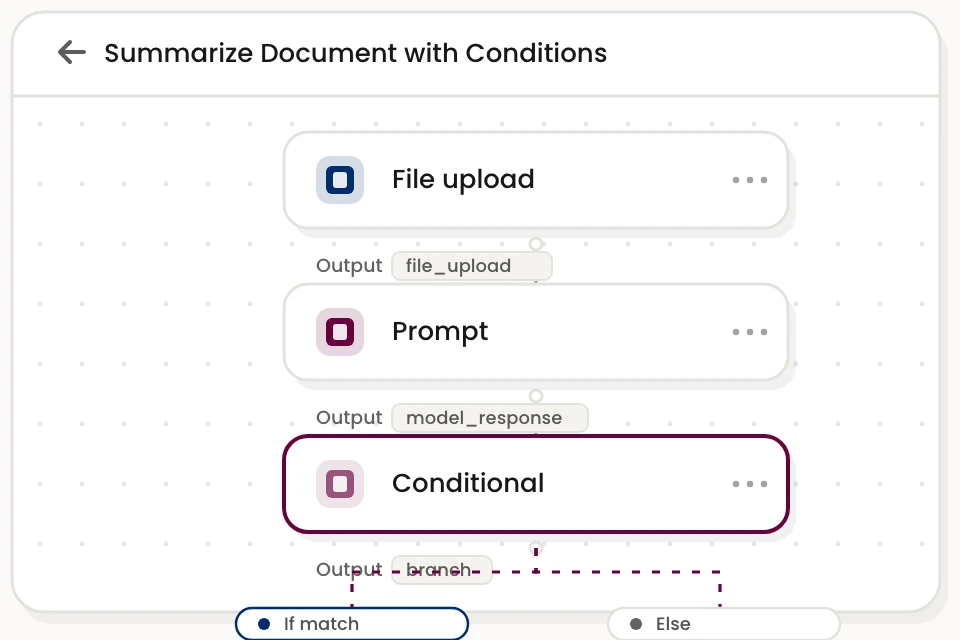
    Summarize Document with ConditionsFile uploadOutputfile_uploadPromptOutputmodel_responseConditionalOutputbranchIf matchElse