
Skip to content
    HAQQ
    • Prezzi
    Inizia Gratis
    Inizia GratisPrenota Demo
    Accedi
    1. Solutions
    2. Topics
    3. Child Custody Rights
    ChatMobile

    What are your custody rights?

    Custody has two parts: legal (decisions) and physical (residence). Here is what each parent is typically entitled to.

    Ask HAQQGet the App
    Ask HAQQExample

    Can HAQQ answer this and show its sources?

    Yes — HAQQ answers in plain language and backs every response with the specific law or clause it used, so nothing is a black box.

    Cited: Primary sources
    15,000+ law firms100,000+ people200+ countriesLegal AI ChateFirm

    What people get wrong

    Custody is two rights, not one

    Parents often talk about "getting custody" as a single thing they win or lose. But custody splits into two separate rights — making decisions for the child and having the child live with you — and you can hold one without the other.
    The short answer

    The short answer

    Custody has two parts. Legal custody is the right to make major decisions about the child's upbringing — schooling, health, religion. Physical custody is where the child lives. Each can be held jointly or solely by one parent. What each parent is entitled to is decided on the best interests of the child, and the labels vary by jurisdiction.

    Legal vs physical custody

    Legal custody covers decision-making authority; physical custody covers residence and day-to-day care. Joint legal custody, where both parents share major decisions, is a common default in many jurisdictions, while physical time may still be split unevenly. The UAE's civil track for non-Muslims under Federal Decree-Law No. 41 of 2022 sets a joint-custody default. Terms vary by jurisdiction.

    The rights a non-residential parent keeps

    A parent who does not have primary physical custody usually still has parenting time (often called visitation or access) and frequently retains a share of legal decision-making. Courts generally favor keeping both parents involved unless a child's safety is at risk. The exact rights, and any supervision, vary by jurisdiction — confirm locally.

    How HAQQ helps

    Private by design (never trained on your data)

    Available inside HAQQ across chat, mobile, and eFirm workflows.

    Real legal citations

    Available inside HAQQ across chat, mobile, and eFirm workflows.

    Available 24/7 in your language

    Available inside HAQQ across chat, mobile, and eFirm workflows.

    How it works

    1

    Separate decisions from residence

    Map what you want on legal custody (the decisions) and physical custody (the living arrangement) as two distinct questions. Conflating them is where most confusion starts.

    2

    Center the child's best interests

    Courts decide on the best interests of the child, not parental fairness. Frame your position around stability, the child's needs, and each parent's involvement, not who deserves to win.

    3

    Ask HAQQ to explain your rights, then confirm with counsel

    Ask HAQQ privately to explain what legal and physical custody mean where you live and what each parent is typically entitled to, then take anything dispositive to a local family lawyer. This is legal information, not legal advice.

    FAQ

    What is the difference between legal and physical custody?

    Legal custody is the right to make major decisions about the child; physical custody is where the child lives. A parent can have joint legal custody while the child lives mostly with the other parent. Labels vary by jurisdiction.

    Do mothers automatically get custody?

    No. Most modern systems decide custody on the best interests of the child, not the parent's gender. Some jurisdictions retain age-based or other presumptions, so confirm the rule where you live.

    What rights does the non-custodial parent have?

    Typically parenting time (visitation or access) and often a share of major decision-making. Courts usually favor keeping both parents involved unless the child's safety requires limits. The specifics vary by jurisdiction.

    Can custody rights be changed later?

    Yes — custody and parenting time can usually be modified if there is a substantial change in circumstances and the change serves the child's best interests. The threshold to modify varies by jurisdiction.

    Related solutions

    Topics
    ChatMobile

    How is child custody decided?

    The standard is the best interests of the child. Here are the factors that actually move the decision.

    Read the guide
    Topics
    ChatMobile

    Joint vs sole custody

    Joint shares decisions and time; sole concentrates them. Here is when courts grant each.

    Read the guide
    Topics
    ChatMobile

    What is a parenting plan?

    It sets custody, the schedule, and co-parenting logistics. Here is what a good one covers — and the clauses people forget.

    Read the guide

    Browse other solutions

    By roleBy use caseFeaturesBy firm sizeBy countryBy cityFor individualsSpecialized

    Unisciti agli oltre 15.000 studi legali che usano HAQQ

    AI legale riservata e con citazioni, su chat, mobile ed eFirm.

    Inizia GratisVedi in Azione
    HAQQ Legal AI Platform Logo

    Il tuo Gemello AI Legale e Sistema di Gestione Studio per redigere, fatturare e vincere.

    Download on theApp StoreGet it onGoogle Play

    Documentazioni

    • Docs si apre in una nuova scheda
    • Per iniziare si apre in una nuova scheda
    • Stampa si apre in una nuova scheda
    • Aggiornamenti del prodotto si apre in una nuova scheda
    • Stato si apre in una nuova scheda
    • Sicurezza
    • FAQ si apre in una nuova scheda
    • Comunità si apre in una nuova scheda
    • Assistenza si apre in una nuova scheda

    Academy

    • Corso si apre in una nuova scheda
    • Competenze si apre in una nuova scheda
    • Clausole si apre in una nuova scheda
    • Libreria di prompt si apre in una nuova scheda
    • Strumenti si apre in una nuova scheda
    • Hub di ricerca si apre in una nuova scheda
    • Documenti si apre in una nuova scheda

    Sito web

    • eFirm
    • Chat IA Legale
    • App Mobile
    • Motore Giustiniano
    • HAQQ eBar
    • HAQQ eWallet
    • Prezzi
    • Confrontaci
    • Soluzioni
    • Blog
    • Conosci il team
    • Unisciti a noi si apre in una nuova scheda
    Apri l'app
    • Linguear en fr es it de pt
    • Contattoinfo@haqq.ai
    • Statooperativo·fondato
    • Termini di Servizio
    • Informativa sulla privacy
    • Informativa sui cookie
    • Trattamento Dati si apre in una nuova scheda
    • humans.txt si apre in una nuova schedalawyers.txt si apre in una nuova schedasecurity.txt si apre in una nuova scheda
    © 2026 HAQQ Inc. Tutti i diritti riservati.Prodotto sviluppato internamente da HAQQ. Sito web costruito con strumenti web moderni.
    Connected Intelligence
    Legal AssistantAWhat is the term of this NDA?NDA · Vendor.pdfThe term is 3 years from signing,effective 1 Mar 2024, expiring28 Feb 2027.ADoes confidentiality survive termination?Yes — obligations continue for 2years after expiry, until 28 Feb 2029.Can this agreement be terminated early?
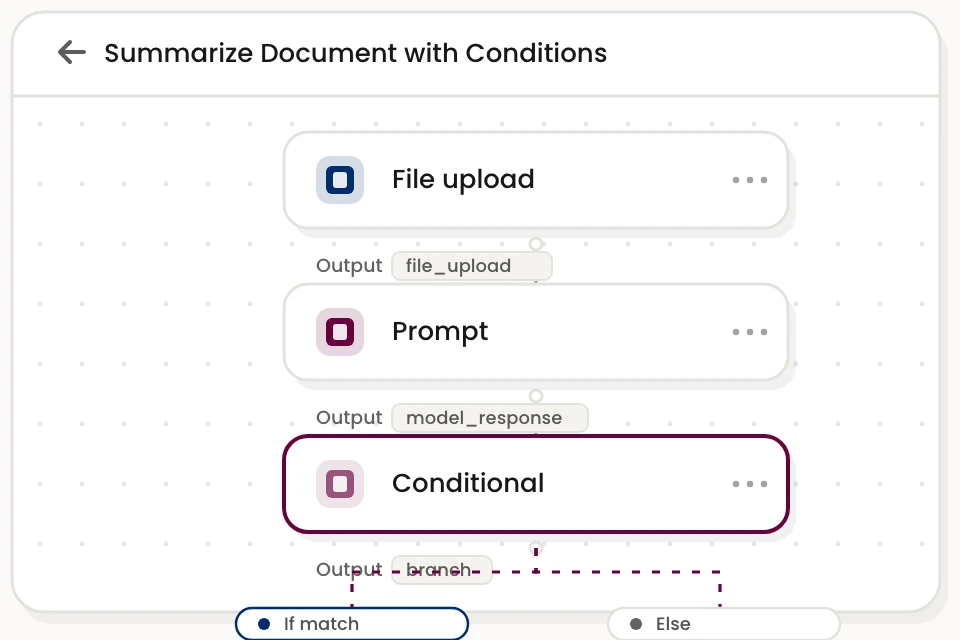
    Summarize Document with ConditionsFile uploadOutputfile_uploadPromptOutputmodel_responseConditionalOutputbranchIf matchElse