Skip to content
    HAQQ
    • Tarifs
    Commencer gratuitement
    Commencer gratuitementRéserver une démo
    Se connecter
    1. Solutions
    2. Topics
    3. Hidden Assets in Divorce
    ChatMobile

    How are hidden assets found in divorce?

    Disclosure plus a careful read of the financials usually surfaces them. Here are the red flags and the tools that help.

    Ask HAQQGet the App
    Ask HAQQExample

    Can HAQQ answer this and show its sources?

    Yes — HAQQ answers in plain language and backs every response with the specific law or clause it used, so nothing is a black box.

    Cited: Primary sources
    15,000+ law firms100,000+ people200+ countriesLegal AI ChateFirm

    What people get wrong

    You can only split what you can see

    A fair division of property assumes you both know what there is to divide. When one spouse quietly moves money, undervalues a business, or forgets to mention an account, the settlement is built on a false picture — and the other spouse pays for it.

    The short answer

    The short answer

    Hidden assets are usually surfaced through the divorce's financial disclosure obligations plus a careful read of the paper trail. Both spouses generally must disclose their assets, debts, and income under oath, and tax returns, bank statements, and business records are then cross-checked for what does not add up. The tools and penalties for hiding assets vary by jurisdiction.

    The common red flags

    Typical warning signs include income that suddenly drops around the divorce, a business whose expenses balloon, large or unexplained transfers, cash-heavy dealings, overpaying tax or a friend to be "repaid" later, and accounts you only learn about by accident. None of these prove hiding on their own — they are leads to chase, and what they mean varies by case.

    The tools that find them

    Beyond mandatory disclosure, the usual tools are formal requests for documents, subpoenas to banks and employers, depositions under oath, and a forensic accountant for complex or business cases. Courts can penalize a spouse who hides assets. The exact procedures and sanctions vary by jurisdiction — confirm locally.

    How HAQQ helps

    Private by design (never trained on your data)

    Available inside HAQQ across chat, mobile, and eFirm workflows.

    Real legal citations

    Available inside HAQQ across chat, mobile, and eFirm workflows.

    Available 24/7 in your language

    Available inside HAQQ across chat, mobile, and eFirm workflows.

    How it works

    1

    Build the financial baseline

    Gather tax returns, bank and card statements, payslips, and business records, and list every account and asset you know exists. You cannot spot what is missing without a baseline.

    2

    Look for what does not reconcile

    Compare lifestyle against declared income, watch for transfers and timing, and note assets that have quietly changed hands. The gaps between the documents are where hidden money usually hides.

    3

    Organize the trail, then confirm

    Ask HAQQ privately to organize your financial records and flag the red flags and questions to raise, then bring anything serious to a family lawyer and, where needed, a forensic accountant. This is legal information, not legal advice.

    FAQ

    What happens if a spouse is caught hiding assets?

    It can backfire badly — courts can reopen the division, award more to the other spouse, or impose sanctions for non-disclosure. The specific penalties vary by jurisdiction.

    What are the most common places assets are hidden?

    Often undisclosed accounts, deferred income or bonuses, undervalued or cash-heavy businesses, transfers to friends or family, and overpaid taxes to be refunded later. Where to look depends on the couple's finances.

    Do I need a forensic accountant?

    Not always — for simple finances, disclosure and the bank records may be enough. For a business, complex holdings, or clear red flags, a forensic accountant is often worth it. It depends on the case.

    Can I investigate my spouse's accounts myself?

    Be careful — accessing someone's accounts without permission can be illegal even mid-divorce. The proper route is formal disclosure and court process. What you may lawfully do varies by jurisdiction; get advice first.

    Related solutions

    Topics
    ChatMobile

    How is property divided in a divorce?

    It depends on your regime: equitable distribution, community property, or a civil-law matrimonial regime. Here is how each one splits the estate.

    Read the guide
    Topics
    ChatMobile

    Who keeps the house in a divorce?

    It is usually the biggest asset and the hardest call. Here are the options — buyout, sale, deferred sale — and how to choose.

    Read the guide
    Topics
    ChatMobile

    Is it safe to use ChatGPT for your divorce?

    A 2026 ruling found AI chats are not privileged — which can make them evidence in your case. Here is what is safe and what is not.

    Read the guide

    Browse other solutions

    By roleBy use caseFeaturesBy firm sizeBy countryBy cityFor individualsSpecialized

    Rejoignez plus de 15 000 cabinets d'avocats qui utilisent HAQQ

    Une IA juridique confidentielle et sourcée, dans le chat, sur mobile et dans eFirm.

    Commencer GratuitementVoir en Action
    HAQQ Legal AI Platform Logo

    Votre Jumeau Juridique IA et Système de Gestion de Cabinet pour la rédaction, la facturation et le succès.

    Download on theApp StoreGet it onGoogle Play

    Documentations

    • Docs s'ouvre dans un nouvel onglet
    • Premiers pas s'ouvre dans un nouvel onglet
    • Presse s'ouvre dans un nouvel onglet
    • Nouveautés produit s'ouvre dans un nouvel onglet
    • Statut s'ouvre dans un nouvel onglet
    • Sécurité
    • FAQ s'ouvre dans un nouvel onglet
    • Communauté s'ouvre dans un nouvel onglet
    • Assistance s'ouvre dans un nouvel onglet

    Academy

    • Cours s'ouvre dans un nouvel onglet
    • Compétences s'ouvre dans un nouvel onglet
    • Clauses s'ouvre dans un nouvel onglet
    • Bibliothèque de prompts s'ouvre dans un nouvel onglet
    • Outils s'ouvre dans un nouvel onglet
    • Pôle recherche s'ouvre dans un nouvel onglet
    • Documents s'ouvre dans un nouvel onglet

    Site web

    • eFirm
    • Chat IA Juridique
    • Application Mobile
    • Moteur Justinien
    • HAQQ eBar
    • HAQQ eWallet
    • Tarifs
    • Comparez-nous
    • Solutions
    • Blog
    • Rencontrer l'équipe
    • Rejoignez-nous s'ouvre dans un nouvel onglet
    Ouvrir l'app
    • Languesar en fr es it de pt
    • Contactinfo@haqq.ai
    • Statutopérationnel·ancré
    • Conditions d'Utilisation
    • Politique de Confidentialité
    • Politique de Cookies
    • Traitement des Données s'ouvre dans un nouvel onglet
    • humans.txt s'ouvre dans un nouvel ongletlawyers.txt s'ouvre dans un nouvel ongletsecurity.txt s'ouvre dans un nouvel onglet
    © 2026 HAQQ Inc. Tous droits réservés.Produit conçu en interne par HAQQ. Site web construit avec des outils web modernes.
    Connected Intelligence
    Legal AssistantAWhat is the term of this NDA?NDA · Vendor.pdfThe term is 3 years from signing,effective 1 Mar 2024, expiring28 Feb 2027.ADoes confidentiality survive termination?Yes — obligations continue for 2years after expiry, until 28 Feb 2029.Can this agreement be terminated early?
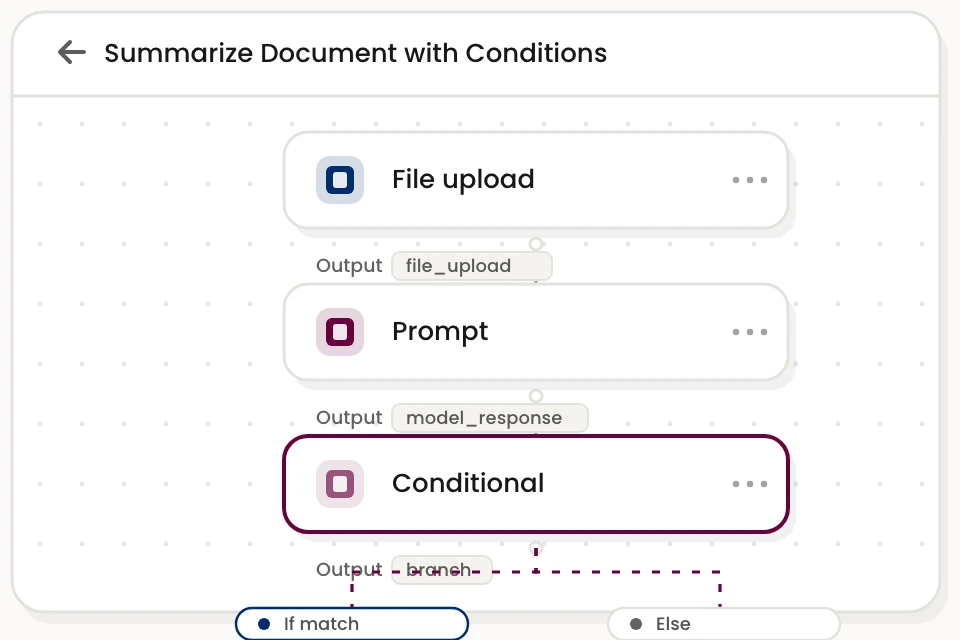
    Summarize Document with ConditionsFile uploadOutputfile_uploadPromptOutputmodel_responseConditionalOutputbranchIf matchElse