

Short answer: Claude's legal plugin did not kill legal tech. It exposed which parts of the stack were weaker than the industry wanted to admit, while the durable parts (verification, workflow, and firm context) kept their value. The honest read sits between the panic and the denial.
Vyzkoušejte HAQQ AI zdarma
Zažijte sepisování a rešerše s podporou AI
Legal tech has a habit of panicking every time a new AI model learns to read long PDFs. Claude's legal plugin triggered exactly that ritual. Stock dips. Breathless LinkedIn essays. Half the industry declaring the end of legal tech. The other half insisting nothing has changed.
Reality sits somewhere in the middle. Claude did not replace the legal stack. But it did expose which parts of the stack were weaker than people wanted to admit.
This matters because the legal market is not built like most software categories. Law runs on three layers: authoritative information, structured workflows, and operational tasks. Claude just entered one of those layers directly. Understanding which one explains both the excitement and the limits.
The Moment Claude Entered Legal
Anthropic introduced a legal plugin inside Claude's Cowork environment. Instead of acting only as a conversational model, Claude can now run specific legal operations through commands such as contract review, NDA triage, vendor compliance checks, legal brief preparation, and response drafting.
Speed up contract review, NDA triage, and compliance workflows for in-house legal teams. (Anthropic)
The tool allows organizations to configure internal playbooks, acceptable risk ranges, fallback positions, and escalation triggers. In theory, a legal department can upload its preferred negotiation positions and have Claude apply them automatically when reviewing documents.
- Reviewing vendor contracts
- Screening NDAs
- Preparing internal legal briefings
- Checking vendor compliance status
- Drafting standard responses
Anthropic is careful about positioning. Their documentation explicitly states that outputs must still be reviewed by licensed attorneys. Claude is not presented as a lawyer replacement but as a workflow assistant.
Why Legal Suddenly Cares About Claude
Claude itself is not new. Anthropic launched the first version in 2023. At the time, legal professionals mostly ignored it. It looked like another chatbot competing with GPT models.
The perception changed when Claude became unusually strong at processing extremely large documents. Legal work runs on long files: contracts, litigation records, discovery sets, regulatory filings, case law collections, due diligence folders. Many of these documents reach hundreds or thousands of pages.
Claude's large context window makes it capable of reading and reasoning over entire agreements or document sets in one pass. That is precisely why legal AI platforms such as Harvey began integrating Claude into their workflows.
When Anthropic moved from providing a model to shipping actual legal tasks through a plugin, the market took notice. Investors started asking whether foundation models could bypass traditional legal software layers. Some legal technology stocks even dipped briefly after the announcement.
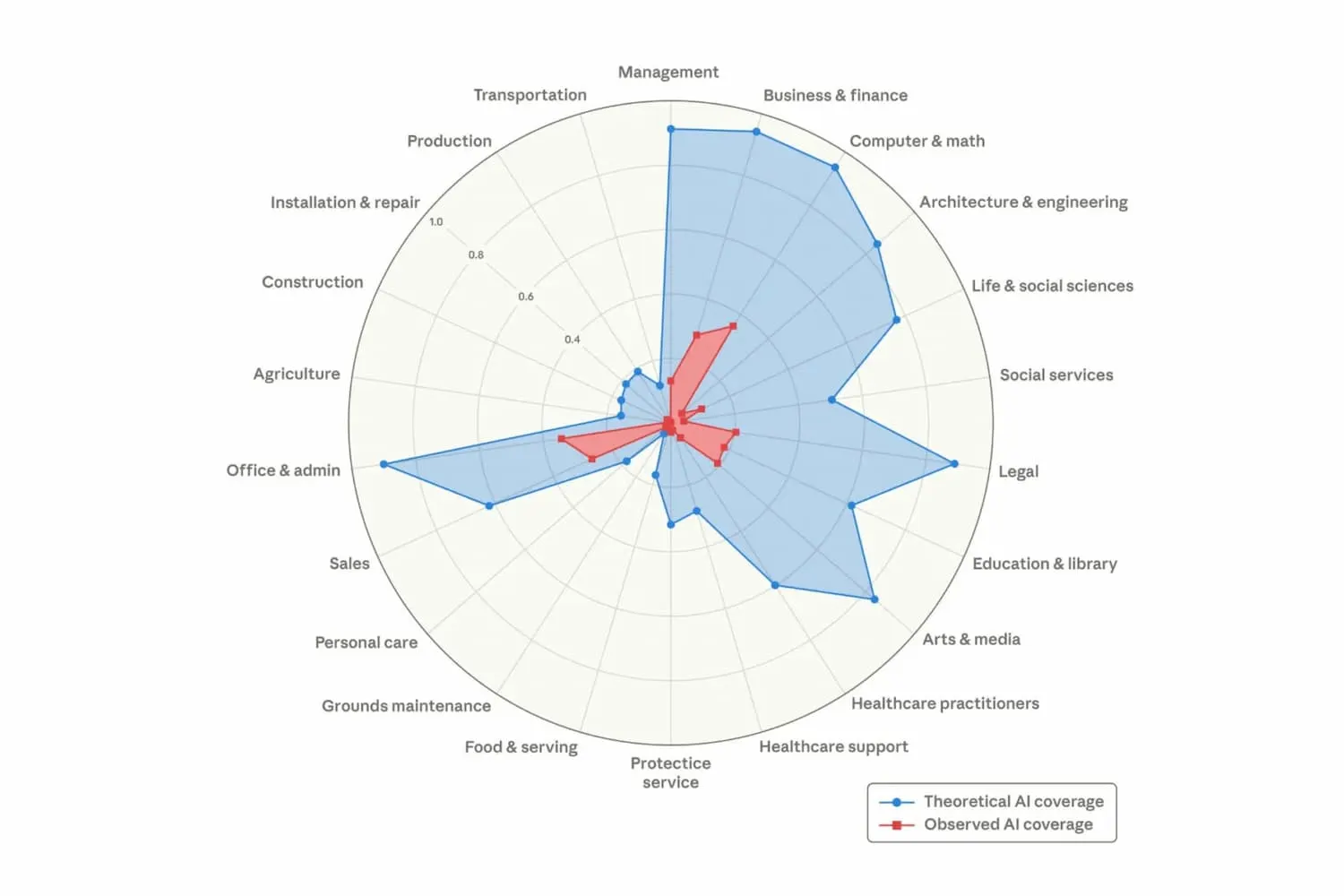
The panic, however, misunderstood where Claude actually fits.
What Claude Actually Replaces
Claude's legal plugin does not dismantle the entire legal tech ecosystem. It targets a specific layer of the market: operational legal tasks. Three categories are directly affected.
1. Thin-wrapper legal AI products
Over the past two years, dozens of startups launched tools that were essentially a user interface placed on top of a large language model. Their value proposition was simple: "Ask AI to review your contract." Claude can now perform many of those functions directly. If a product's core differentiation was simply prompting a model in a nicer interface, the moat is weak.
2. Manual internal legal processes
Legal departments still run a surprising amount of work manually. Junior lawyers review standard agreements. Paralegals triage NDAs. Compliance teams assemble internal briefings. Claude can automate parts of that work by applying playbooks across large documents quickly. The improvement is not just speed but repeatability.
3. Smaller legal teams
Many companies do not have large in-house legal departments. They either outsource work to outside counsel or operate with minimal tooling. For these teams, Claude functions as a safety net. It can provide initial document review, highlight issues, and draft responses before a lawyer finalizes the output.
What Claude Does Not Replace
Despite the headlines, the legal stack is far larger than operational document review. Several core layers remain untouched.
Authoritative legal research
Legal research platforms such as Westlaw, LexisNexis, and Wolters Kluwer rely on curated datasets built over decades. They provide validated case law, statutes, editorial commentary, and citation verification. Foundation models do not replace that infrastructure.
The difference lies between operational AI and authoritative AI. The former helps with workflow tasks. The latter provides verified legal knowledge. (Thomson Reuters Legal AI Leadership)
Enterprise contract lifecycle management
Large organizations operate complex contract lifecycle management systems connected to procurement workflows, approval chains, enterprise resource planning tools, and compliance frameworks. A plugin that reviews contracts cannot replace the entire operational infrastructure of enterprise CLM platforms.
Institutional legal knowledge
Many legal organizations maintain internal databases of negotiation history, precedent clauses, benchmarking data, and firm knowledge. These institutional datasets represent years of accumulated legal strategy. Claude can read such information if provided, but it does not own or structure that knowledge base.
Where do legal plugins stop?
A plugin works one task at a time: review this contract, triage this NDA, summarise this brief. What it does not see is the rest of the matter. It has no record of the client, the hearing dates, the time spent, the firm's earlier positions on the same clause or who signed off on the last draft. Firms that need those pieces, plus a choice of hosting region and an audit trail of who approved what, end up connecting the plugin to practice management and document systems, or buying a platform that already joins them. That join, more than the model, is where the remaining legal software market sits.
The Real Technical Debate: Architecture
The most interesting critique of Claude's legal plugin is not about accuracy or hallucinations. It is about architecture. Some analysts argue that Claude appears to perform contract analysis using a single-pass method. The system reads the contract and the playbook, then generates suggested redlines and comments in one step.
This approach can work well for straightforward agreements. However, complex legal review often requires a structured pipeline that checks each issue systematically.
If the system relies only on a single prompt pass, there is a risk that certain playbook positions are overlooked. Critics argue that complex contract review requires enforced coverage of every rule rather than relying purely on model reasoning. This is why many purpose-built legal AI tools rely on decomposed pipelines and structured evaluation logic rather than only prompts.
In legal work, architecture matters as much as the model.
The Three-Layer Structure of Legal AI
A useful way to understand the market is to divide legal AI into three layers.
Operational AI
This is where Claude currently excels. Tasks include contract triage, NDA review, legal brief preparation, compliance workflows, and internal legal responses. These tasks rely mostly on reasoning over documents and applying internal policies.
Workflow AI
Purpose-built legal software lives here. These systems manage structured legal processes such as contract lifecycle management, legal matter management, document automation, litigation workflows, and firm knowledge systems. The value lies in repeatable workflows, structured data, and organizational integration.
Authoritative legal intelligence
This is the domain of legal research platforms. These systems provide validated case law, statutory databases, citation analysis, editorial commentary, and jurisdictional authority. Foundation models alone do not provide that level of legal authority.
Each layer solves a different problem. Claude entered the operational layer. It did not replace the others.
The Real Impact on Legal Tech
The real disruption is not that Claude replaced legal tech. It is that it raised the baseline.
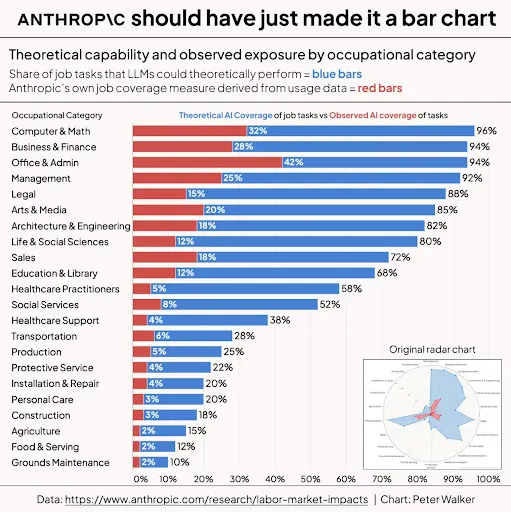
First, adding "AI" to a legal product is no longer enough. If a startup simply connects a user interface to a large language model, Anthropic can now replicate much of that functionality directly.
Second, playbook-based document review is becoming a commodity capability. Any modern model can ingest internal policies and apply them to documents.
Third, legal software vendors must now prove deeper value. That value may come from proprietary data, structured workflows, integrations, or institutional knowledge systems. Foundation models are moving up the stack faster than many vertical SaaS companies expected.
The Bigger Picture
Claude's legal plugin represents a shift in how AI companies approach vertical markets. In the early phase of generative AI, model providers focused on APIs and general-purpose chat interfaces. Vertical industries were left to build applications on top of those models.
Now the model providers themselves are packaging domain workflows. This creates a new competitive dynamic. Vertical software companies must move further up the value chain, building systems that combine data, workflow architecture, and domain expertise.
The legal industry will likely end up with a hybrid structure: Foundation models will handle reasoning over documents and language-heavy tasks. Legal software platforms will manage structured workflows, institutional knowledge, and system integrations. Authoritative research providers will maintain curated legal datasets and trusted sources.
The Quiet Lesson
Claude did not kill legal tech. It simply removed the illusion that prompting a language model was a product.
Legal technology that depends only on the model will struggle. Legal technology that owns data, workflow architecture, and institutional knowledge will remain valuable.
The market has not been replaced. It has been clarified.
And for legal tech vendors, the message is simple. The bar just got higher.